Key performance
Technical specifications
Engine
- Displacement
- 998 cc
- Power
- 182.0 ch @ 12500 tr/min (133.9 kW)
- Torque
- 114.7 Nm @ 10000 tr/min
- Engine type
- 4 cylindres en ligne, 4 temps
- Cooling
- liquide
- Compression ratio
- 12.7 : 1
- Bore × stroke
- 78 x 52.2 mm
- Valves/cylinder
- 4
- Camshafts
- 2 ACT
- Fuel system
- Injection Ø 45 mm
Chassis
- Frame
- Deltabox en aluminium
- Gearbox
- boîte à 6 rapports
- Final drive
- Chaîne
- Front suspension
- Fourche téléhydraulique inversée Ø 43 mm, déb : 120 mm
- Rear suspension
- Mono-amortisseur, déb : 120 mm
Brakes
- Front brakes
- Freinage 2 disques Ø 310 mm, fixation radiale, étrier 6 pistons
- Rear brakes
- Freinage 1 disque Ø 220 mm, étrier simple piston
- Front tyre
- 120/70-17
- Rear tyre
- 190/55-17
Dimensions
- Seat height
- 835.00 mm
- Fuel capacity
- 18.00 L
- Weight
- 206.00 kg
- New price
- 14 999 €
Overview
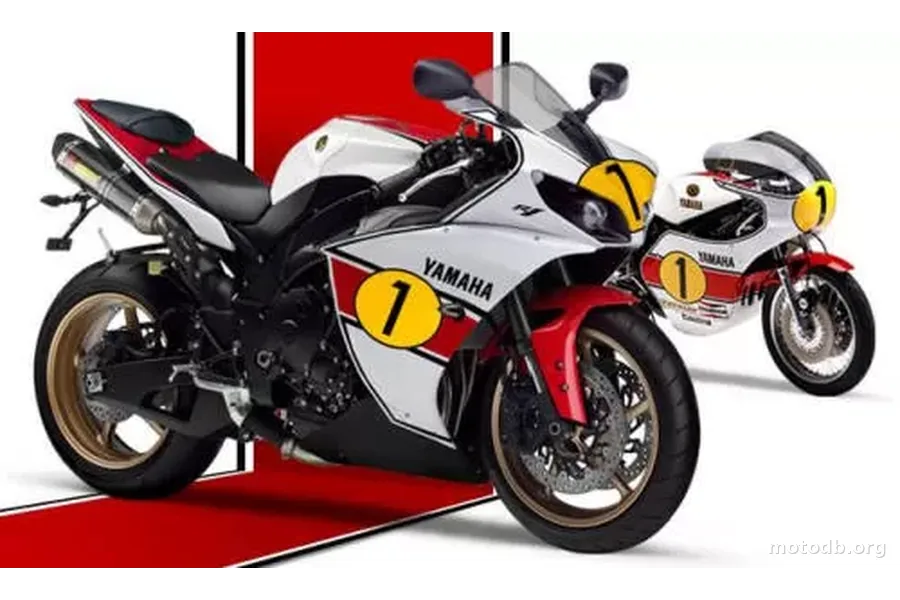
We all remember the shock. Around 2009, the hypersportive world was hit hard with the arrival of the BMW S 1000 RR and its incredible power. Faced with this new order, the Yamaha YZF-R1 of the time, despite its WSBK title, seemed destined to surrender. The 2013 version, this one, was meant to be the answer. The answer was... subtle. No power revolution, but an electronic refinement to try and keep its head above water.
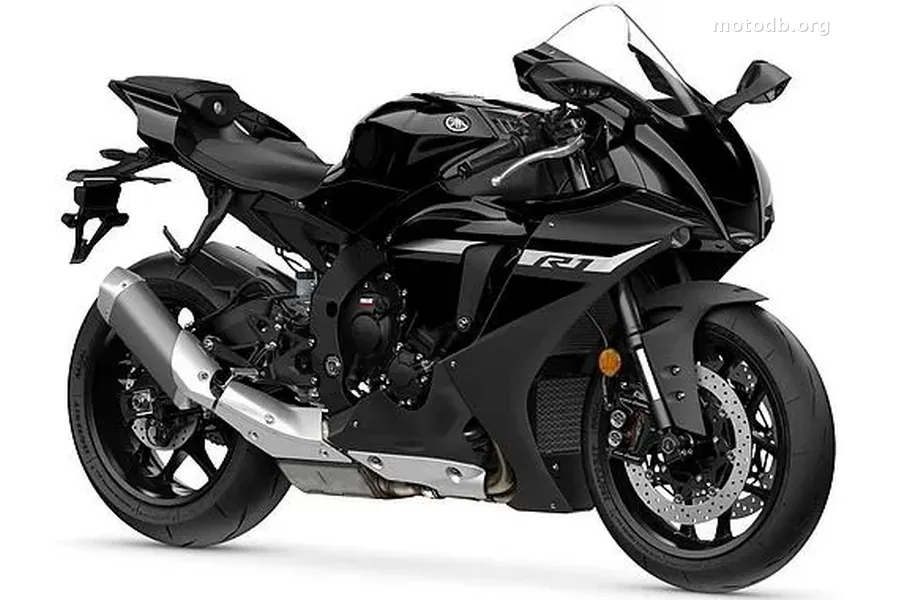
Visually, you have to be a true fan to distinguish this 2013 R1 from its predecessor. Yamaha played the evolution card, with LED lights in the guise of stylized tear tracks and a new TCS, traction control, as the main marketing argument. The system, adjustable in six levels, finally tames the ardor of this four-cylinder with a well-tempered character. Because under the fairing, the soul remains the same: the famous crossplane engine. This 998 cm3 block, with its 270° staggered ignition, does not produce more horsepower than before. We remain at 182 horsepower at 12,500 rpm, a power that remains very healthy but, it must be said, pales in comparison to the 200 horsepower now common among competitors. For those who wonder how much horsepower the Yamaha YZF-R1 1000 of that era has, the answer is clear: enough to do everything, but not enough to intimidate on the dashboard.
Where Yamaha excels is in the sensation. This engine delivers its 114.7 Nm of torque with exceptional progressiveness and tractability, accompanied by a hoarse sound that is unique to it. On the track, it is a precision weapon, with a Deltabox chassis still as lively and radial monoblock brakes of biting efficiency. But this racing character comes at a price in road use: a 835 mm seat height, an engaged riding position and an 18-liter fuel tank that often remind you of your place. This is not a motorcycle for leisurely rides.
So, for whom? For the pure and hard track rider who prioritizes feel over technical specifications, for those seeking a hypersportive with a unique mechanical character, far from the aseptic perfection of some competitors. Its new price of 15,000 euros at the time made it a committed choice. Today, the price of a 2016 Yamaha YZF-R1 1000 in France, or even a 2013 model on the used market, makes it an interesting alternative to access this crossplane technology. It is a motorcycle that divides: some will reproach it for its lack of raw power compared to a Kawasaki ZX-10R, others will love its unique communication and true race machine temperament. Yamaha chose its camp, that of emotion rather than one-upmanship. A bold gamble, but not always a winning one on paper.
Practical info
- La moto est accessible aux permis : A
Reviews & comments
No reviews yet. Be the first to share your opinion!