Key performance
Technical specifications
Engine
- Displacement
- 998 cc
- Power
- 172.0 ch @ 12500 tr/min (126.5 kW)
- Torque
- 106.9 Nm @ 10500 tr/min
- Engine type
- 4 cylindres en ligne, 4 temps
- Cooling
- liquide
- Compression ratio
- 12,1:1
- Bore × stroke
- 77 x 53.6 mm
- Valves/cylinder
- 5
- Camshafts
- 2 ACT
- Fuel system
- injection
Chassis
- Frame
- deltabox V double poutre en alu
- Gearbox
- boîte à 6 rapports
- Final drive
- Chaîne
- Front suspension
- Fourche téléhydraulique inversée Ø 43 mm, déb : 120 mm
- Rear suspension
- Mono-amortisseur, déb : 130 mm
Brakes
- Front brakes
- Freinage 2 disques Ø 320 mm, fixation radiale, étrier 4 pistons
- Rear brakes
- Freinage 1 disque Ø 220 mm, étrier simple piston
- Front tyre
- 120/70-17
- Rear tyre
- 190/50-17
Dimensions
- Seat height
- 835.00 mm
- Fuel capacity
- 18.00 L
- Dry weight
- 172.00 kg
- New price
- 13 565 €
Overview
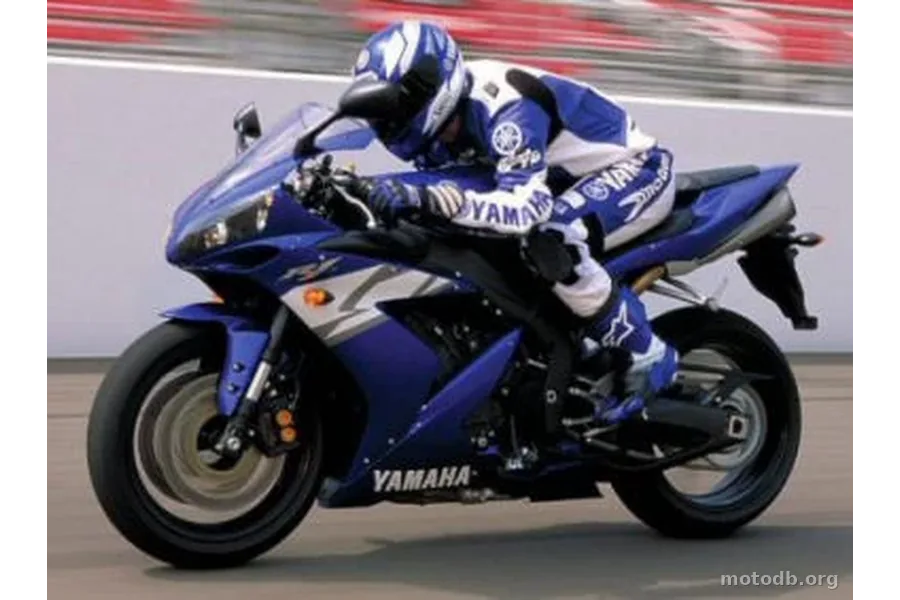
We still remember the shock. In 2004, opening a motorcycle magazine was like facing a declaration of war. Yamaha, with a stroke of a pencil and a turn of a wrench, had just redefined what a production sportbike could be. The new YZF-R1 wasn’t a simple evolution; it was a thunderclap in a sky already filled with Japanese lightning. Imagine: extracting 172 wild horsepower from a one-liter displacement, a power equivalent to that of the hyper-sportbikes of the time, and housing it in a frame weighing just 172 kg dry. These figures still induce vertigo today. The question "How many horsepower does the Yamaha YZF-R1 1000 have?" for that year elicits an answer that sounds like a provocation. Facing a GSX-R 1000, previously unbeatable in smoothness, or a ZX-10R already viciously effective, the 2004 R1 brought a new recipe: controlled madness.
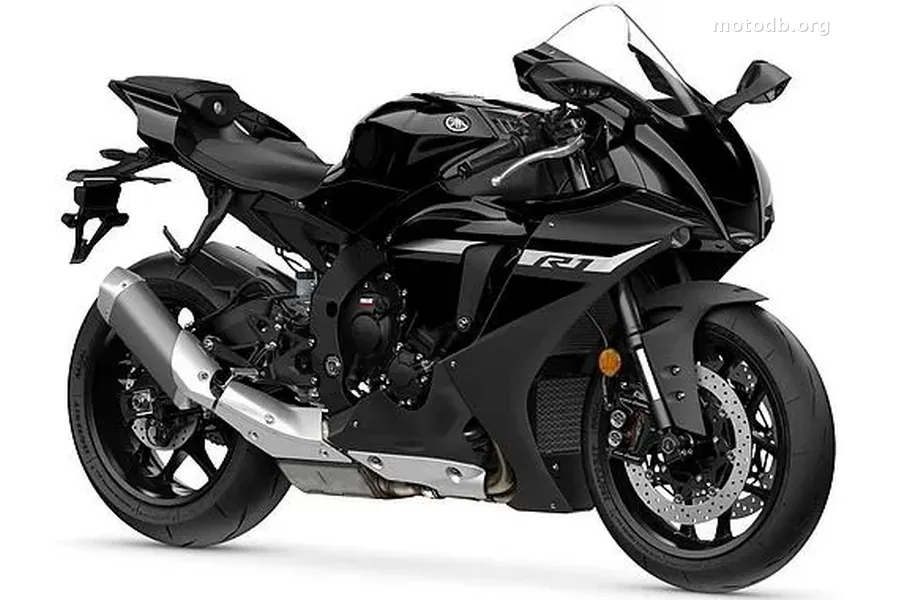
Its design, a subtle evolution of the line launched in 2002, concealed a technical revolution. The legendary five-valve engine was completely redesigned, more compact, capable of revving 2500 rpm higher, peaking at 13,750 rpm. The Deltabox V frame was refined, the inverted swingarm was implemented, and the brakes were upgraded with radial calipers. Everything was done to ensure that this monstrous power remained exploitable. And that’s where its true strength lay. Unlike the Kawasaki ZX-10R, a pure fury that became hysterical at high RPM, the Yamaha offered a more progressive, almost civilized power delivery… until you slammed the lever to the stop. There, the power was brutal, linear, and literally glued your eyes to the back of their sockets. On the track, it humiliated the competition, with the green machine retaining a slight lead in pure aggression. But the real surprise was its behavior on the road.
Yamaha had accomplished the unthinkable: making this track beast more user-friendly. A slightly raised handlebar, a standard steering damper, exemplary straight-line stability that banished the headshake of previous generations. It lost a fraction of agility compared to the Kawa, but gained confidence and serenity for the everyday rider. It became a sportbike that could be tamed, without sacrificing its fangs. It was this versatility, this ability to be both a track weapon and a demanding but fair road companion, that marked people's minds. Reviews of the Yamaha YZF-R1 1000 2004 are often tinged with this revelation: you could have absolute power without permanent punishment.
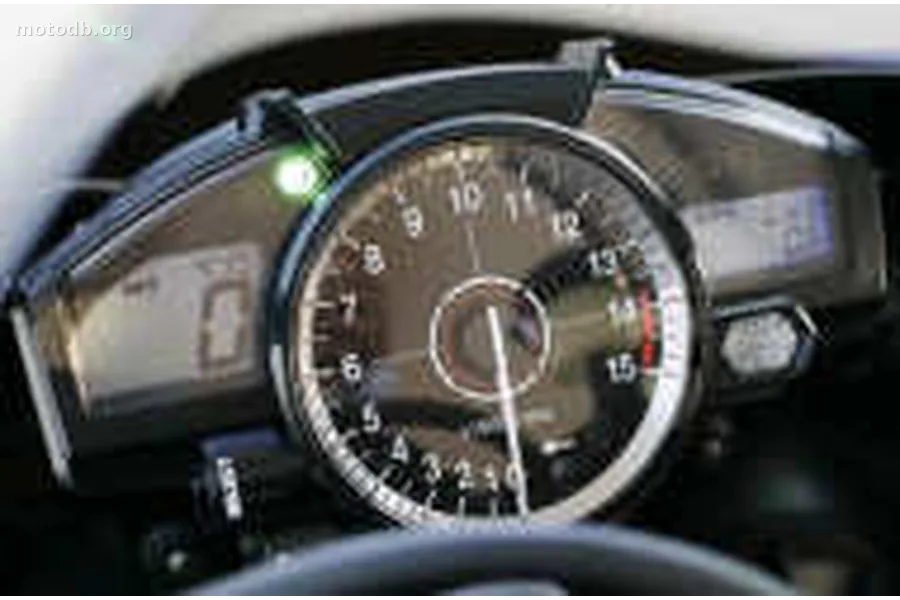
Today, the price of a Yamaha YZF-R1 1000 from 2004 in France varies greatly depending on its condition, ranging from a collector’s price for pristine models to more accessible deals. Compared to the price of a Yamaha YZF-R1 1000 from 2016, which is significantly higher, the argument is undeniable. It represents the acquisition of a piece of history, a motorcycle that marked a turning point. It’s not suitable for beginners, of course, but for the demanding road rider or amateur track enthusiast seeking charismatic mechanics and a raw sensation that modern electronic models have sometimes diluted. It was the last of the purely mechanical R1s, an animal whose leash was held in your hands, without electronic safety nets. A drawback? Its voracious fuel consumption and a still very committed riding position. But for those seeking the very essence of the Japanese sportbike at the height of its art, before the era of ubiquitous driving aids, this R1 remains an absolute reference, a brilliant madness and surprisingly well-behaved.
Practical info
- La moto est accessible aux permis : A
Reviews & comments
No reviews yet. Be the first to share your opinion!