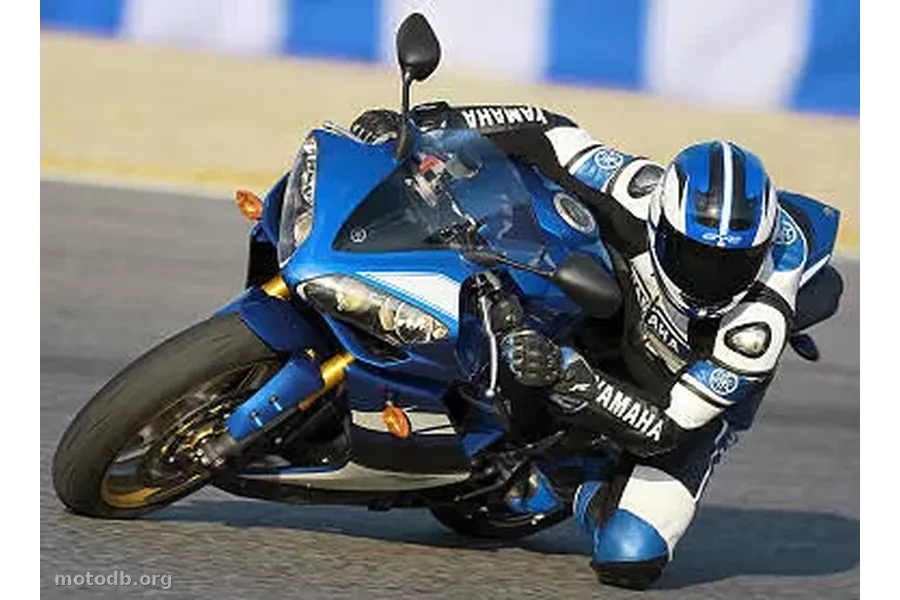
Key performance
Technical specifications
Engine
- Displacement
- 998 cc
- Power
- 182.0 ch @ 12500 tr/min (133.9 kW)
- Torque
- 107.9 Nm @ 10000 tr/min
- Engine type
- 4 cylindres en ligne, 4 temps
- Cooling
- liquide
- Compression ratio
- 12.7:1
- Bore × stroke
- 78 x 52.2 mm
- Valves/cylinder
- 4
- Camshafts
- 2 ACT
- Fuel system
- Injection Ø 45 mm
Chassis
- Frame
- Deltabox en aluminium
- Gearbox
- boîte à 6 rapports
- Final drive
- Chaîne
- Front suspension
- Fourche téléhydraulique inversée Ø 43 mm, déb : 120 mm
- Rear suspension
- Mono-amortisseur, déb : 120 mm
Brakes
- Front brakes
- Freinage 2 disques Ø 310 mm, fixation radiale, étrier 6 pistons
- Rear brakes
- Freinage 1 disque Ø 220 mm, étrier simple piston
- Front tyre
- 120/70-17
- Rear tyre
- 190/55-17
Dimensions
- Seat height
- 835.00 mm
- Fuel capacity
- 18.00 L
- Weight
- 206.00 kg
- New price
- 13 999 €
Overview
Who would have bet that a Japanese sportbike could still surprise us in 2009? Yet, by releasing this R1, Yamaha did much more than a simple update. It operated a mutation. The silhouette remains recognizable, aggressive, with that predatory gaze that sometimes recalls models from the 2000s, but the soul has radically changed. The real shock, especially in white color with this bright red frame, a first for a Japanese bike, sends a clear message: we are no longer in the consensus. We are in affirmation.
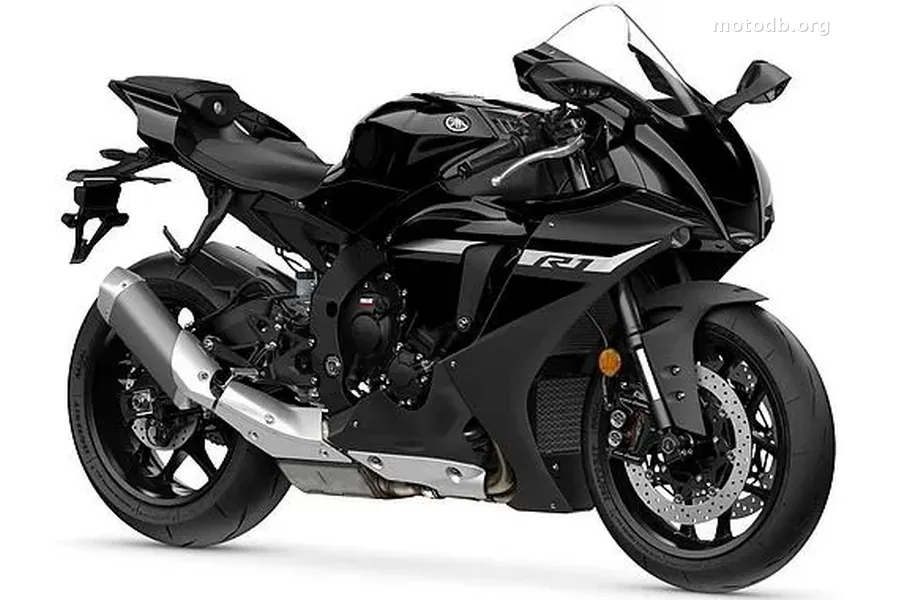
Under the 18-liter fuel tank, it's a technical revolution. The 998 cm³ engine hasn't simply gained 2 horsepower to approach 182 hp; it has mainly adopted a philosophy inherited from MotoGP. The dirty secret? A 90° crankshaft and an asymmetrical ignition timing (270°-180°-90°-180°). Translation for the rider: forget brute power and jerks. Here, the goal is linear traction, millimeter-precise acceleration control, especially in the middle of corners. Even the exhaust pipe begins to hum a melody close to that of the M1. It's an intelligent response to the race for pure power, a way of saying that mastery is more important than the number. For those who wonder how many horsepower the 2010 Yamaha YZF-R1 1000 has, the figure is there, but it is almost anecdotal compared to this profound overhaul of character.
Obviously, such an engine deserved a chassis to match. The Deltabox frame is reworked, the engine moved forward, and the rigidity optimized. The 43 mm inverted fork adopts an ingenious separation of functions: compression on the left, rebound on the right, for more precise adjustment and more consistent behavior. The radial 6-piston brakes bite on 310 mm discs with formidable efficiency. Yet, the announced weight of 206 kg fully fueled can be unsettling. It must be understood that Yamaha has switched to a more realistic measurement, including fluids. On the road, or on the track, this mass is perfectly controlled and does not detract from the beast's ferocious agility.
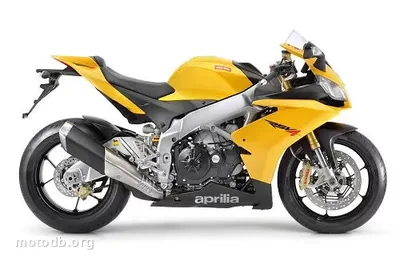
The target audience? The demanding track rider, but also the passionate road rider who seeks the most accomplished machine, not necessarily the most brutal. Faced with a Suzuki GSX-R1000 of the time, more immediate, or a slightly more refined Honda Fireblade, the R1 2009 plays the card of intelligence and feeling. It is less accessible than some, requiring the rider to adapt to its particular power delivery. But once this language is understood, the reward is immense: a feeling of connection and efficiency in curves that was then the preserve of the Aprilia RSV4, its great European rival.
Ultimately, this generation marked a before and after. Its price at launch, around €15,000, had made teeth grind, but it was justified by the innovation. Today, on the used market, it represents a sensible investment for those who want a sportbike with character, technological, without the sometimes stifling electronics of later models. It is a motorcycle for enthusiasts, demanding, which rewards talent and which, more than any other, linked the series production and the world of racing. A bold, and successful, bet.
Practical info
- La moto est accessible aux permis : A
Reviews & comments
No reviews yet. Be the first to share your opinion!