Key performance
Technical specifications
Engine
- Displacement
- 998 cc
- Power
- 182.0 ch @ 12500 tr/min (133.9 kW)
- Torque
- 114.7 Nm @ 10000 tr/min
- Engine type
- 4 cylindres en ligne, 4 temps
- Cooling
- liquide
- Compression ratio
- 12.7 : 1
- Bore × stroke
- 78 x 52.2 mm
- Valves/cylinder
- 4
- Camshafts
- 2 ACT
- Fuel system
- Injection Ø 45 mm
Chassis
- Frame
- Deltabox en aluminium
- Gearbox
- boîte à 6 rapports
- Final drive
- Chaîne
- Front suspension
- Fourche téléhydraulique inversée Ø 43 mm, déb : 120 mm
- Rear suspension
- Mono-amortisseur, déb : 120 mm
Brakes
- Front brakes
- Freinage 2 disques Ø 310 mm, fixation radiale, étrier 6 pistons
- Rear brakes
- Freinage 1 disque Ø 220 mm, étrier simple piston
- Front tyre
- 120/70-17
- Rear tyre
- 190/55-17
Dimensions
- Seat height
- 835.00 mm
- Fuel capacity
- 18.00 L
- Weight
- 206.00 kg
- New price
- 14 999 €
Overview
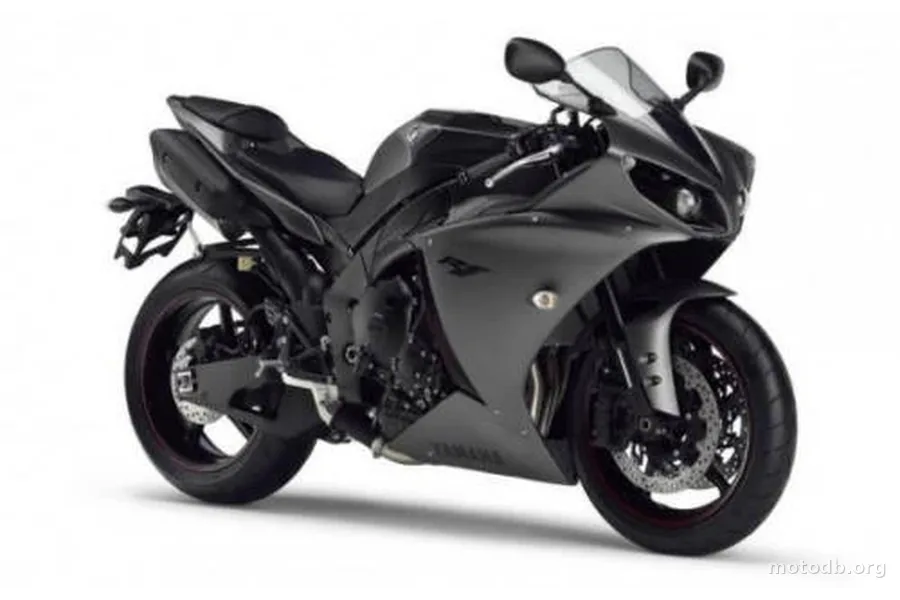
We still talk about that crossplane R1. In 2012, the question was acute. Faced with the onslaught of the BMW S 1000 RR and Kawasaki ZX-10R, which were beginning to display stratospheric figures, the Yamaha with its irregular four-cylinder engine risked being seen as a gentle dreamer. Yet, with its 182 horsepower at 12,500 rpm, this YZF-R1 1000 was anything but a pushover. The figure may seem modest today, but it is important to put it in context: at the time, it was a more than respectable power output, capable of propelling the machine to around 300 km/h without a second thought. The real magic wasn't in the peak power, but in the way it was delivered. This crossplane engine, with its smoothed torque curve and a soundtrack that growled like a V4, offered an exceptional level of intuitiveness. You could drop a knee with absolute confidence, feeling the rear always in contact, even on tight corner exits.
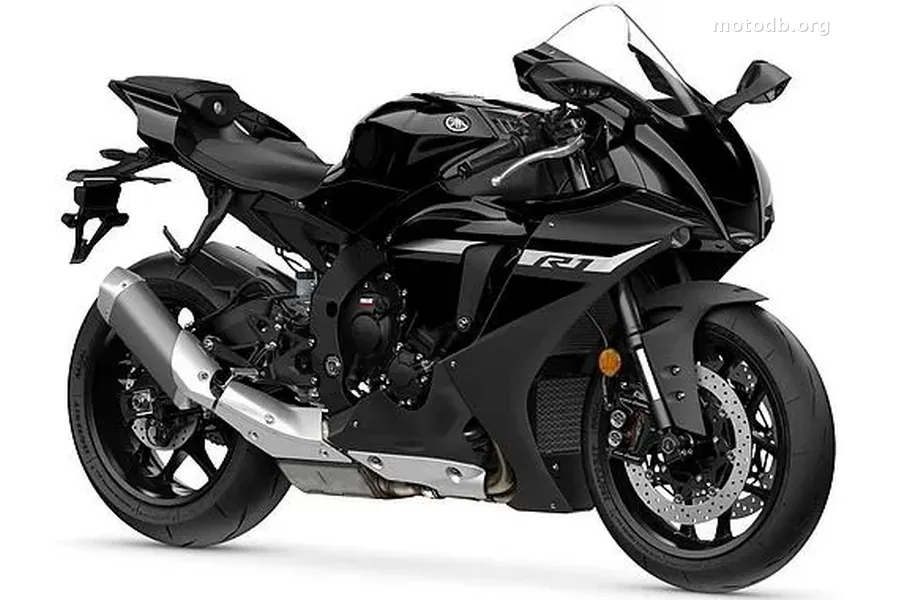
The 2012 evolution wasn’t a revolution, but a strategic update. Yamaha finally grafted on traction control, the TCS, a six-setting system that would calm the beast’s ardor in case of excessive wheelspin. Coupled with the three engine maps already present, this gave no less than twenty-one possible combinations. Enough to occupy a rider on a rainy Saturday afternoon. Aesthetically, it took a lynx's eye to see the differences: LED position lights, a redesigned fork head, a slightly modified lower fairing. The silhouette remained this ambiguous work of art, both admired and misunderstood, which belonged to it alone. The price, however, was set at 14,999 euros, an entry-level rate in the world of hypersport bikes of the time.
So, who was it for? Certainly not a beginner, despite its relative maneuverability. Its low handlebars, 835 mm seat height, and 206 kg when fully fueled made it a physically demanding machine. It was the mount of the enlightened track rider seeking pure sensation, mechanical connection, more than absolute lap times. It was also the choice of the sporty touring enthusiast who loved a unique character. Faced with a wilder ZX-10R or a more clinical and more powerful S 1000 RR, the R1 played the card of emotion and feeling. It may not have won the numbers war on paper, but it often won the battle of the smile under the visor.
With hindsight, this 2009-2014 generation, and notably this 2012 model year with its TCS, solidified the myth of the crossplane R1. It proved that a hypersport could have a soul, a sound, and a distinct behavior. If you are looking for the price of a Yamaha YZF-R1 1000 from 2016 in France, you will find a more electronically advanced machine. But if you are wondering how many horsepower the Yamaha YZF-R1 1000 from 2010 or 2012 had, know that its 182 hp was much more than just a number. It was the signature of a character engine, in a motorcycle that prioritized riding pleasure over brute force. A bold gamble, and rather successful.
Practical info
- La moto est accessible aux permis : A
Reviews & comments
No reviews yet. Be the first to share your opinion!