Key performance
Technical specifications
Engine
- Displacement
- 998 cc
- Power
- 175.0 ch @ 12500 tr/min (128.7 kW)
- Torque
- 98.1 Nm @ 10500 tr/min
- Engine type
- 4 cylindres en ligne, 4 temps
- Cooling
- liquide
- Compression ratio
- 12,4:1
- Bore × stroke
- 77 x 53,6 mm
- Valves/cylinder
- 5
- Camshafts
- 2 ACT
- Fuel system
- Injection
Chassis
- Frame
- deltabox V double poutre en alu
- Gearbox
- boîte à 6 rapports
- Final drive
- Chaîne
- Front suspension
- Fourche téléhydraulique inversée Ø 43 mm, déb : 120 mm
- Rear suspension
- Mono-amortisseur, déb : 130 mm
Brakes
- Front brakes
- Freinage 2 disques Ø 320 mm, fixation radiale, étrier 4 pistons
- Rear brakes
- Freinage 1 disque Ø 220 mm, étrier 2 pistons
- Front tyre
- 120/70-17
- Rear tyre
- 190/50-17
Dimensions
- Seat height
- 835.00 mm
- Fuel capacity
- 18.00 L
- Weight
- 208.00 kg
- Dry weight
- 173.00 kg
- New price
- 13 699 €
Overview
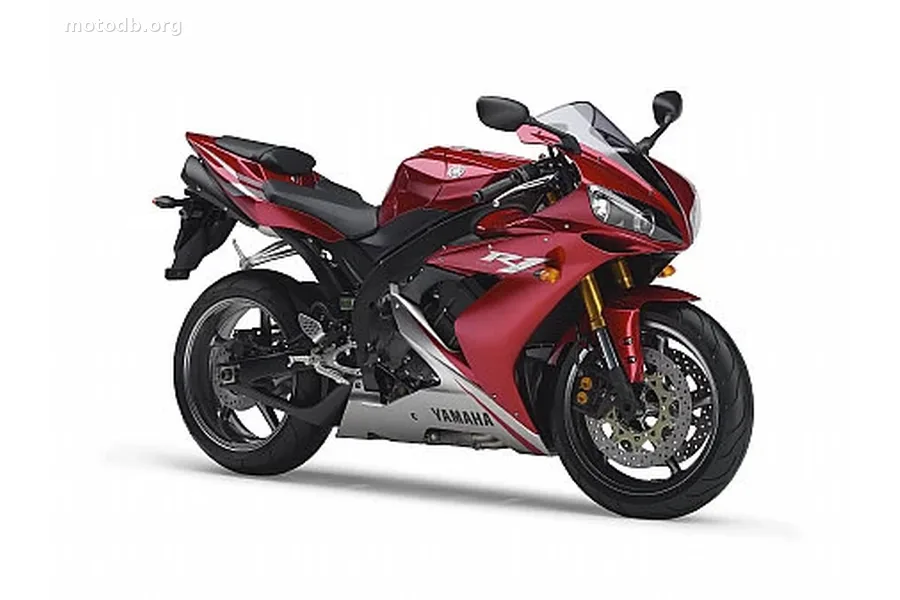
Do you remember that feeling, when you see a perfect motorcycle for the first time? In 2006, Yamaha must have felt it looking at its own R1. Why tamper with a silhouette that had become iconic, a design so complete that it was almost dizzying? The brand therefore made a wise and rare decision: not to spoil a work of art. Aesthetic modifications are limited to details, such as more pronounced gold fork tubes or painted air intakes. The real work, the goldsmith's work, took place beneath the bodywork.
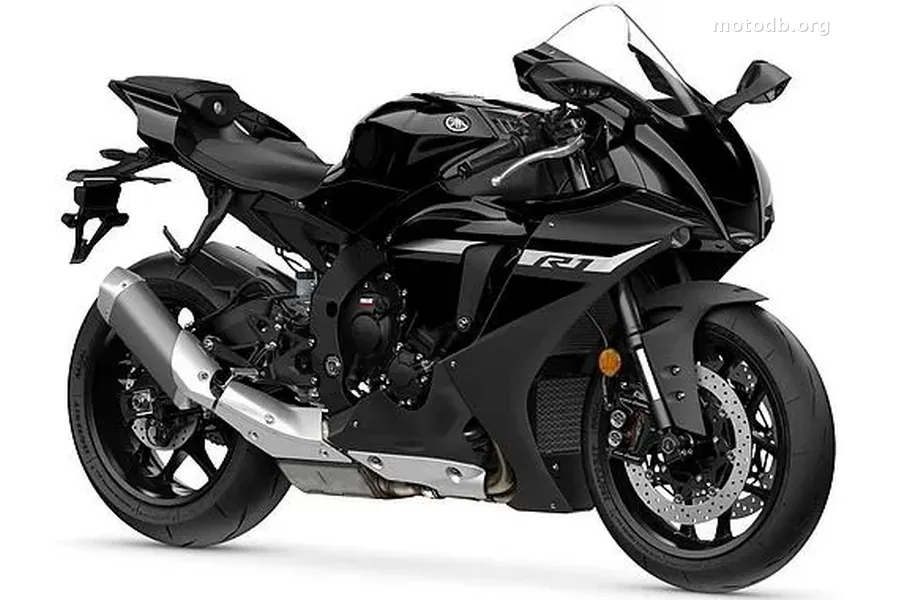
Because the 998 cm³ engine, already ferocious, gains three horsepower to reach 175 hp at 12,500 rpm. You don't mess with the power of the Yamaha YZF-R1 1000. This gain comes from meticulous refinement: shortened valve guides for a more generous intake flow, polished air intakes, revised clutch. It's the search for perfect breathing. Torque remains at 98 Nm, a value that alone does not explain the brutality of acceleration. It's the whole package that counts, this ability to propel its 208 kg fully fueled towards a horizon melting at 285 km/h.
The true feat, however, lies in the chassis. The aluminum Deltabox frame undergoes strategic weight reduction, gaining in maneuverability without conceding an iota of rigidity. The swingarm is lengthened by 20 mm, engine mounting points are modified, and mass distribution shifts by a crucial percentage towards the front. These figures seem dry, but on the road, they translate into surgical precision. The 43 mm inverted fork and the single shock absorber swallow imperfections with Olympian calm, while the radial dual disc brakes of 320 mm at the front inspire absolute confidence. This R1 is no longer ridden, it is thought about.
So, who is this machine for? Certainly not a beginner. It is the ultimate weapon of the experienced track rider, the one who seeks to brush against mechanical perfection. At the time, its price of 13,699 euros placed it at the top of the category, an investment justified for cutting-edge technology. Today, the price of a 2006 Yamaha YZF-R1 1000 in France varies depending on its condition, but it remains a collector's item, a piece of history. Yamaha had even pushed luxury further with special series, such as the R1 SP equipped with Öhlins suspensions, or the yellow racing livery for the 50th anniversary of the brand. These versions still fuel discussions among purists, just like opinions on the 2009 Yamaha YZF-R1 remain laudatory for its racing character.
Faced with a more nervous Fireblade or a GSX-R perhaps more accessible, the 2006 R1 assumes its status as a demanding and total machine. It doesn't flatter, it imposes its rhythm. It is proof that at a certain point, evolution does not come through an aesthetic revolution, but through the obsessive quest for technical detail that makes all the difference. A lesson that some manufacturers would do well to meditate on.
Practical info
- La moto est accessible aux permis : A
Reviews & comments
No reviews yet. Be the first to share your opinion!