Key performance
Technical specifications
Engine
- Displacement
- 998 cc
- Power
- 150.0 ch (110.3 kW)
- Torque
- 107.9 Nm @ 8500 tr/min
- Engine type
- 4 cylindres en ligne, 4 temps
- Cooling
- liquide
- Compression ratio
- 11.8:1
- Bore × stroke
- 74 x 58 mm
- Valves/cylinder
- 5
- Camshafts
- 2 ACT
Chassis
- Frame
- deltabox,double poutre en alliage alu
- Gearbox
- boîte à 6 rapports
- Final drive
- Chaîne
- Front suspension
- Fourche téléhydraulique inversée 41 mm de diamètre, déb : 135 mm
- Rear suspension
- Mono-amortisseur, déb : 130 mm
Brakes
- Front brakes
- Freinage 2 disques Ø 298 mm, étrier 4 pistons
- Rear brakes
- Freinage 1 disque Ø 245 mm, étrier 2 pistons
- Front tyre
- 120/70-17
- Rear tyre
- 190/50-17
Dimensions
- Seat height
- 815.00 mm
- Fuel capacity
- 18.00 L
- Dry weight
- 175.00 kg
- New price
- 12 950 €
Overview
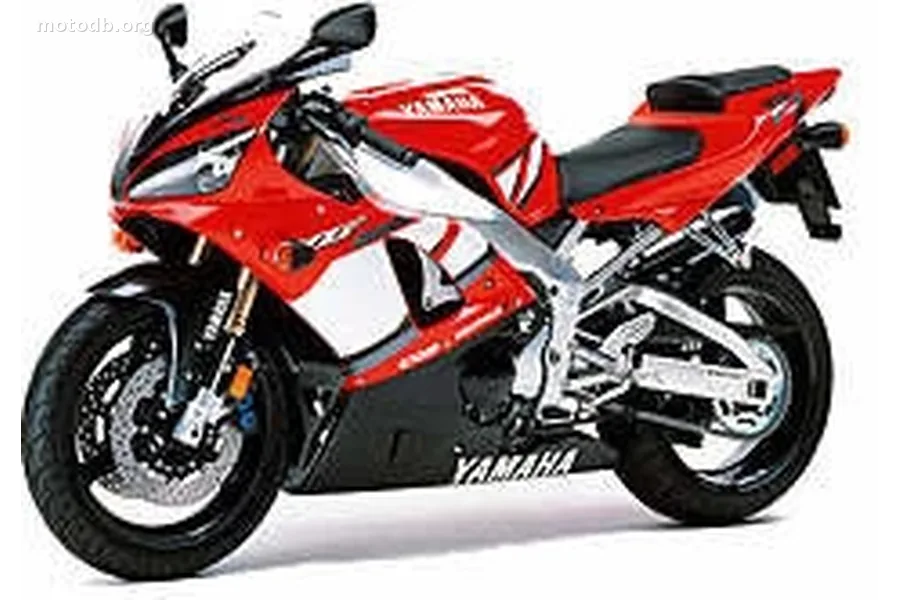
Do you remember the first time you saw a R1 from this generation? That sharp design, that low-slung silhouette that seemed to defy the wind, that predatory gaze with its embedded lights. In 2001, the Yamaha YZF-R1 1000 no longer had to prove that it was a revolution; it was already its definitive incarnation. Three years after its thunderous arrival, it had refined its character, remaining the absolute weapon that made the Honda CBR 900 RR and other GSX-R models of the time pale. Its secret? A blend of violence and finesse that belongs to it alone.
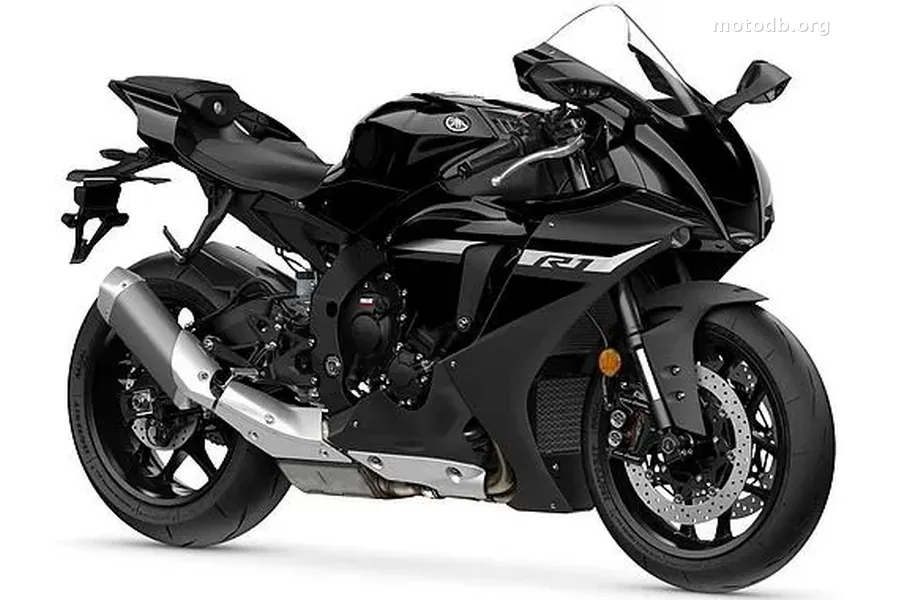
Are you going to ride it to get bread? Forget about it immediately. The 81.5 cm high seat is just a detail compared to the torture posture that awaits you. With your torso pressed against the 18-liter tank, your wrists cantilevered, it’s a total commitment. Yamaha did not design this machine for urban riding, and you can feel it from the first few meters. Comfort is a foreign concept, a notion sacrificed on the altar of pure efficiency. Compared to that, a 600 from the time seems like a club chair.
But go ahead and start up that inline four-cylinder engine with 998 cm3 displacement. The advertised 150 horsepower is not a number; it’s a promise. And the 107.9 Nm of torque available from 8500 rpm is the signature of this engine. That’s where everything is explained. This motorcycle doesn't want the city; it demands curves, precise counter-steering, acceleration that compresses your spine. On the track, the magic happens. The Deltabox frame, the 41 mm inverted fork, and the monoshock transform this demanding beast into an extension of your body. It's less accessible than a CBR, more nervous, more direct. It requires technique, anticipation, especially with this front braking system with a double 298 mm disc that bites with exemplary ferocity. It’s a motorcycle that speaks to you clearly: be precise, or you will suffer.
Today, looking at the price of a 2001 Yamaha YZF-R1 1000 in France is like a gold rush. At the time, it was listed at 12,950 euros, a sum justified for such performance. Opinions on the Yamaha YZF-R1 1000 2002 or subsequent models consistently converge on the same observation: it’s a purist’s machine. The question "how many horsepower does the Yamaha YZF-R1 1000 have?" often comes up, and the answer has evolved over the years, from those 150 hp to higher figures on later versions, such as the 2008 or the 2010 Factory Superbike. But this 2001 generation, with its 175 kg dry weight, remains a benchmark of truth.
It’s not for everyone. It’s for the track rider who accepts the harshness to obtain total connection, for those seeking a mechanical icon with a well-tempered character. It’s a motorcycle that doesn’t flatter, that trains, and that, when you succeed in dancing with it, offers a feeling of mastery that is absolutely exhilarating. A legend, simply.
Practical info
- La moto est accessible aux permis : A
Reviews & comments
No reviews yet. Be the first to share your opinion!