Key performance
Technical specifications
Engine
- Displacement
- 998 cc
- Power
- 200.0 ch @ 13500 tr/min (147.1 kW)
- Torque
- 113.8 Nm @ 11500 tr/min
- Engine type
- 4 cylindres en ligne, 4 temps
- Cooling
- liquide
- Compression ratio
- 13 : 1
- Bore × stroke
- 79 x 50.9 mm
- Valves/cylinder
- 4
- Camshafts
- 2 ACT
- Fuel system
- Injection
Chassis
- Frame
- périmétrique Diamond en aluminium
- Gearbox
- boîte à 6 rapports
- Final drive
- Chaîne
- Front suspension
- Fourche téléhydraulique inversée Ø 43 mm, déb : 120 mm
- Rear suspension
- Mono-amortisseur, déb : 120 mm
Brakes
- Front brakes
- Freinage 2 disques Ø 320 mm, fixation radiale, étrier 4 pistons
- Rear brakes
- Freinage 1 disque Ø 220 mm, étrier simple piston
- Front tyre
- 120/70-17
- Rear tyre
- 190/55-17
Dimensions
- Seat height
- 855.00 mm
- Fuel capacity
- 17.00 L
- Weight
- 201.00 kg
- New price
- 19 299 €
Overview
Does a production sportbike really need to gain 200 horsepower when it already weighs 201 kilograms fully fueled? The question arises as soon as one mentions the Yamaha YZF-R1 2020, a machine whose MotoGP pedigree needs no further proof, but which must now compete on two fronts: the track against the Ducati Panigale V4-R, and the catalog against prices flirting with 20,000 euros. At nearly 19,300 euros, it is not a toy, and its developments for this year are meticulous paring rather than a revolution.
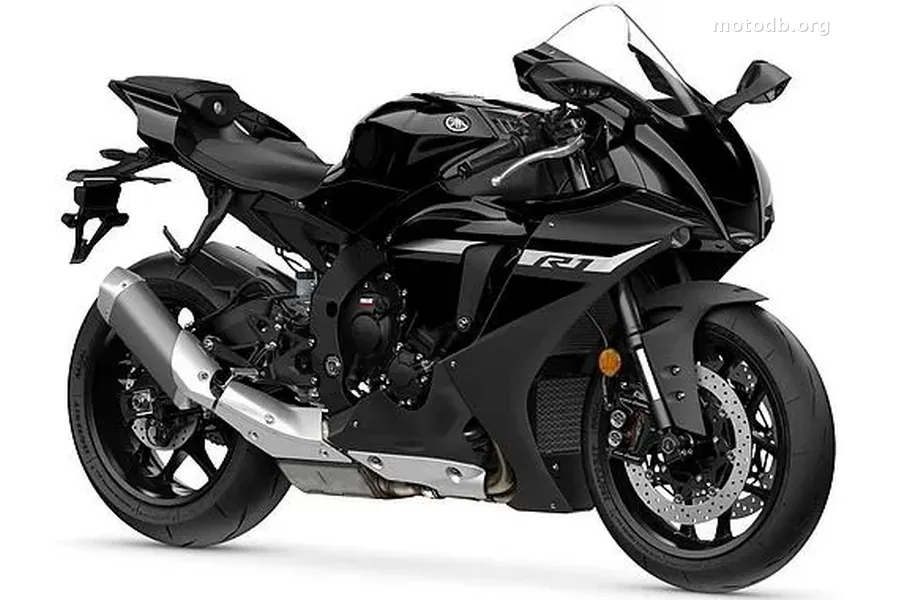
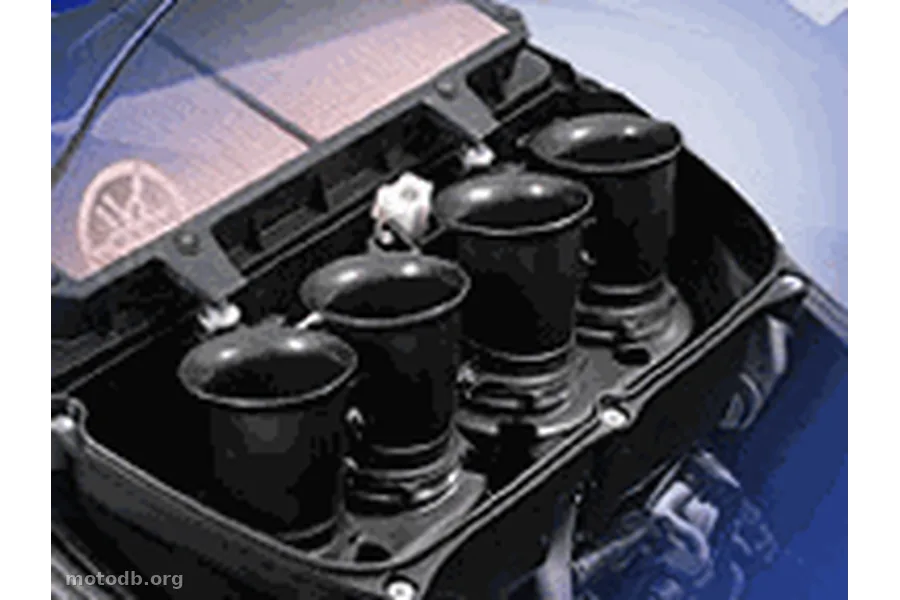
Under fairing that gains 5% aerodynamic efficiency but changes barely visually, it is the crossplane engine of 998 cm3 that receives most of the attention. The 200 horsepower at 13,500 rpm remain the segment standard, but Yamaha has reworked the soul of its four-cylinder. New camshafts, cylinder head, and repositioned injectors: the goal is a more stable and efficient combustion, especially at high RPM. One can feel that the engineers have eliminated every parasitic loss, even if it adds two unfortunate kilograms to the whole. Throttle response, via a new APSG throttle tube, promises to be more direct. For purists wondering how many horsepower the Yamaha YZF-R1 1000 has, the figure is stable, but the way it is delivered has evolved.
The real progress, for the rider, is nestled in the electronics. The 6-axis inertial measurement unit, already present, now orchestrates two new systems. Cornering brake control (BC) with ABS is a precision weapon, modulating the anti-lock according to the lean angle. Coupled with the three-level engine brake management (EBM), this gives astonishing control over the bike's attitude. The Kayaba fork, for its part, has been retouched to transmit more raw sensations. Faced with the sometimes overwhelming sophistication of certain Italians, the R1 2020 seeks to remain an intuitive machine, where electronics assist without imposing.
So, for whom? Clearly for the demanding track rider or the tech-savvy road rider who wants the quintessence of the sportbike without going for the V4. It requires physical commitment, with a seat at 855 mm, and its 17-liter tank reminds you that it is not a globetrotter. It is a focused, precision machine that rewards technique. Its price places it in the court of high-end hypersportives, an investment justified by a rare level of technical completion.
In summary, this R1 2020 is not a reinvention. It is a refinement, a hardening for competition, whether on the track or against its rivals in the catalog. It proves that the crossplane platform still has potential. For those hunting for a deal, asking the question of the price of a 2016 Yamaha YZF-R1 in France is legitimate, because the previous generation already offers the essentials. But this 2020 version, with its electronic and mechanical refinements, is the most accomplished and relentless expression of the R1 philosophy. A track weapon dressed in production trim, without compromise.
Standard equipment
- Assistance au freinage : ABS de série
Practical info
- La moto est accessible aux permis : A
Reviews & comments
No reviews yet. Be the first to share your opinion!