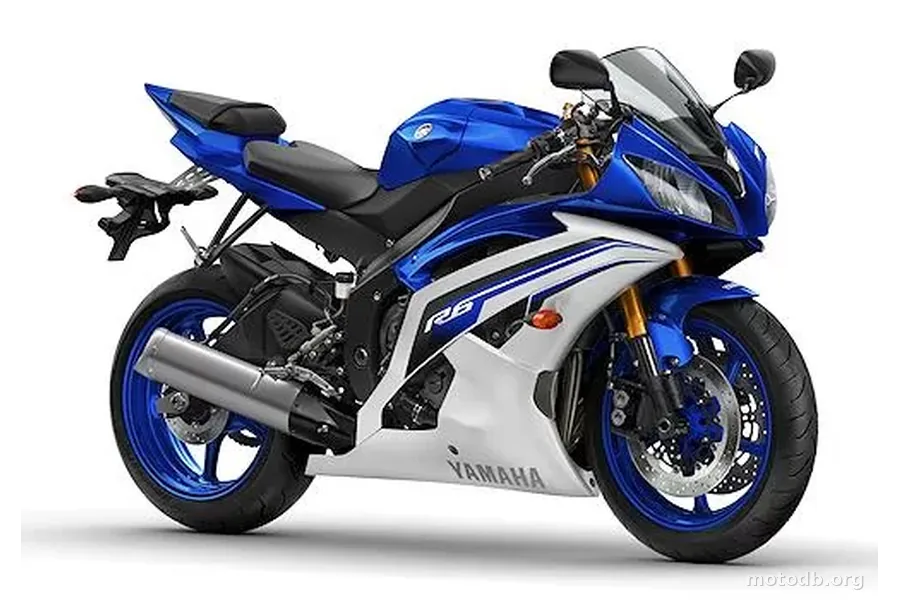
Key performance
Technical specifications
Engine
- Displacement
- 600 cc
- Power
- 124.0 ch @ 14500 tr/min (91.2 kW)
- Torque
- 65.7 Nm @ 11000 tr/min
- Engine type
- 4 cylindres en ligne, 4 temps
- Cooling
- liquide
- Compression ratio
- 13.1:1
- Bore × stroke
- 67 x 42,5 mm
- Valves/cylinder
- 4
- Camshafts
- 2 ACT
- Fuel system
- injection
Chassis
- Frame
- deltabox double poutre en alu
- Gearbox
- boîte à 6 rapports
- Final drive
- Chaîne
- Front suspension
- Fourche téléhydraulique inversée Ø 41 mm, déb : 115 mm
- Rear suspension
- Mono-amortisseur, déb : 120 mm
Brakes
- Front brakes
- Freinage 2 disques Ø 310 mm, fixation radiale, étrier 4 pistons
- Rear brakes
- Freinage 1 disque Ø 220 mm, étrier 2 pistons
- Front tyre
- 120/70-17
- Rear tyre
- 180/55-17
Dimensions
- Seat height
- 850.00 mm
- Fuel capacity
- 17.00 L
- Weight
- 189.00 kg
- Dry weight
- 170.00 kg
- New price
- 12 999 €
Overview
It takes a track rider to understand what a 2015 Yamaha YZF-R6 represents. This machine, launched in 2008 with its radical generation, has weathered the years without a true aesthetic revolution, but it has absorbed technical modifications that have refined its character. In 2010, Yamaha gave it a mechanical refresh, and this 2010-2015 version remains the ultimate expression of the Japanese 600 sportbike before the category began to fade. This is not a motorcycle for Sunday rides, but an instrument tailored for absolute precision.
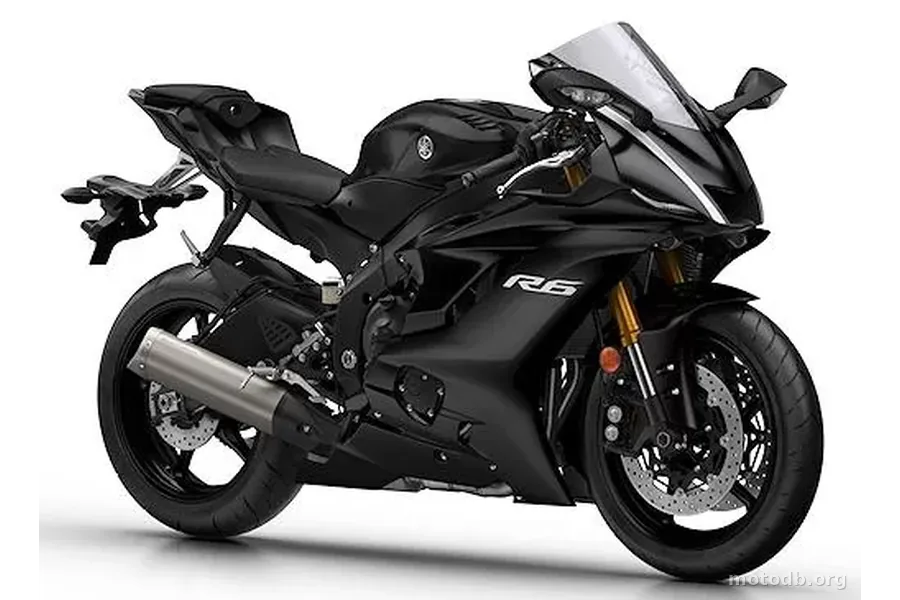
Under the redesigned fairing with a sharper beak, the engine is a case study in high-rev obsession. With 124 horsepower at 14,500 rpm, we are far from the stratospheric figures of the previous generation, which flirted with 135 horsepower. But this power of the 2015 Yamaha YZF-R6 600, often discussed, finds its origin in a different philosophy. Yamaha sacrificed a few horsepower at the top to gain breathability in the mid-range. The secret? A larger airbox, a longer exhaust silencer for emissions standards, and above all, the arrival of the YCC-I variable intake system, borrowed from the R1. This system, which modifies the length of the intake runners according to engine speed, provides a boost to torque, estimated at around a 10% gain. The compression ratio rises to 13.1:1, a record for Yamaha at the time, supported by high-compression pistons and titanium valves. It’s an engine that demands to be pushed, but responds with furious linearity when you twist the YCC-T throttle, the “drive by wire.”
This precision mechanics is housed in a Deltabox frame whose rigidity has been refined by invisible modifications, such as variable wall thickness and the removal of a crossmember. Steering becomes firmer, and the front end, with its 41mm inverted fork, communicates every imperfection of the road surface. Braking, with its two 310mm discs and radial four-piston calipers, remains a benchmark in the category. It should be noted, however, that the R6 has gained weight over the years. It displays 189 kg fully fueled, or approximately 170 kg dry. This weight of a 2008 Yamaha YZF-R6, often questioned by buyers, has increased with technical developments, such as the adoption of electronic systems and a reinforced structure. Yamaha even used magnesium for the rear subframe to save 450 grams, but the overall balance is positive.
On the track, this accumulation of technology translates into methodical aggression. The motorcycle is sharp, it requires committed riding and does not forgive trajectory errors. It is not for beginners or touring riders seeking comfort. Its 850mm seat height and a mere 17-liter fuel tank confirm its role: pure performance. Compared to a Kawasaki ZX-6R or a Honda CBR600RR of the same period, the R6 stands out for its more extreme character, less versatile, but more rewarding when you master its language. Opinions on the 2003 Yamaha YZF-R6, often nostalgic, acknowledge that this 2008-2015 generation pushed the concept even further.
Today, with a price of around €12,999 at the time, it represented a serious investment for a track rider or a technology enthusiast. Its current value on the used market depends on its history, but its status as an iconic machine remains intact. It is not the most powerful, nor the lightest, but it is probably the most determined, the one that demands the most of its rider and, in return, offers a feeling of absolute control. It’s a motorcycle that doesn’t smile, it grimaces and attacks, faithful to its radical supersport DNA.
Practical info
- La moto est accessible aux permis : A
Indicators & positioning
Similar bikes
600 GSX-R 25eme anniversaire
Reviews & comments
No reviews yet. Be the first to share your opinion!