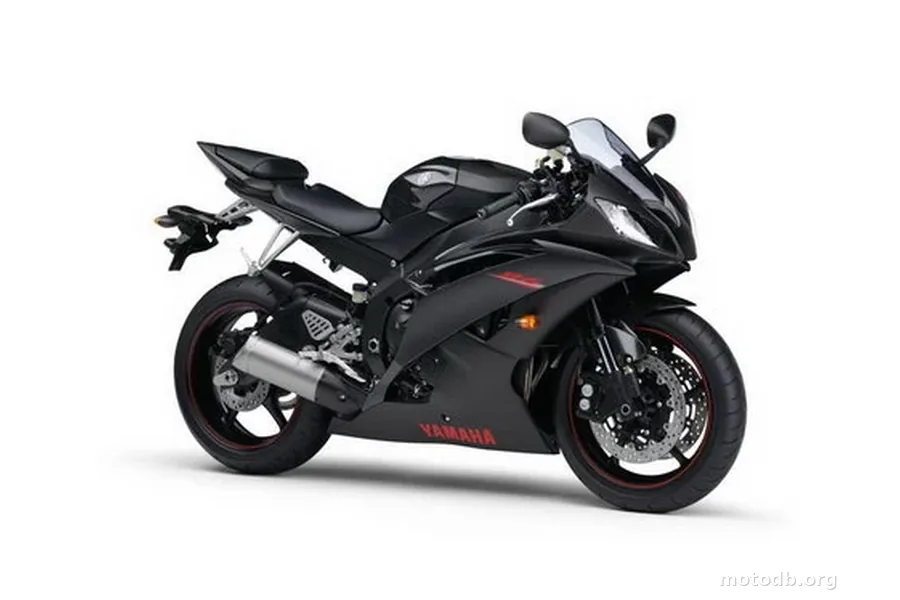
Key performance
Technical specifications
- Displacement
- 599 cc → 600 cc
- Power
- 120.0 ch @ 13000 tr/min (88.3 kW) → 129.0 ch @ 14500 tr/min (94.9 kW)
- Torque
- 67.7 Nm @ 11500 tr/min → 58.8 Nm @ 11000 tr/min
- Compression ratio
- 12.4:1 → 13.1:1
- Bore × stroke
- 65,5 x 44,5 mm → 67 x 42,5 mm
- Fuel system
- — → injection
- Frame
- deltabox en alu double longerons → deltabox double poutre en alu
- Front suspension
- Fourche téléhydraulique Ø 43 mm, déb : 130 mm → Fourche téléhydraulique inversée Ø 41 mm, déb : 115 mm
- Front brakes
- Freinage 2 disques Ø 295 mm, étrier 4 pistons → Freinage 2 disques Ø 310 mm, fixation radiale, étrier 4 pistons
- Front tyre
- 120/60-17 → 120/70-17
- Seat height
- 820.00 mm → 850.00 mm
- Fuel capacity
- 17.00 L → 17.30 L
- Weight
- 195.00 kg → —
- Dry weight
- 169.00 kg → 166.00 kg
- New price
- 9 600 € → 11 200 €
Engine
- Displacement
- 600 cc
- Power
- 129.0 ch @ 14500 tr/min (94.9 kW)
- Torque
- 58.8 Nm @ 11000 tr/min
- Engine type
- 4 cylindres en ligne, 4 temps
- Cooling
- liquide
- Compression ratio
- 13.1:1
- Bore × stroke
- 67 x 42,5 mm
- Valves/cylinder
- 4
- Camshafts
- 2 ACT
- Fuel system
- injection
Chassis
- Frame
- deltabox double poutre en alu
- Gearbox
- boîte à 6 rapports
- Final drive
- Chaîne
- Front suspension
- Fourche téléhydraulique inversée Ø 41 mm, déb : 115 mm
- Rear suspension
- Mono-amortisseur, déb : 120 mm
Brakes
- Front brakes
- Freinage 2 disques Ø 310 mm, fixation radiale, étrier 4 pistons
- Rear brakes
- Freinage 1 disque Ø 220 mm, étrier 2 pistons
- Front tyre
- 120/70-17
- Rear tyre
- 180/55-17
Dimensions
- Seat height
- 850.00 mm
- Fuel capacity
- 17.30 L
- Dry weight
- 166.00 kg
- New price
- 11 200 €
Overview
Remember that sensation, your wrist twisted to 14,000 rpm, the engine screaming like a circular saw in a salon. In 2008, the Yamaha YZF-R6 600 was not just a motorcycle; it was a declaration of war against the laws of physics and common sense on the road. As the world began to talk about electronic aids and versatility, Yamaha released this pure track weapon, a machine that demanded everything and forgave little. Its weight, 166 kg dry for the 2008 version, was a figure that sounded almost heavy in the context, but every gram was placed with the intention of a duelist.
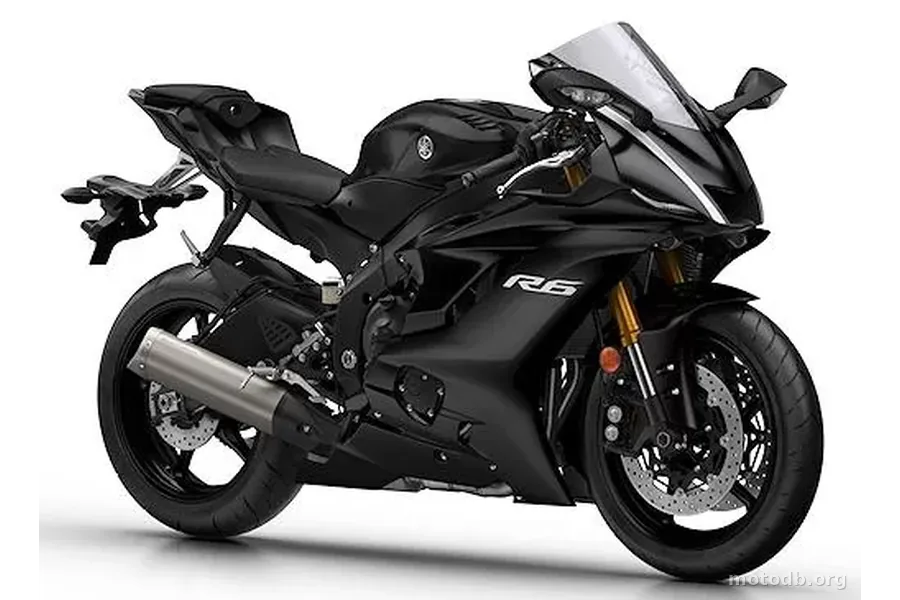
Under the fairing, engineering bordered on obsession. The engine, a high-revving inline four-cylinder, received the YCC-I system, a variable intake stolen from the bigger R1 sister. The idea? To cheat on the length of the intake runners to gain torque at low rpm and unleash all the fury at the top. With a compression ratio raised to 13.1:1, a record for Yamaha at the time, and titanium valves, the engine produced 129 official horsepower. A power that, when compared, made the 120 horsepower of the Honda CBR600RR of the era seem almost pale. It’s far from the 130 horsepower claimed for the 2017 or 2020 models, but in 2008, on a track, it was an absolute weapon. The torque, 58.8 Nm at 11,000 rpm, existed only for those who dared to flirt with the redline.
The chassis, an aluminum Deltabox, had been reworked with precision surgery. Fewer welds, a revised rigidity, reinforced fork tubes. All this for one reason: to transform the slightest input from the handlebars into an instantaneous, almost telepathic change of direction. Radial four-piston brakes bit down on 310 mm discs with a ferocity that could detach shoulders. It was a machine that spoke only one language, that of absolute precision. For a beginner, it was the best way to scare yourself. For an experienced track rider, it was an extension of the will.
Today, when searching for the price of a 2008 Yamaha YZF-R6 600 in France, you find listings around 7,000 to 9,000 euros for a model in good condition, far from the initial 11,200 euros. It is a testament to its longevity. Reviews of the 2003 or 2007 YZF-R6 600 all converge on one point: it is an icon of the 600 sportbike, the apex of an era before anti-pollution standards came to soften characters. It doesn’t flatter, it educates, often with moments of solitude in tight corners if you lack conviction.
So, who is it for? Certainly not for everyday use. The 850 mm seat height, the 17.3-liter tank quickly depleted by sporty riding, and the race-bike riding position make it an execrable companion for traffic jams. Its element is the curve, preferably on a track. It is the motorcycle for those seeking pure, mechanical, unfiltered sensation, not filtered by intrusive electronic aids. It closed a generation with panache, and already looked, with a certain disdain, towards a more aseptic future. A legend, simply, with the rough defects that make great stories.
Practical info
- La moto est accessible aux permis : A
Indicators & positioning
Similar bikes
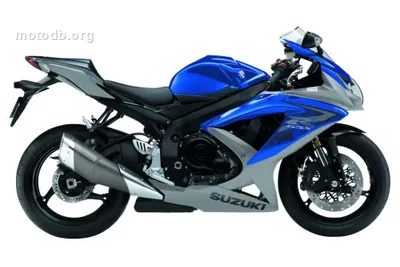
600 GSX-R 25eme anniversaire
Reviews & comments
No reviews yet. Be the first to share your opinion!