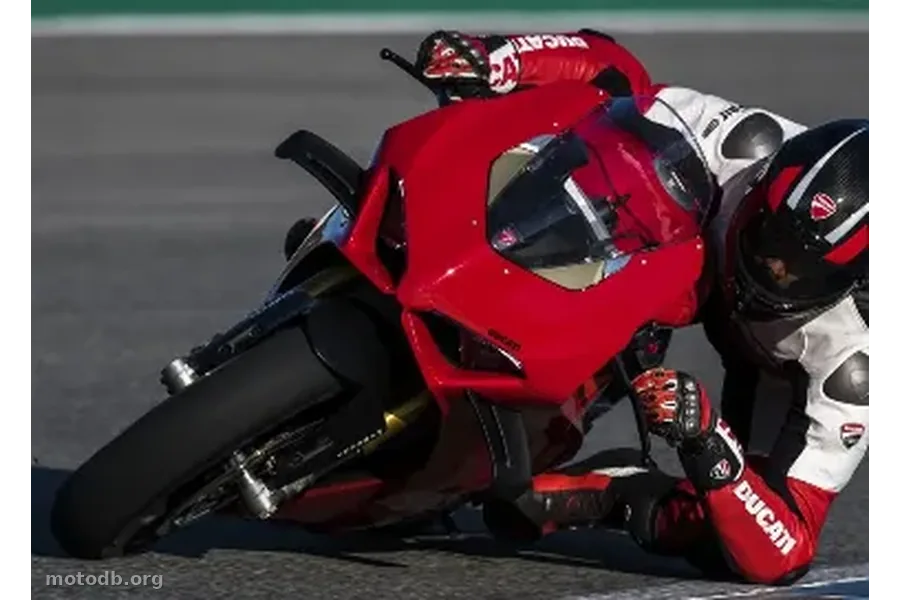
Key performance
Technical specifications
Engine
- Displacement
- 1103 cc
- Power
- 215.5 ch @ 13000 tr/min (158.5 kW)
- Torque
- 123.6 Nm @ 9500 tr/min
- Engine type
- 4 cylindres en L à 90°, 4 temps, calage de type Twin Pulse - 0° - 90° - 290° - 380°
- Cooling
- liquide
- Compression ratio
- 14 : 1
- Bore × stroke
- 81 x 53.5 mm
- Valves/cylinder
- 4
- Camshafts
- 2 ACT
- Fuel system
- Injection Ø 52 mm
Chassis
- Frame
- semi-périmétrique en aluminium
- Gearbox
- boîte à 6 rapports
- Final drive
- Chaîne
- Front suspension
- Fourche téléhydraulique inversée Ø 43 mm, déb : 120 mm
- Rear suspension
- Mono-amortisseur, déb : 130 mm
Brakes
- Front brakes
- Freinage 2 disques Brembo Ø 330 mm, fixation radiale, étrier 4 pistons
- Rear brakes
- Freinage 1 disque Ø 245 mm, étrier 2 pistons
- Front tyre
- 120/70-17
- Rear tyre
- 200/60-17
Dimensions
- Seat height
- 850.00 mm
- Fuel capacity
- 17.00 L
- Weight
- 198.50 kg
- Dry weight
- 175.00 kg
- New price
- 26 490 €
Overview
When Bologna decides not to change a winning formula, it results in a third generation where no one expected it. The Ducati Panigale V4 (2024) should have been replaced by a successor, as is the natural cycle for the brand’s superbikes. But, facing the commercial success of the V4 S, the best-selling version of the range, the engineers preferred to refine the knife rather than start from scratch. A choice that holds up, especially when the knife in question already delivers 215.5 horsepower at 13,000 rpm on a machine weighing 198.5 kg fully fueled.
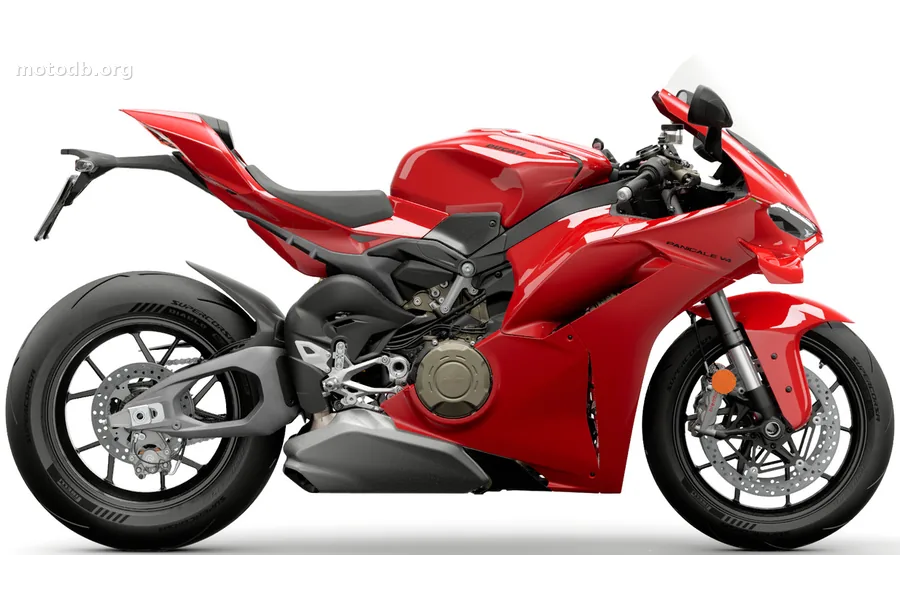
What immediately strikes you about this 2024 version is the consistency of the work performed on the Desmosedici Stradale engine. The 90° L-twin cylinder engine, with its Twin Pulse timing that gives it that incomparable sound between a twin and a four-cylinder, receives a new oil pump and improved fan thermal management. The numerical result seems modest, 1.5 horsepower more than the previous generation, but it’s the way this power is released that changes. Full mode now allows the 215 horsepower from the second gear, and the gearbox, revised in the spirit of the Ducati Panigale V4 R, lengthens the first gears to better suit track use without sacrificing fluidity on the road. The top gear also gains 1.8%, which, combined with the extra watts, promises a theoretical top speed of 300 km/h. Difficult to argue.
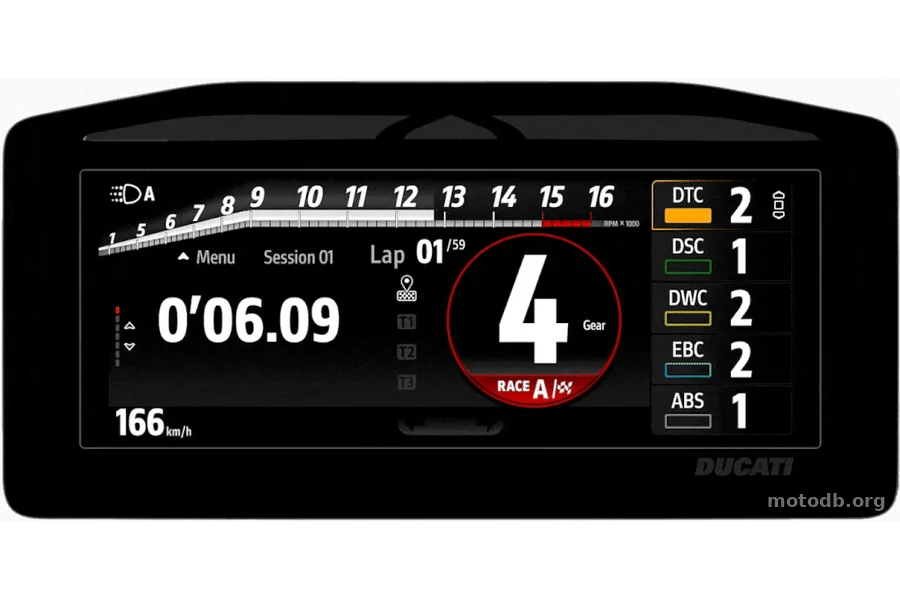
Facing the Aprilia RSV4, its most direct rival in terms of displacement and circuit ambitions, the Ducati Panigale V4 plays a different card. The Italian from Noale bets on a claimed versatility; the Bolognese assumes its track orientation with a touch of concession for the road. The four riding modes illustrate this philosophy well. Race A releases everything from the throttle opening, with cornering ABS and traction control DTC Evo 3 set to level 3. Race B moderates the torque on the first three gears for technical circuits or degraded asphalt. Sport activates the Slide by Brake function for those who want to play with the rear on corner entry. Street limits power to 150 horsepower and tightens all safety nets for bearable daily use. The 6-axis IMU inertial unit monitors all of this, supported by wheelie control DWC Evo, slide control DSC, and the up/down shifter DQS Evo 2, whose ignition management has been refined for even more transparent gear changes.
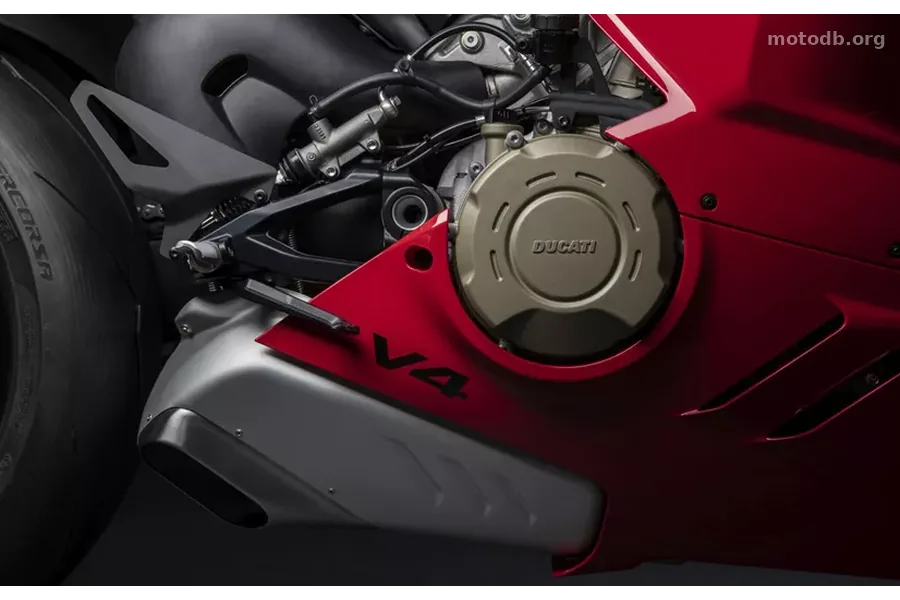
The chassis of the standard version rests on a semi-perimeter aluminum frame, a 43 mm inverted fork, and a swingarm whose pivot has moved up 4 mm to reduce wheelie tendencies on corner exit. Four-piston Brembo calipers clamp 330 mm front discs, a 245 mm rear disc. It’s reference-grade braking hardware for open road use, and it’s precisely there that the version S widens the gap with its Öhlins suspension and forged wheels. For those searching on the Ducati Panigale V4 used market, this distinction between V4 and V4 S remains the most structuring criterion of choice.
The question of price remains. At €26,490 for the base version, the Ducati Panigale V4 positions itself in the high range of hypersports available at dealerships. It’s an investment justified by the density of embedded technology, but which definitively closes the door to motorcyclists seeking their first large-displacement machine. This machine is aimed at experienced riders, capable of reading and exploiting the feedback from sophisticated electronics, and ideally holders of a subscription to their regional circuit. For the rest of the world, it will remain what it has always been since its first generation, an icon to admire from afar, or to tame with respect.
Standard equipment
- Assistance au freinage : ABS
- Nombre de mode de conduite : 4
- Taille de l'écran TFT couleur : 12,70 cm / 5 pouces
- ABS Cornering
- Jantes aluminium
- Shifter
- Amortisseur de direction
- Indicateur de vitesse engagée
- Aide au départ arrêté (Launch Control)
- Contrôle de traction
- Contrôle anti wheeling
- Embrayage anti-dribble
- Centrale inertielle
- Contrôle du frein moteur
Practical info
- La moto est accessible aux permis : A
Reviews & comments
No reviews yet. Be the first to share your opinion!