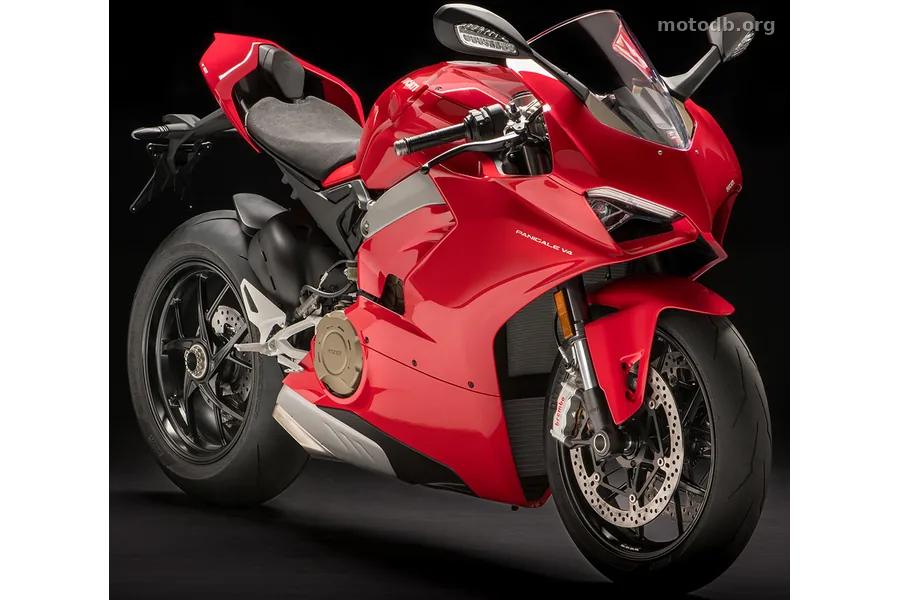
Key performance
Technical specifications
Engine
- Displacement
- 1103 cc
- Power
- 214.0 ch @ 13000 tr/min (156.2 kW)
- Torque
- 124.0 Nm @ 10000 tr/min
- Engine type
- V4, four-stroke
- Cooling
- Liquid
- Compression ratio
- 14.0:1
- Bore × stroke
- 81 x 53.5 mm
- Valves/cylinder
- 4
- Camshafts
- 2 ACT
- Fuel system
- Injection. Electronic fuel injection system. Twin injectors per cylinder. Full ride-by-wire elliptical throttle bodies.
- Valve timing
- Desmodromic valve control
- Starter
- Electric
Chassis
- Frame
- Aluminium alloy
- Gearbox
- 6-speed
- Final drive
- Chain (final drive)
- Clutch
- Slipper and self-servo wet multiplate clutch with hydraulic control
- Front suspension
- Showa BPF 43mm fork
- Rear suspension
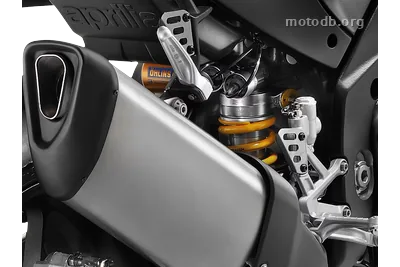
- Fully adjustable Sachs unit. Aluminium single-sided swingarm.
- Front wheel travel
- 120 mm (4.7 inches)
- Rear wheel travel
- 130 mm (5.1 inches)
Brakes
- Front brakes
- Double disc. ABS. Floating discs. Radially mounted.
- Rear brakes
- Single disc. ABS. Two-piston calipers.
- Front tyre
- 120/70-ZR17
- Front tyre pressure
- 2.30 bar
- Rear tyre
- 200/55-ZR17
- Rear tyre pressure
- 2.10 bar
Dimensions
- Seat height
- 830.00 mm
- Wheelbase
- 1469.00 mm
- Fuel capacity
- 16.00 L
- Weight
- 198.00 kg
- Dry weight
- 175.00 kg
- New price
- 22 490 €
Overview
Thirty years of twins, thirty years of engines roaring and polarizing, and then Ducati draws a line. Not a line, a sawtooth. With the Ducati Panigale V4, Bologna turns the page of its own mythology to write something entirely new, even if it upsets its most devoted followers.
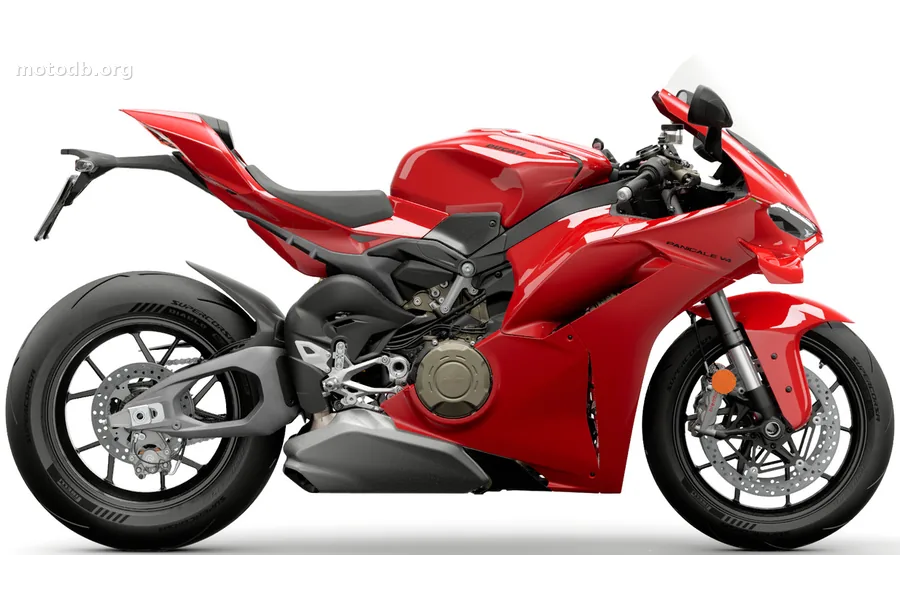
The figure that strikes you first is 214. One hundred fourteen horsepower more than the average for a family sedan driver. This 1103 cm3 V4, based on the dimensions of the MotoGP engine with an 81 mm bore, develops its maximum power at 13,000 rpm and a torque of 124 Nm at 10,000 rpm. The raw figures of the Ducati Panigale V4 technical specifications are dizzying, but they deserve to be put into perspective. The specific output of this engine, around 194 hp per liter, remains slightly higher than that of a CBR 1000 RR. Ducati is therefore playing on displacement to crush the competition in absolute figures, more than on revolutionary engine efficiency. It’s honest to say that. What is less common, however, is the reverse-rotating crankshaft, the twin-pulse timing that acoustically simulates a twin-cylinder engine, and the variable admission with geometry changing according to the engine speed. The mechanics feel as much like a racetrack as a precision engineering workshop.
The chassis follows the same logic of controlled disruption. The "Front Frame" perimeter aluminum frame weighs only four kilos, less than that of the previous twin-cylinder Panigale, which is a feat considering the machine totaled 175 kilos dry at the time of its launch. A power-to-weight ratio of 1.23 hp/kg places it ahead of all its four-cylinder rivals on this criterion. The suspensions abandon the 50 mm Marzocchi fork for a 43 mm Showa BPF, and the Sachs shock absorber moves to a classic central position. A pragmatic choice, sometimes disconcerting for purists, but one that works. Radial-mounted Brembo Stylema calipers on 330 mm floating discs complete a technically very refined front end.
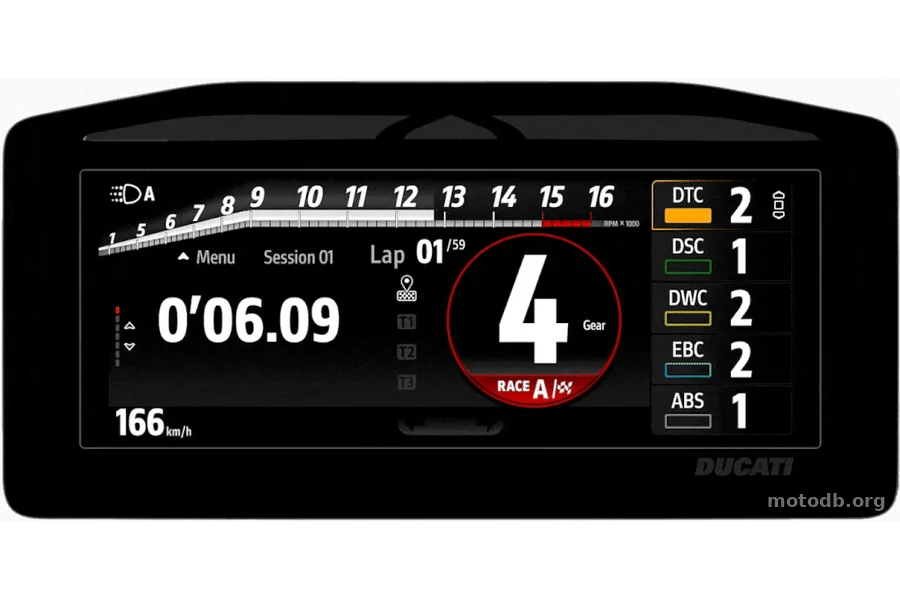
Electronics is what Ducati has been doing best for years, and the Ducati Panigale V4 concentrates all its know-how. Three-level Cornering ABS, DTC EVO traction control on eight settings, rear lift management, bidirectional shifter that communicates with the inertial sensor, launch control. Three riding modes, Street, Sport, and Race, each customizable in its parameters. Race mode unleashes the 214 horsepower without filter, with ABS reduced to the front wheel only. This is the machine for confirmed track riders, those who seek in a used Ducati Panigale V4 access to this level of technology at a reduced price compared to the 22,490 euros of the new one.
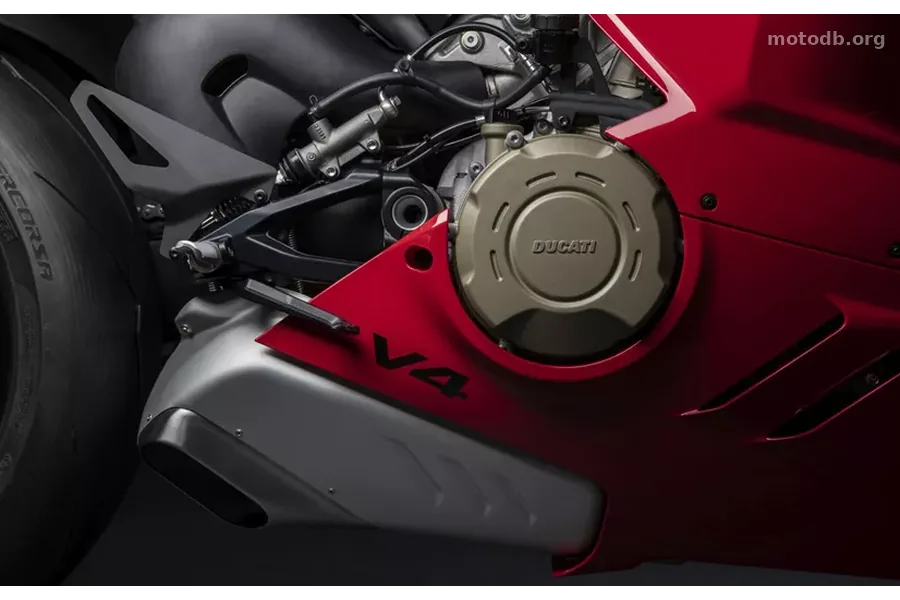
This price, indeed, positions the base V4 in a tense competitive zone facing the Yamaha R1 and the Kawasaki ZX-10R. But Ducati isn't really playing on the same ground. The brand has built around this base a vertical range that runs from the version S with semi-active Öhlins suspensions to the Ducati Panigale V4 Superleggera, the price of which defies understanding and whose power exceeds 230 horsepower. Between the two, the Ducati Panigale V4 R and Ducati Panigale V4 SP2 occupy increasingly exclusive niches, for riders who know the difference between an approach corner and a lean-in. The top speed announced at 300 km/h on the standard version is enough to confirm that this machine has little to do with the Parisian ring road on a Tuesday morning.
The only criticism that can be made without beating around the bush concerns the design. For a mechanical change of this magnitude, the bodywork remains too close to the 1299 Panigale. The headlights concealed in the air intakes, the muscular but familiar lines. Ducati played the visual continuity where a clear break was expected. On a 2020 or 2021 Ducati Panigale V4, aesthetic evolutions will remain marginal. The revolution was under the fairing, not on top. It’s not a fatal flaw, it’s simply a missed opportunity to visually affirm what the engine already says very loudly.
Standard equipment
- Assistance au freinage : ABS in curves
- Bluetooth
Practical info
- La moto est accessible aux permis : A
Reviews & comments
No reviews yet. Be the first to share your opinion!