Key performance
Technical specifications
Engine
- Displacement
- 1099 cc
- Power
- 164.0 ch @ 9750 tr/min (120.6 kW)
- Torque
- 122.6 Nm @ 8000 tr/min
- Engine type
- Bicylindre en L à 90°, 4 temps
- Cooling
- liquide
- Bore × stroke
- 104 x 64.7 mm
- Valves/cylinder
- 4
- Camshafts
- 2 ACT
- Fuel system
- Injection
Chassis
- Frame
- treillis à section ovale hybride
- Gearbox
- boîte à 6 rapports
- Final drive
- Chaîne
- Rear suspension
- Monoamortisseur ExtremeTech, déb : 130 mm
Brakes
- Front brakes
- Freinage Brembo
- Rear brakes
- Freinage 1 disque
- Front tyre
- 120/70-17
- Front tyre pressure
- 2.30 bar
- Rear tyre
- 190/55-17
- Rear tyre pressure
- 2.30 bar
Dimensions
- Fuel capacity
- 16.00 L
- Dry weight
- 164.00 kg
- New price
- 39 300 €
Overview
Imagine a sheet of carbon stretched over a trellis frame, a Ducati twin growling under the seat, and a price tag that would make any accountant choke. That's exactly what Bimota offers with the DB7 in its Oro Nero version — a machine that has nothing in common with a mass-produced sportbike, and makes no secret of it.
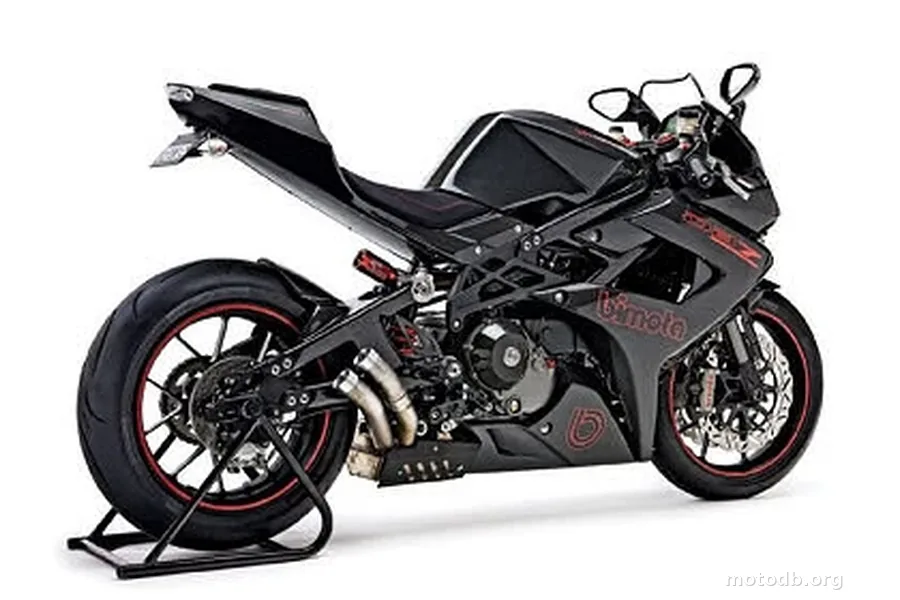
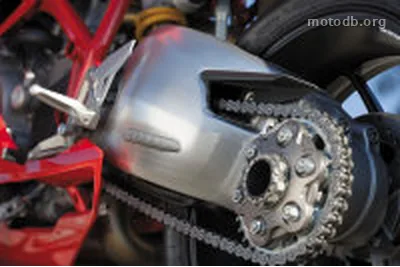
The construction philosophy is radical: carbon fiber here is not a cosmetic shell applied over a conventional structure to justify a premium price. It constitutes the machine in its smallest details. The swingarm is carved from carbon fiber, the self-supporting seat likewise, the tank shrouding as well. Even certain elements of the hybrid oval-section trellis frame, connected to billet-machined aluminum plates, use the same material. The result tips the scales at 164 kg fully fueled — a figure that takes on its full significance when set against the claimed power output.
Because beneath that sculpted fairing beats the Ducati 1098 twin in a version reworked by Bimota, pushed to 164 horsepower at 9,750 rpm with 122.6 Nm of torque available at 8,000 rpm. A power-to-weight ratio of one to one — in other words, one horsepower per kilogram. On a CBR1000RR or an R1 of the same era, that ratio simply doesn't exist, and those machines cost ten times less. That is the entire Bimota logic: selling an exceptional object to those who make no compromises, not a sports transportation tool.
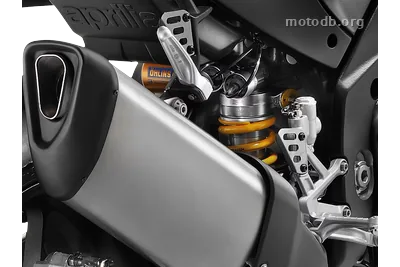
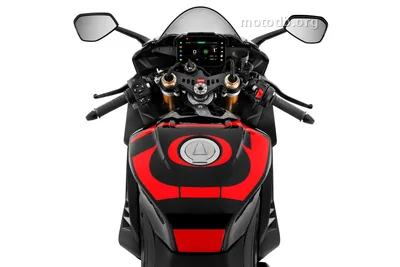
The chassis follows the same demanding philosophy. The Marzocchi inverted fork is fitted with radial Brembo calipers at the end of its travel, which have become the undisputed reference on all top-tier Italian sportbikes. The ExtremeTech rear shock offers 130 mm of travel. The instrument cluster, more sophisticated than on the standard DB7, includes a lap timer function and allows riding data to be exported to a computer. This is not for the weekend rider commuting back and forth to work — it's for the rider who knows their braking points to the meter and wants to compare sector times in cold blood.
At €39,300, the DB7 Oro Nero costs more than a top-end Japanese hypersport plus the entry price at Bimota. The strictly limited production run hammers the point home: this is not a motorcycle you buy, it's a piece you acquire. It's hard to fault it on technical grounds, but one must be clear-eyed about its real-world use. With 16 liters of fuel capacity, an unknown seat height, and a top speed of 280 km/h, it is built for the track or open mountain roads — not urban gridlock. The intended audience numbers in the dozens worldwide, which, in a certain sense, is itself the best sales argument.
Practical info
- La moto est accessible aux permis : A
Reviews & comments
No reviews yet. Be the first to share your opinion!