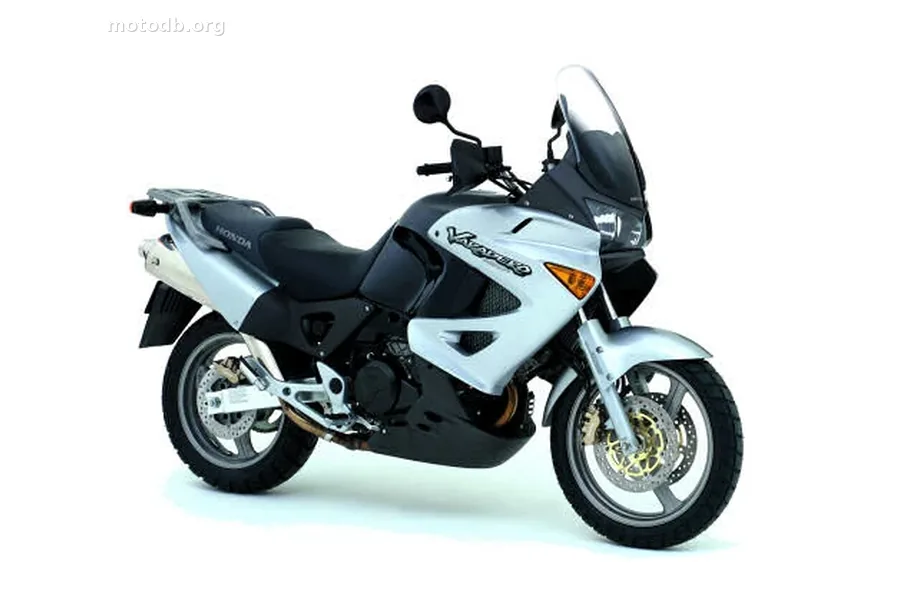
Key performance
Technical specifications
Engine
- Displacement
- 996 cc
- Power
- 95.0 ch @ 8000 tr/min (69.9 kW)
- Torque
- 97.1 Nm @ 6000 tr/min
- Engine type
- Bicylindre en L à 90°, 4 temps
- Cooling
- liquide
- Compression ratio
- 9.8:1
- Bore × stroke
- 98 x 66 mm
- Valves/cylinder
- 4
- Camshafts
- 2 ACT
- Fuel system
- Injection Ø 42 mm
- Starter
- Electric
Chassis
- Frame
- Treillis en acier, moteur porteur
- Gearbox
- boîte à 6 rapports
- Final drive
- Chaîne
- Clutch
- Wet, multiplate with coil springs
- Front suspension
- Fourche téléhydraulique Ø 43 mm , déb : 155 mm
- Rear suspension
- Monoamortisseur Pro-link, déb : 145 mm
Brakes
- Front brakes
- Freinage 2 disques Ø 296 mm, étrier 3 pistons
- Rear brakes
- Freinage 1 disque Ø 256 mm, étrier 3 pistons
- Front tyre
- 110/80-19
- Front tyre pressure
- 2.50 bar
- Rear tyre
- 150/70-17
- Rear tyre pressure
- 2.50 bar
Dimensions
- Seat height
- 838.00 mm
- Wheelbase
- 1560.00 mm
- Ground clearance
- 185.00 mm
- Fuel capacity
- 25.00 L
- Weight
- 262.00 kg
- Dry weight
- 235.00 kg
- New price
- 10 760 €
Overview
In 2003, it still took character to choose a large trail bike. The BMW R 1150 GS dominated the landscape, and the others had to distinguish themselves with specific arguments. The Honda XL 1000 V Varadero of that year played a unique card: that of the engine. This 90° V-twin, a veritable surgical transplant from the VTR 1000 Firestorm sportbike, gave it a unique voice in the category. With 95 horsepower delivered at 8000 rpm and a torque of 97 Nm at 6000 rpm, it was neither the most powerful nor the most torquey, but its sound and response were a liveliness that was sorely lacking in the more placid engines of its competitors. This character came at a price, notably at the level of the average fuel consumption of the Honda XL 1000 V Varadero, often pointed out as a weak point by owners.
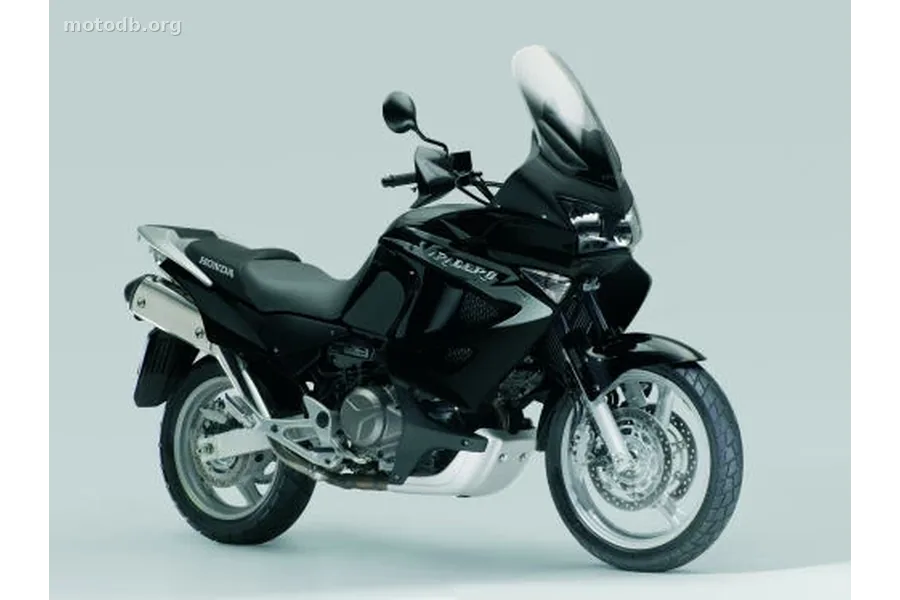
Honda had brought in some welcome corrections to this generation. The facelift was subtle but effective: a modernized dashboard with an onboard computer, finally allowing monitoring of instantaneous fuel consumption, and an adjustable screen improving protection. The 25-liter tank adopted a hinge-mounted cap, an obvious feature that was missing from the first version. But the main evolution, the one that really changed the game for long stretches of highway, was the arrival of a sixth gear in the gearbox. This additional gear finally calmed the V-twin, allowing it to turn less quickly at high speed, and contributed to saving about one liter per hundred kilometers on the fuel consumption of a Honda XL 1000 V Varadero 2003. It was a tangible progress.
The downside was increased weight. With 262 kg fully fueled, it had gained weight, a mass that was felt during low-speed maneuvers or during initial tests. However, this weight was partly justified by a stiffened trellis frame and an engine directly attached to it, becoming a structural element. This architecture paid off in handling: the machine was remarkably stable at high speed, a true rock on the highway even beyond 160 km/h. The braking, assisted by the CBS (Combined Braking System), was excellent and instilled great confidence. Only a slight wandering could appear with full luggage, a characteristic common to many trail bikes of that era.
What are the opinions on the Honda XL 1000 V Varadero today? It remains a very endearing machine for those seeking a large trail bike with a vibrant engine and a defined personality, far from the sometimes aseptic placidity of certain competitors. Its comfort, protection, and ease of riding make it a consummate tourer, ideal for long-distance travel. But it requires a certain physical commitment, and its consumption, although improved, remains a point of vigilance for fuel budget calculations. For those who adopt it, upgrades such as a modern lithium battery, such as an Accossato ML LFP14-765 for Honda XL 1000 V Varadero 1000, can help to further reduce mass. Ultimately, this 2003 Varadero was an honest, effective, and charming proposition, which chose personality over technical perfection. A choice that, for some, remains the right one.
Standard equipment
- Assistance au freinage : Double CBS
Practical info
- La moto est accessible aux permis : A
Indicators & positioning
Similar bikes
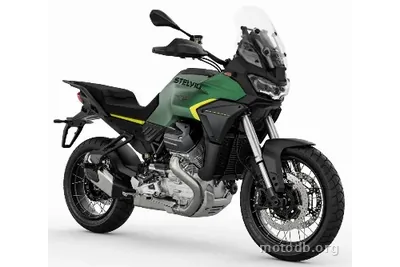
1000 Stelvio
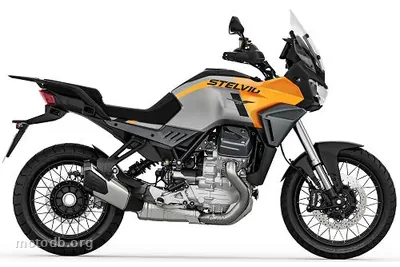
1000 Stelvio PFF Rider Assistance Solution
Reviews & comments
No reviews yet. Be the first to share your opinion!