Key performance
Technical specifications
Engine
- Displacement
- 1198 cc
- Power
- 162.0 ch @ 9500 tr/min (119.2 kW)
- Torque
- 126.5 Nm @ 8000 tr/min
- Engine type
- Bicylindre en L à 90°, 4 temps
- Cooling
- liquide
- Compression ratio
- 11.5 : 1
- Bore × stroke
- 106 x 67.9 mm
- Valves/cylinder
- 4
- Camshafts
- 2 ACT
- Fuel system
- Injection Ø 58 mm
Chassis
- Frame
- Treillis tubulaire en acier relié à 2 platines en alu
- Gearbox
- boîte à 6 rapports
- Final drive
- Chaîne
- Front suspension
- Fourche téléhydraulique inversée Ø 50 mm, déb : 130 mm
- Rear suspension
- Mono-amortisseur, déb : 120 mm
Brakes
- Front brakes
- Freinage 2 disques Ø 320 mm, fixation radiale, étrier 4 pistons
- Rear brakes
- Freinage 1 disque Ø 265 mm, étrier 2 pistons
- Front tyre
- 120/70-17
- Front tyre pressure
- 2.50 bar
- Rear tyre
- 240/45-17
- Rear tyre pressure
- 2.50 bar
Dimensions
- Seat height
- 770.00 mm
- Fuel capacity
- 17.00 L
- Dry weight
- 207.00 kg
- New price
- 20 990 €
Overview
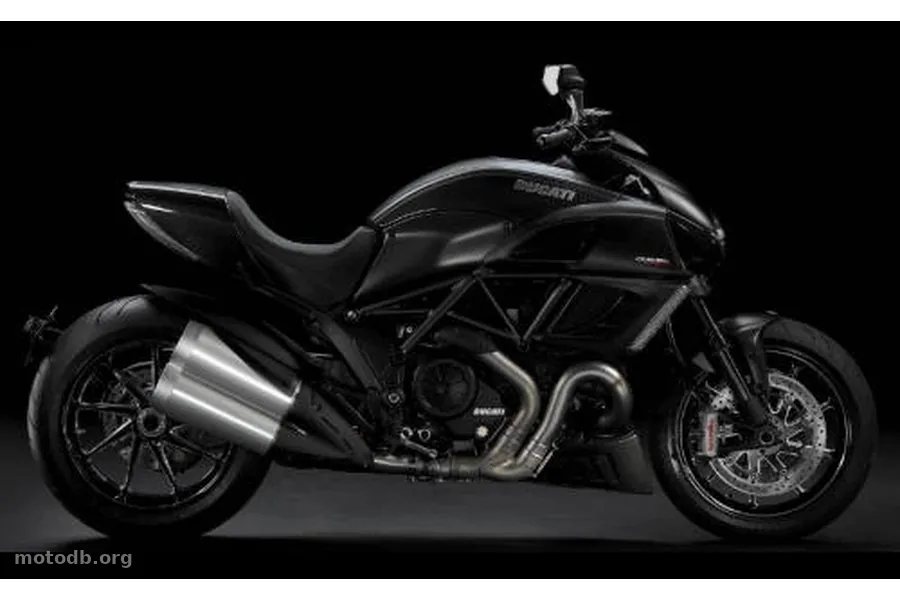
At Ducati, when it comes to moving a model upmarket, the recipe is well known: an S suffix, sometimes R, higher-end suspension, a few machined aluminum parts. With the Diavel, Bologna chose a different path. The premium version is called Carbon, and the name says it all. The 2013 Ducati Diavel Carbon 1200 wraps its tank, seat cowl, and front fender in carbon fiber. The visual result is striking: this woven material, dark and gleaming, reinforces the intimidating character of a machine that already had plenty. But the aesthetic gain isn't everything. The real knockout blow on the scales comes from the forged Marchesini wheels, which shed 2.5 kg of unsprung mass compared to the standard model. On a bike that tips the scales at 207 kg dry, every gram saved in rotating weight is immediately felt in agility. The 50 mm inverted Marzocchi fork, monumental in size, also receives a DLC coating on its stanchions — that black finish that reduces friction and adds a fearsome visual touch.
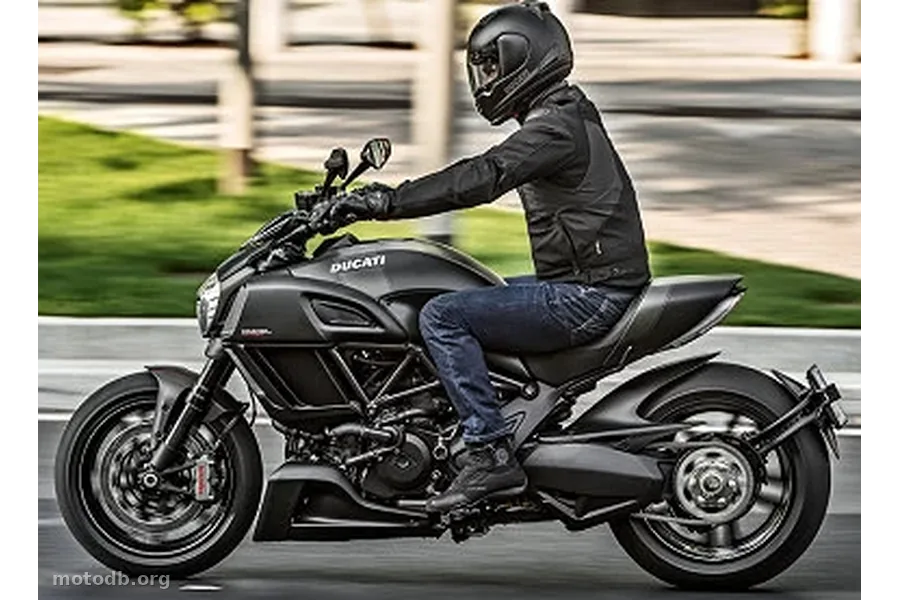
Beneath this show-stopping dress lies a 1198 cc Testastretta L-twin that delivers 162 horsepower at 9,500 rpm and 126.5 Nm of torque at 8,000 rpm. Figures worthy of a superbike, housed in a steel trellis frame with aluminum side plates designed for versatile use. This is the whole ambiguity of the Diavel: half muscular roadster, half uninhibited power cruiser, it refuses to pick a side. With a 240 mm rear tire, you'd expect an ocean liner through a series of bends. Yet this bike leans to 41 degrees and threads through corners with an ease that leaves you bewildered on the first ride. The 11.5:1 compression ratio and 106 x 67.9 mm bore and stroke betray a sporty engine character — short and fierce — that pushes the machine to a top speed of 250 km/h.
On the equipment front, Ducati didn't cut corners. Three engine maps let you tailor the temperament to your mood or the road. ABS and traction control stand guard — a welcome necessity when 162 horsepower is channeled through such a wide rear tire. Braking relies on two 320 mm front discs with radial-mount four-piston calipers, complemented by a 265 mm rear disc. The seat, perched at just 770 mm, keeps the machine accessible, while the 17-liter tank provides decent range for a twin of this displacement. The keyless ignition system adds a touch of modern convenience that contrasts sharply with the mechanical brutality of the whole package.
Against the competition of its era, the Ducati Diavel Carbon 1200 played in a category it had practically invented. Yamaha's VMAX offered even more displacement and muscle, but with considerably more bulk and less agility. The Triumph Rocket III aimed at an entirely different register, more classic cruiser. At 20,990 euros, the entry price was steep, but consistent with the level of finish and the exclusivity of the machine. This bike is aimed at experienced riders who want to break the mold — bikers tired of conventional roadsters and uncomfortable sportbikes, looking for something that's both spectacular in a parking lot and playful on a winding back road. The Diavel Carbon does nothing like the rest, and that is precisely what makes it so compelling. Its only real flaw may be just that: once you've had a taste, everything else seems a little bland.
Standard equipment
- Assistance au freinage : ABS de serie
Practical info
- La moto est accessible aux permis : A
Indicators & positioning
Similar bikes
XL 1200 SPORTSTER LOW
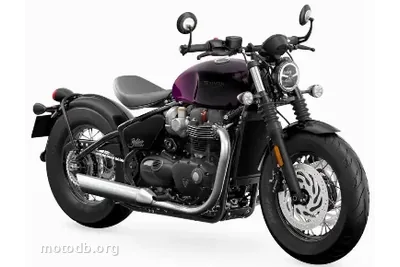
Bonneville Bobber Purple Stealth Edition
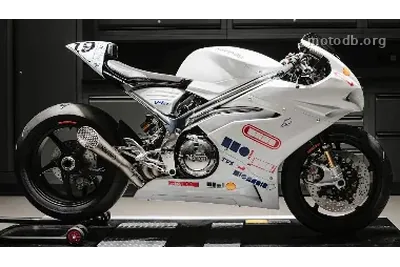
1200 V4 SV One of One 'RCW 588 replica'
Reviews & comments
No reviews yet. Be the first to share your opinion!