Key performance
Technical specifications
Engine
- Displacement
- 124 cc
- Power
- 15.0 ch @ 9250 tr/min (11.0 kW)
- Engine type
- Monocylindre, 4 temps
- Cooling
- liquide
- Compression ratio
- 12 : 1
- Bore × stroke
- 58 x 47 mm
- Valves/cylinder
- 4
Chassis
- Frame
- double poutre périmétrique en alu
- Gearbox
- boîte à 6 rapports
- Final drive
- Chaîne
- Front suspension
- Fourche téléhydraulique inversée Ø 40 mm, déb : 110 mm
- Rear suspension
- Mono-amortisseur, déb : 120 mm
Brakes
- Front brakes
- Freinage
- Rear brakes
- Freinage 1 disque
- Front tyre
- 110/70-17
- Front tyre pressure
- 1.90 bar
- Rear tyre
- 130/70-17
- Rear tyre pressure
- 2.00 bar
Dimensions
- Fuel capacity
- 14.00 L
- Dry weight
- 120.00 kg
- New price
- 4 099 €
Overview
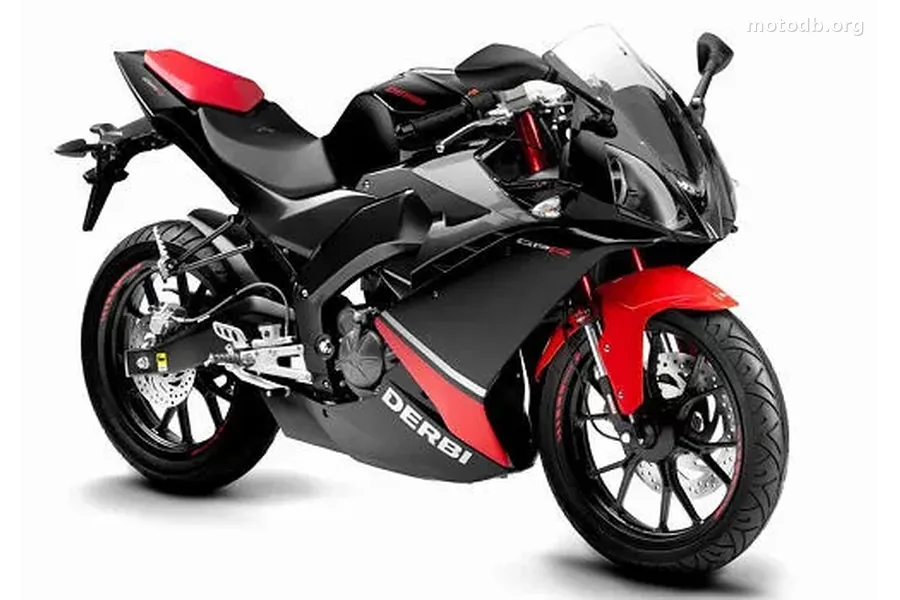
Nineteen world championship titles in the GP 125 class forge a reputation that few brands can claim. Derbi wore this record like an emblem, and when the time came to switch to the four-stroke mandated by new standards, the Spanish didn't choose the easy route. They chose panache.
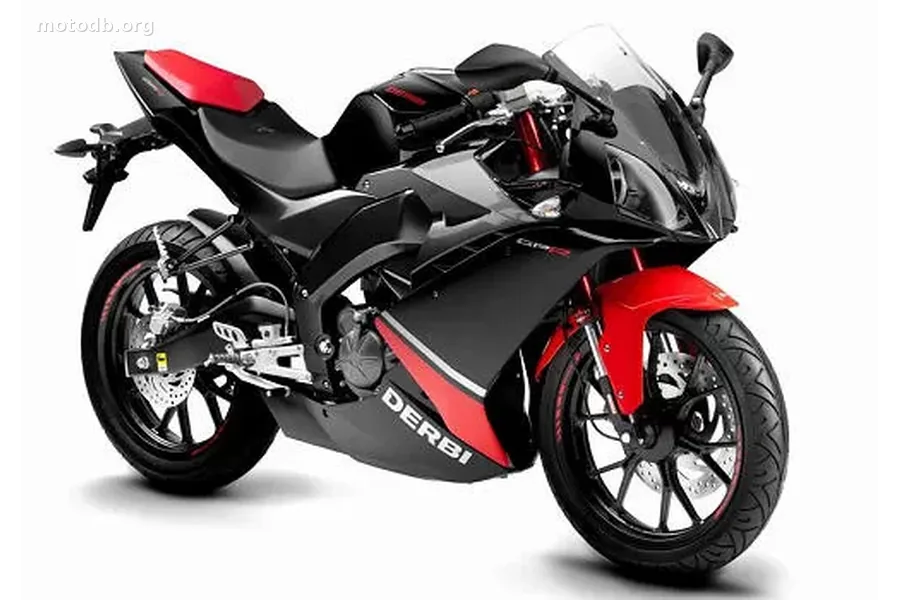
The 124 cc single-cylinder engine revs to 9250 rpm to deliver its regulated 15 horsepower. That figure is identical at Honda, Yamaha, or KTM: everyone is playing in the same league now. The four-stroke has its own virtues, contained consumption, controlled emissions, a more discreet sound at standstill, but you have to accept turning the page on the two-stroke’s nervous accelerations. The GPR accepts 130 km/h top speed on a good straight, with the wind in its favor. That's honest for an A1 license, without being spectacular.
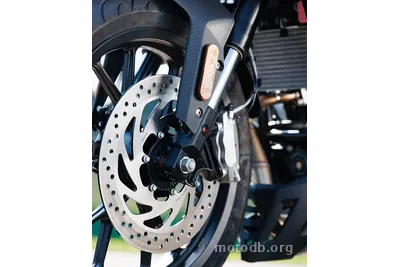
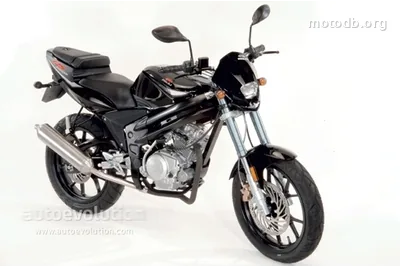
Where Derbi plays a distinctly different part is in the packaging. While the CBR 125 and the YZF-R 125 are equipped with a classic telescopic fork, the GPR features an inverted fork with a 40 mm diameter. To give a reference, it's roughly the same caliber as the first production R1. Paired with a radial caliper clamping a 300 mm disc at the front, the cycle section displays pretensions that far exceed the category. The perimeter frame with double beams made of aluminum and the asymmetrical swingarm of the same alloy complete a resolutely track-oriented picture. The rear shock absorber anchored directly to the swingarm, without linkages, sacrifices a bit of progressiveness for more direct feel. On a winding road, you can feel it.
At 120 kg dry weight and 4099 euros in the catalog, the GPR is aimed at young license holders who want a real sports motorcycle, not a scooter in disguise. The digital dashboard confirms this ambition: bar graph tachometer, stopwatch, shift light, maximum speed memorized. All that’s missing is a fuel gauge for the 14-liter tank, which is a difficult-to-understand oversight on a machine otherwise so well-executed. The exterior lines follow the same guiding principle: central air intake in the headstock, exhaust located under the seat, rear LED lights, slender turn signals. The whole is taut, coherent, without unnecessary embellishments.
The bottom line is clear. The 2013 GPR 125 is probably the best-equipped 125 sports motorcycle in terms of chassis and equipment of its generation. It surpasses its Japanese rivals on almost every visible technical point. The constraint comes from the engine, restricted like the competition, and from a Derbi brand image that remains less established in France than the Japanese large-displacement bikes. For a young rider who wants to learn to ride fast without being hampered by an under-chassised motorcycle, that’s a significant argument.
Practical info
- La moto est accessible aux permis : A
Reviews & comments
No reviews yet. Be the first to share your opinion!