Key performance
Technical specifications
Engine
- Displacement
- 124 cc
- Power
- 15.0 ch @ 9250 tr/min (11.0 kW)
- Engine type
- Monocylindre, 4 temps
- Cooling
- liquide
- Compression ratio
- 12 : 1
- Bore × stroke
- 58 x 47 mm
- Valves/cylinder
- 4
Chassis
- Frame
- double poutre périmétrique en alu
- Gearbox
- boîte à 6 rapports
- Final drive
- Chaîne
- Front suspension
- Fourche téléhydraulique inversée Ø 40 mm, déb : 110 mm
- Rear suspension
- Mono-amortisseur, déb : 120 mm
Brakes
- Front brakes
- Freinage
- Rear brakes
- Freinage 1 disque
- Front tyre
- 110/70-17
- Front tyre pressure
- 1.90 bar
- Rear tyre
- 130/70-17
- Rear tyre pressure
- 2.00 bar
Dimensions
- Fuel capacity
- 14.00 L
- Dry weight
- 120.00 kg
- New price
- 4 299 €
Overview
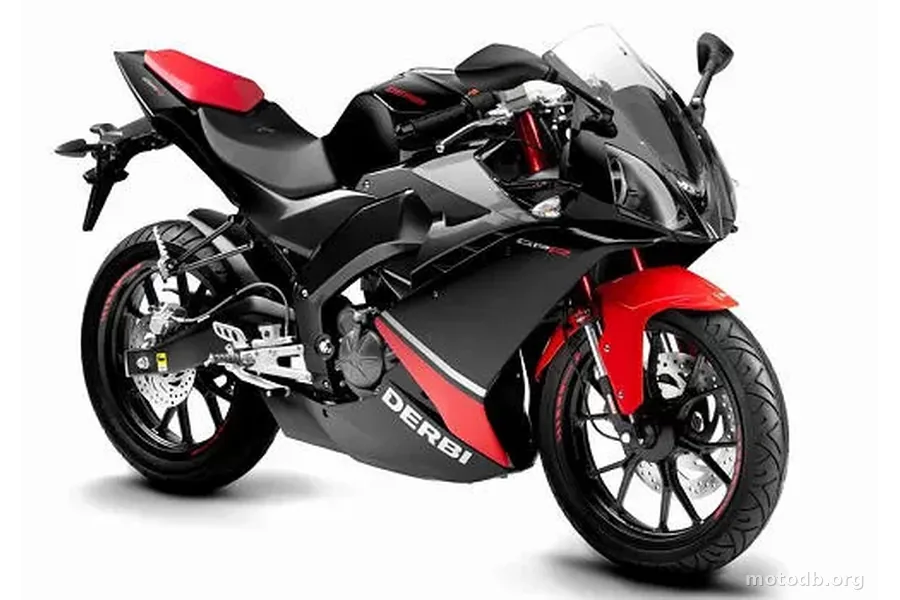
Nineteen world champion titles forge a reputation. Derbi didn’t arrive in the 125 sporty category as a tourist, and the 2009 GPR 125 carries this competitive baggage with a certain insolence. The novelty of this generation lies in a strong technological choice: abandoning the nervous and booming two-stroke for a sensible and clean four-stroke. This is not a capitulation, but an adaptation. All the competition has followed the same path, and the battle is now being fought on other grounds.
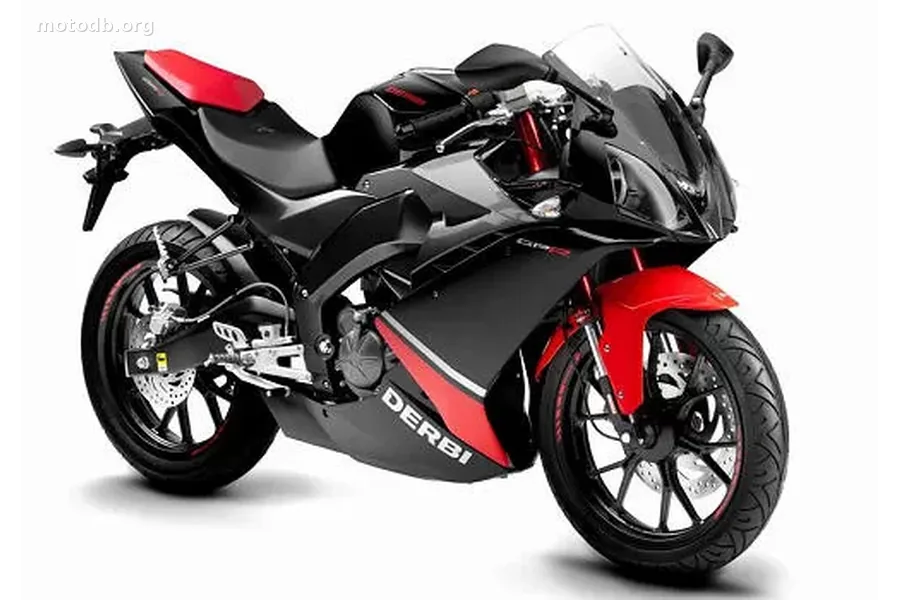
The four-stroke imposes its rules. Consumption decreases, as do emissions, and the neighborhood breathes better. In return, the 15 horsepower delivered at 9250 rpm will never make up for the frantic revs of the transfer cylinder. But the Honda CBR 125 and the Yamaha YZF-R 125 don’t do any better in terms of raw power. At 4299 euros, you are therefore buying a balanced experience rather than a pure adrenaline rush. Top speed is around 130 km/h under the best conditions, which remains honest for an A1 license. The target audience here is young drivers who want a real sporty bike without settling for a plastic copy.
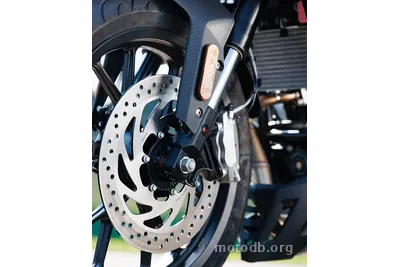
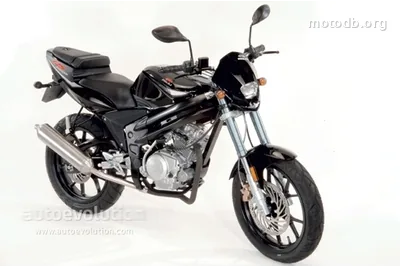
It is precisely here that the GPR scores points over its Japanese rivals. The 40 mm diameter inverted fork, with 110 mm of travel, is not a marketing argument: it is serious equipment, the kind of component that was found on high-displacement sportbikes a few years ago. While the CBR 125 and the YZF-R 125 are content with a conventional fork, the GPR arrives with a technical presentation that deserves respect. The front brake follows the same logic, with a 300 mm disc clamped by a radial caliper. On 120 kilos dry weight, the whole assembly brakes with a real frankness. The silhouette sticks to the program: sharpened fairing, central air intake in the fork head, slipped exhaust under the seat, LED rear light and tapered transparent turn signals. The aesthetics do not cheat, it assumes.
The perimeter aluminum frame and the asymmetrical swingarm in the same material confirm the machine's ambitions. The single rear shock absorber is anchored directly to the swingarm, without interposed linkages. This choice reduces the progressiveness of the suspension, but reinforces the direct feel of the road surface. This is a track philosophy transposed to the road, with all that it implies in terms of structural rigidity. The digital dashboard completes the picture with a bar graph for the revs, a shiflight, a chronograph, the memorized maximum speed and two trip meters. The only notable shortcoming: no fuel gauge, which requires monitoring the mileage on a 14-liter tank. A lapse difficult to justify on a machine sold at this price.
The Derbi GPR 125 is a coherent proposition for those who want a sporty bike equipped like an adult, not a colorful toy. It does not reinvent the physics of 125cc engines, and its 15 horsepower will always be 15 horsepower. But in this segment, the difference is made on the seriousness of the chassis, the quality of the front end and the readability of the whole. On these three points, the Spanish manufacturer does better than average, and that is already a lot.
Practical info
- La moto est accessible aux permis : A
Reviews & comments
No reviews yet. Be the first to share your opinion!