Key performance
Technical specifications
Engine
- Displacement
- 124 cc
- Power
- 15.0 ch @ 9250 tr/min (11.0 kW)
- Engine type
- Monocylindre, 4 temps
- Cooling
- liquide
- Compression ratio
- 12 : 1
- Bore × stroke
- 58 x 47 mm
- Valves/cylinder
- 4
Chassis
- Frame
- double poutre périmétrique en alu
- Gearbox
- boîte à 6 rapports
- Final drive
- Chaîne
- Front suspension
- Fourche téléhydraulique inversée Ø 40 mm, déb : 110 mm
- Rear suspension
- Mono-amortisseur, déb : 120 mm
Brakes
- Front brakes
- Freinage
- Rear brakes
- Freinage 1 disque
- Front tyre
- 110/70-17
- Front tyre pressure
- 1.90 bar
- Rear tyre
- 130/70-17
- Rear tyre pressure
- 2.00 bar
Dimensions
- Fuel capacity
- 14.00 L
- Dry weight
- 120.00 kg
- New price
- 4 099 €
Overview
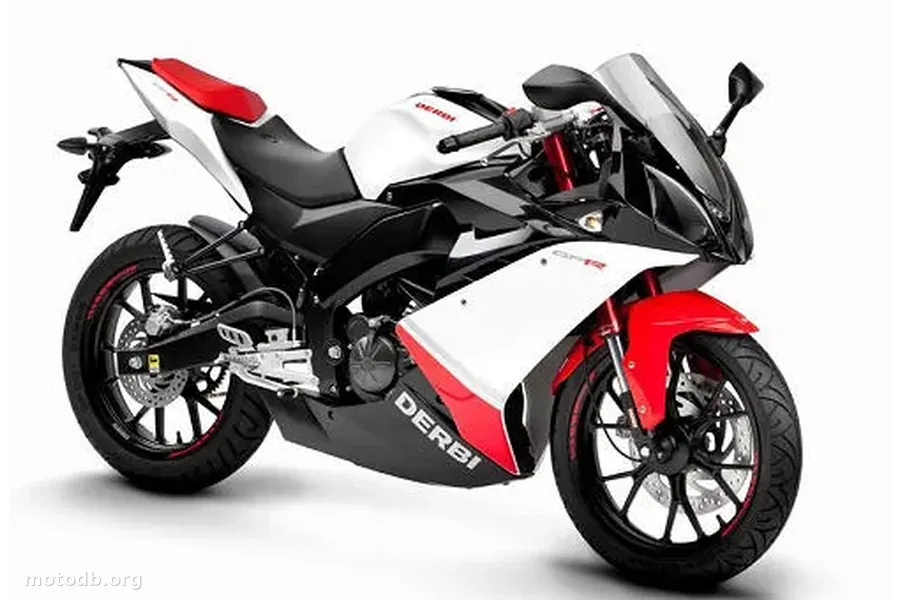
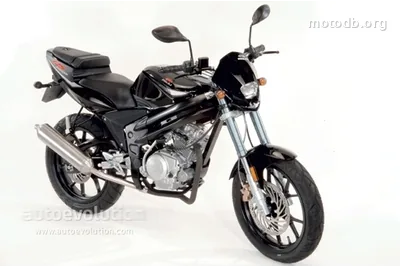
Nineteen Grand Prix world championship titles: that is the legacy that Derbi carries like a card of hardened steel. When the brand from Martorelles decides to launch a road-approved sportbike for young license holders, it doesn't do it halfway. The GPR 125 from 2010 embodies this particular turning point where the two-stroke, dear to the house's DNA, gives way to the four-stroke due to regulatory requirements as much as commercial pragmatism. The mourning is difficult, but the Spanish company has resolved it with a certain elegance.
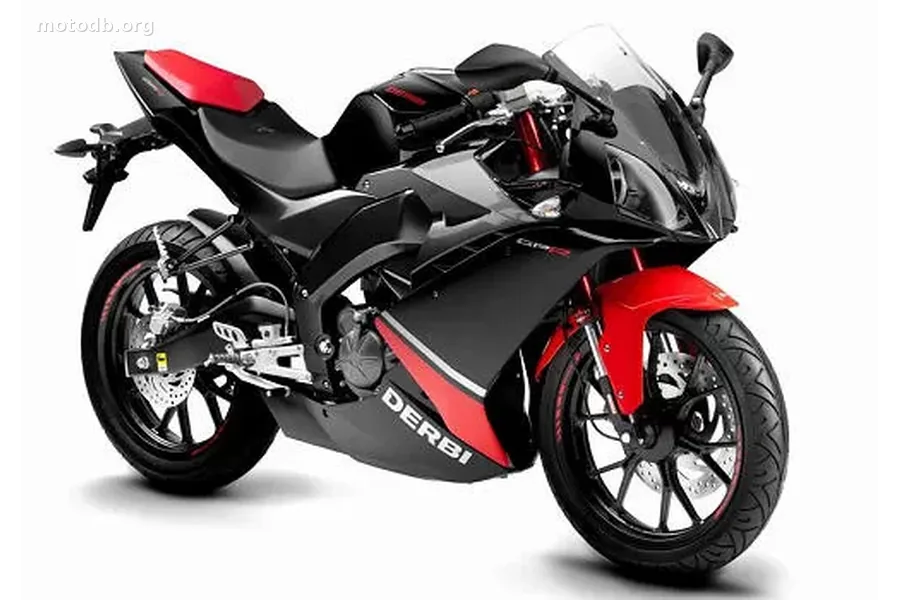
Under the bodywork, the 124 cc single-cylinder engine produces 15 horsepower at 9250 rpm with a compression ratio of 12:1 and a four-valve cylinder head. This is the norm for the segment, and no one escapes it: Honda with its CBR 125R and Yamaha with the YZF-R 125 play in the same league, with very similar figures. The GPR reaches a top speed of 130 km/h, achieved with a bit of patience and drafting on descents. This engine won't change the face of the world, but it consumes little, pollutes reasonably, and doesn't disturb the neighborhood at dawn. For a beginner discovering sporty mechanics and looking for an accessible machine to progress on, it is consistent.
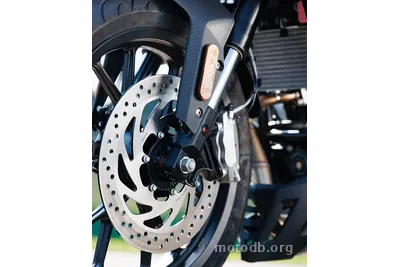
Where Derbi stands out is in the technical choices that dress this sensible engine. The 40 mm diameter inverted telescopic fork, with 110 mm of travel, is not a marketing gimmick: it is a component found on much more powerful superbikes a few years ago. Facing it, the solutions from the Japanese seem almost timid. The front brake, with its well-sized disc pinched by a radial caliper, is in keeping with this ambitious front end. The whole thing weighs 120 kg dry, which gives the machine a welcome lightness for a rider who is still learning to place their trajectory. The perimeter aluminum frame and the asymmetrical swingarm in the same material complete a chassis picture that has nothing to envy to more expensive machines. The rear shock connects directly to the swingarm, without progressive linkages: the behavior will be more telegraphic, less filtered, but that is precisely what a sporty rider is looking for.
The lines leave no room for ambiguity about the machine's intentions. Central air intake at the top of the fork, exhaust located under the seat, LED rear lights, slender indicators in light colors: the GPR 125 reads like a sportbike without trying to deceive anyone. The digital dashboard offers a density of information that far exceeds what is expected in the segment: bar graph tachometer, instantaneous speed, trip meters, clock, stopwatch, shift light and maximum speed memory. The only notable shortcoming is the absence of a fuel level indicator, an omission difficult to justify on a machine sold for 4099 euros and equipped with a 14-liter tank.
At this price, the GPR 125 is aimed at a specific audience: the young A1 license holder who wants a machine with visual character and a solid technical base, without settling for a sporty scooter in disguise. It doesn't invent anything in terms of the engine, but it assumes a level of chassis equipment that makes its Japanese competitors seem like reasonable rather than committed solutions. It is the choice of the rider who wants to feel the road rather than endure it. Derbi's competition record is not just an advertising argument: it has left traces in the engineering choices, and you can feel it as soon as the inverted fork starts working in support.
Practical info
- La moto est accessible aux permis : A
Reviews & comments
No reviews yet. Be the first to share your opinion!