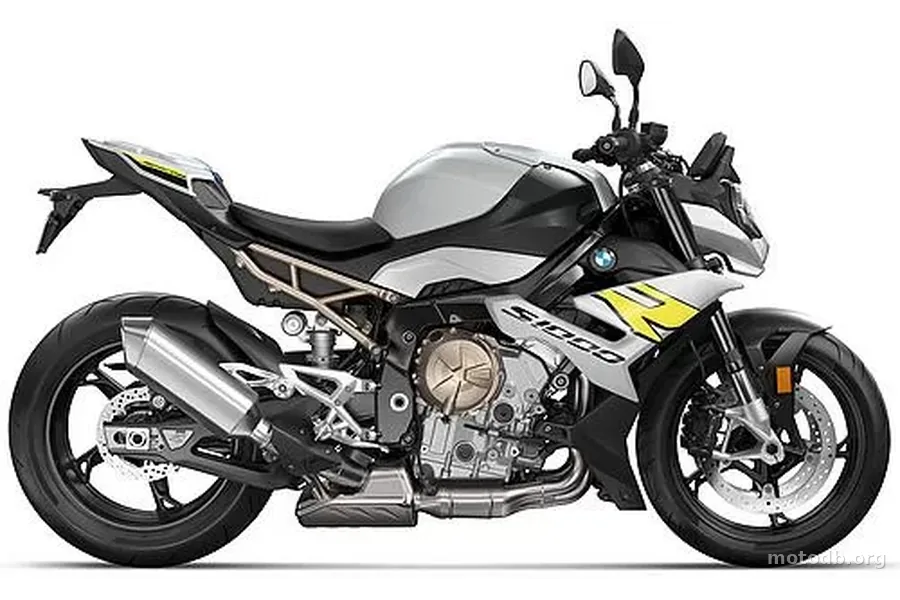
Key performance
Technical specifications
Engine
- Displacement
- 999 cc
- Power
- 165.0 ch @ 11000 tr/min (121.4 kW)
- Torque
- 114.0 Nm @ 9250 tr/min
- Engine type
- 4 cylindres en ligne, 4 temps
- Cooling
- Liquid
- Compression ratio
- 12.5:1
- Bore × stroke
- 80.0 x 49.7 mm (3.1 x 2.0 inches)
- Valves/cylinder
- 4
- Camshafts
- 2 ACT
- Fuel system
- Injection. Electronic port fuel injection, BMS-K+ electronic engine management with RPM cut-off, twin-spark ignition: BMS-O with ride by wire.
- Valve timing
- Double Overhead Cams/Twin Cam (DOHC)
- Lubrication
- Wet sump
- Starter
- Electric
Chassis
- Frame
- Bridge-type aluminum laminate frame with load-bearing engine
- Gearbox
- 6-speed
- Final drive
- Chain (final drive)
- Clutch
- Multi-disc oil bath (anti-hopping) with self-reinforcement
- Front suspension
- Upside-down telescopic fork 46 mm, compression and rebound stage adjustable
- Rear suspension
- Aluminum swingarm, central shock absorber, adjustable rebound and compression damping and adjustable spring preload
- Front wheel travel
- 120 mm (4.7 inches)
- Rear wheel travel
- 117 mm (4.6 inches)
Brakes
- Front brakes
- Double disc. ABS. Floating discs. Four-piston calipers.
- Rear brakes
- Single disc. ABS. Floating disc. Single-piston caliper.
- Front tyre
- 120/70-ZR17
- Front tyre pressure
- 2.50 bar
- Rear tyre
- 190/55-ZR17
- Rear tyre pressure
- 2.90 bar
Dimensions
- Seat height
- 831.00 mm
- Wheelbase
- 1448.00 mm
- Length
- 2057.00 mm
- Width
- 845.00 mm
- Height
- 1228.00 mm
- Fuel capacity
- 16.65 L
- Weight
- 199.00 kg
- New price
- 16 490 €
Overview
Imagine what it would be like to take the S 1000 RR, strip it of its track fairing, graft on a street headlight, and unleash it on the road. That's exactly what BMW has been doing for years with the BMW S 1000 R, and this 2023 version doesn't change that philosophy. It remains in the category of muscular streetfighters, those that produce between 140 and 165 horsepower, far from the absolute madness of 200 horsepower. This positioning is embraced, consistent, and ultimately quite intelligent in the face of competition that sometimes gets carried away in an escalating arms race.
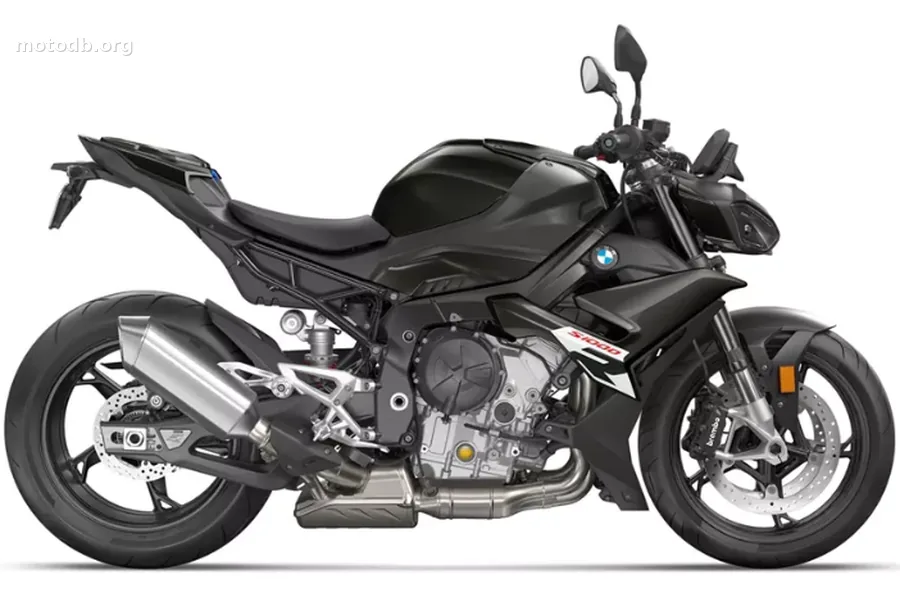
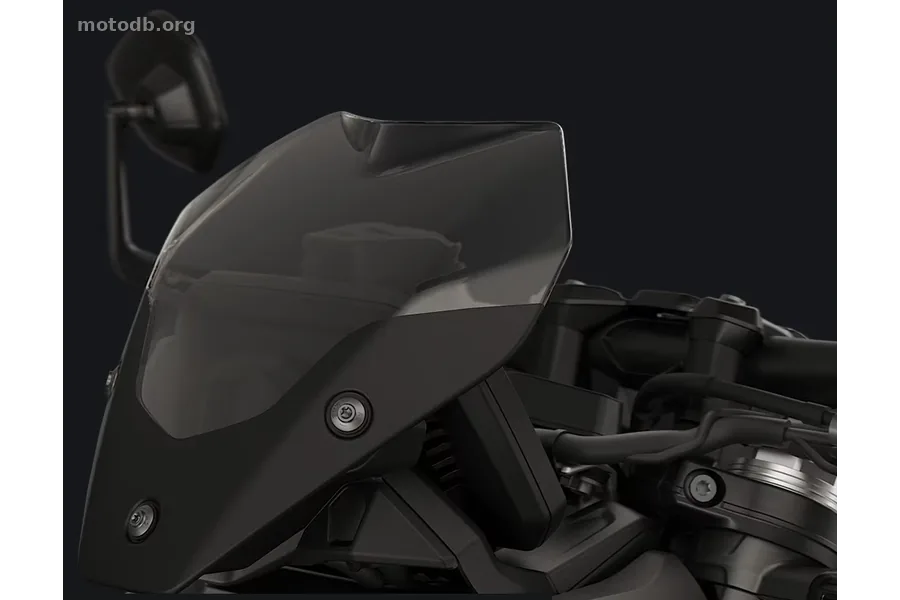
The first striking feature is the face. Those who remember previous generations of the BMW S 1000 R recall a decidedly asymmetrical, aggressive, almost menacing look. This time, the two headlights regard each other with perfect symmetry, in line with the styling of the R 1250 R and other members of the family. The result is clean and modern, but it must be admitted that it loses a bit of character. The bodywork, however, compensates with its sharp appendages that play on the volumes around the massive radiator. It remains a machine that doesn't go unnoticed, especially once the four-cylinder engine is in view.
This engine, precisely. The inline four of 999 cc comes directly from the S 1000 RR, but without the ShiftCam variable cam timing system. BMW has made its choices. What's gained is a more compact engine, five kilos lighter than the previous generation, with a compression ratio increased to 12.5:1 and fuel consumption reduced by 8%. The 165 horsepower peaks at 11,000 rpm, the torque of 114 Nm arrives at 9,250 rpm, and the six-speed gearbox has been revised with the three tallest gears lengthened. In a real-world BMW S 1000 R test, the engine feels rich from the mid-range, with a frank and seamless progression. The 199 km/h top speed is reached in a time that leaves little room for reflection. For comparison, a MT-09 or a Ducati Monster 937 play in a different league, both in terms of raw power and the standard quickshifter livery, which BMW always reserves for options.
In terms of the chassis, the aluminum perimeter frame with curved spars, inherited from the 2018 S 1000 RR, does a solid job. The geometry has been reworked with a 45 mm inverted fork slightly straightened to 24 degrees, which reduces the rake to 96.3 mm for increased agility. The swingarm is lengthened to maintain the wheelbase at 1,448 mm and preserve stability. The lightweight wheels, 1.8 kilo lighter, improve responsiveness to changes in direction. With 199 kg fully fueled, the 2023 BMW S 1000 R remains heavier than an Aprilia Tuono or an MV Agusta Brutale, but the power-to-weight ratio remains among the best in the segment.
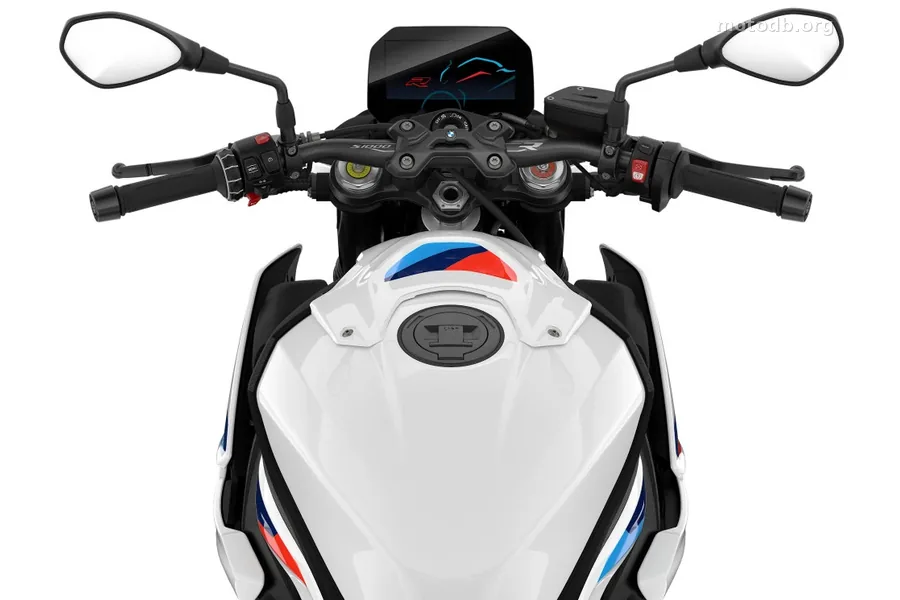
The electronics are probably the area where this generation scores the most points compared to the 2021 and 2020 BMW S 1000 R models. Three riding modes are standard, including Dynamic, a six-axis inertia sensor, ABS Pro cornering included as standard, a more refined DTC traction control than the previous ASC. The 6.5-inch TFT screen displays a density of information that would make many competitors blush, with integrated GPS navigation via the Motorrad app. Semi-active DDC suspensions remain an option, as does the Pro package, which unlocks access to Dynamic Pro mode, MSR engine braking control, and a palette of additional assistance features. The base price is set at 16,490 euros, but the bill quickly climbs once you start ticking the boxes. The price of a Pro-configured BMW S 1000 R easily exceeds 19,000 euros.
This Bavarian roadster is designed for the experienced rider who wants to exploit a superbike engine on a daily basis without becoming a guinea pig for emergencies. It's not a beginner's machine, the 831 mm seat height and the temperament of the four-cylinder engine demand a certain amount of experience. But for the rider looking for a versatile motorcycle, civilized enough for the road and sharp enough for weekend track days, the balance sheet for this 2023 BMW S 1000 R is solid. Not revolutionary, but constantly improved since its debut, and still one of the benchmarks in the sporty maxi-roadster segment.
Standard equipment
- Assistance au freinage : ABS Pro
- Poignées chauffantes
Practical info
- La moto est accessible aux permis : A
Reviews & comments
No reviews yet. Be the first to share your opinion!