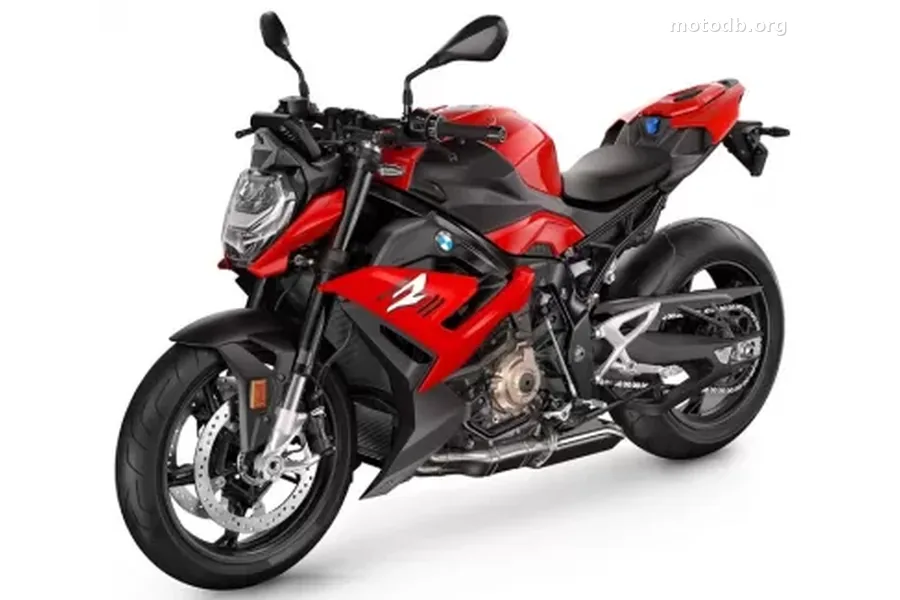
Key performance
Technical specifications
Engine
- Displacement
- 999 cc
- Power
- 165.0 ch @ 11000 tr/min (120.4 kW)
- Torque
- 114.0 Nm @ 9250 tr/min
- Engine type
- In-line four, four-stroke
- Cooling
- Liquid
- Compression ratio
- 12.5:1
- Bore × stroke
- 80.0 x 49.7 mm (3.1 x 2.0 inches)
- Valves/cylinder
- 4
- Camshafts
- 2 ACT
- Fuel system
- Injection. Electronic port fuel injection, BMS-K+ electronic engine management with RPM cut-off, twin-spark ignition: BMS-O with ride by wire.
- Valve timing
- Double Overhead Cams/Twin Cam (DOHC)
- Lubrication
- Wet sump
- Starter
- Electric
Chassis
- Frame
- Bridge-type aluminum laminate frame with load-bearing engine
- Gearbox
- 6-speed
- Final drive
- Chain (final drive)
- Clutch
- Multi-disc oil bath (anti-hopping) with self-reinforcement
- Front suspension
- Upside-down telescopic fork 46 mm, compression and rebound stage adjustable
- Rear suspension
- Aluminum swingarm, central shock absorber, adjustable rebound and compression damping and adjustable spring preload
- Front wheel travel
- 120 mm (4.7 inches)
- Rear wheel travel
- 117 mm (4.6 inches)
Brakes
- Front brakes
- Double disc. ABS. Floating discs. Four-piston calipers.
- Rear brakes
- Single disc. ABS. Floating disc. Single-piston caliper.
- Front tyre
- 120/70-ZR17
- Front tyre pressure
- 2.50 bar
- Rear tyre
- 190/55-ZR17
- Rear tyre pressure
- 2.90 bar
Dimensions
- Seat height
- 831.00 mm
- Wheelbase
- 1439.00 mm
- Length
- 2057.00 mm
- Width
- 845.00 mm
- Height
- 1228.00 mm
- Fuel capacity
- 17.50 L
- Weight
- 199.00 kg
- New price
- 15 890 €
Overview
When Munich decides to strip down its most aggressive superbike to create a roadster, two philosophies clash. One can remain reasonable, delivering a manageable machine with true versatility. Or one can cross the red line and build a show monster. The BMW S 1000 R has always defended the first approach, and this 2022 generation does not deny that heritage.
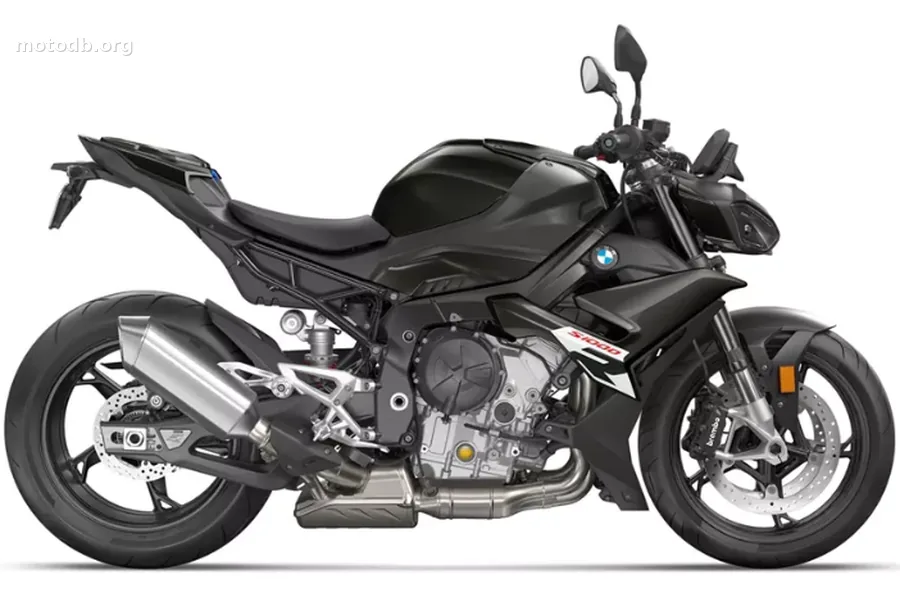
Let's start with the engine, since that's where everything is played. The 999 cc inline four-cylinder engine produces 165 horsepower at 11,000 rpm and 114 Nm of torque at 9,250 rpm. These figures haven't changed from the previous generation, and some potential buyers might complain about it. They would be wrong. Reach 200 km/h in eight seconds from a standstill, then come back and tell me about a lack of power. The S 1000 R doesn’t play in the same league as 200-horsepower hyperfighters derived from Superbikes; it plays in the streetfighter league, with the Ducati Monster 937 and the Yamaha MT-09 as neighbors. In that territory, 165 horsepower is more than enough to settle accounts. The engine has been reworked in depth: compression ratio increased to 12.5:1, fuel consumption reduced by 8%, and above all, five kilos lost compared to the old engine. It remains more responsive on corner exits, better fed at intermediate revs. The six-speed gearbox benefits from three lengthened top gears, the slipper clutch has been reinforced. What the 2022 S 1000 R didn’t inherit from the RR is ShiftCam, the variable cam timing system. A real loss at low revs, but the overall package remains consistent.
The chassis tells a similar story: deep-seated work rather than a spectacular revolution. The aluminum Flex Frame perimeter frame lightens the structure by more than one and a half kilos while also transferring more load to the engine cradle. The 46 mm inverted fork, the reduced rake angle of 24 degrees, the lengthened swingarm that carries the wheelbase to 1,439 mm, the lightweight wheels saving 1.8 kilos: each detail converges on the same objective, making these 199 kilos easier to handle. We are still far from the Transalp roadsters in terms of lightness; Ducati and Aprilia know how to sculpt aluminum with a brutality that Munich engineers have not yet adopted. But the power-to-weight ratio progresses, and that's the figure that really counts in everyday use as well as on the track.
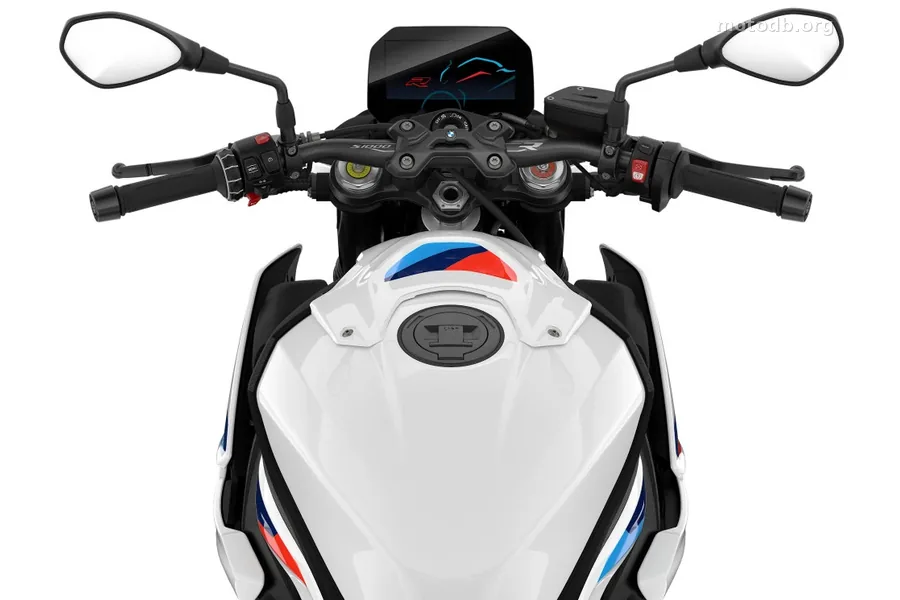
The BMW S 1000 R test reveals a machine that has refined its electronics as much as its mechanics. Three driving modes are now standard, Road, Rain and Dynamic, with traction control DTC managed by a six-axis inertial unit. ABS activates in corners according to the selected mode, which represents a concrete improvement over the previous generation. The 6.5-inch TFT screen inherits from the S 1000 RR with GPS connection via the Motorrad app and an over-rev limiter management that adapts to the engine temperature, starting at 6,000 rpm to gradually rise to 11,000 rpm once the engine is warm. Practical and well thought out. On the other hand, the quickshifter remains an option. At Yamaha with the MT-09 or at Ducati with the Monster 937, it is standard equipment. On a machine at €15,890, this kind of saving is irritating.
The BMW S 1000 R price listed in the catalog can quickly rise. The €3,000 Pro package opens access to advanced riding modes, the MSR engine braking control, the Dynamic Brake Control that cuts the throttle during intense braking phases, and the semi-active DDC suspension that takes 10 milliseconds to adjust. On used versions of the 2019, 2020 or 2021 model years, these options were not always present and it is necessary to check the equipment carefully. This 2022 generation S 1000 R is aimed at an experienced rider who wants a versatile machine, usable on open roads as well as on the track, without the compromises of a pure hyperbike. It does not forgive approximation, it rewards precision. It is not a beginner's motorcycle, and it has never claimed to be.
Standard equipment
- Assistance au freinage : ABS Pro
- Poignées chauffantes
Practical info
- La moto est accessible aux permis : A
Reviews & comments
No reviews yet. Be the first to share your opinion!