Key performance
Technical specifications
No spec differences between these two model years.
Engine
- Displacement
- 125 cc
- Power
- 15.0 ch (11.0 kW)
- Engine type
- Monocylindre, 4 temps
- Cooling
- par air
- Bore × stroke
- 54 x 54 mm
- Valves/cylinder
- 2
Chassis
- Frame
- Double tube triangulaire en acier àdouble poutre
- Gearbox
- boîte à 5 rapports
- Final drive
- Chaîne
- Front suspension
- Fourche inversée Showa Ø 35 mm
- Rear suspension
- Mono-amortisseur, déb : 120 mm
Brakes
- Front brakes
- Freinage
- Rear brakes
- Freinage 1 disque
- Front tyre
- 100/80-17
- Rear tyre
- 130/80-17
Dimensions
- Fuel capacity
- 10.40 L
- Dry weight
- 110.00 kg
- New price
- 2 999 €
Overview
Girona, 1934. Two partners, Riera and Juanola, assemble bicycle accessories in a small Catalan workshop. Nobody bets much on this industrial venture, and yet, nine decades later, Rieju still exists, has been manufacturing motorcycles since 1964 thanks to a historic partnership with Minarelli, and occasionally produces machines worth lingering over. The RS2 is proof of that.
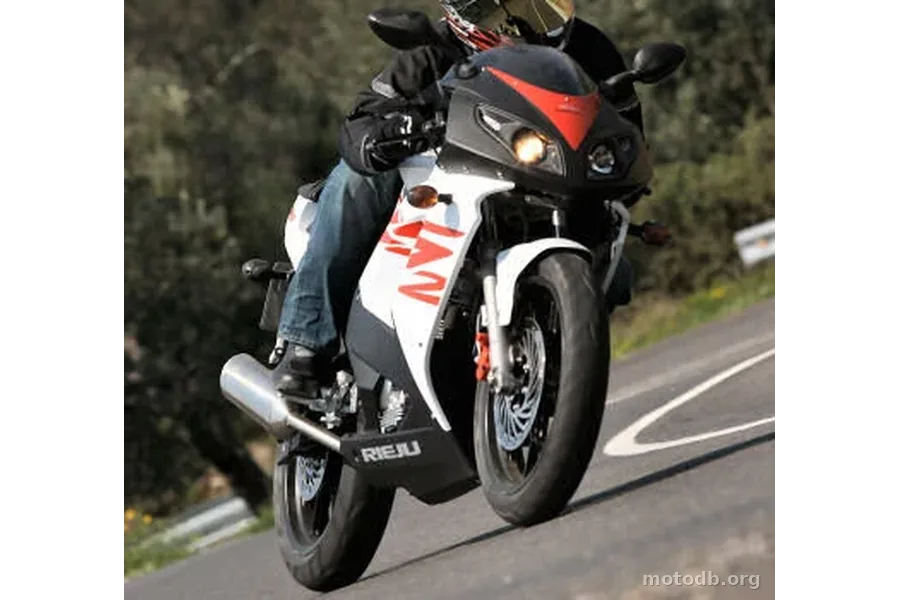
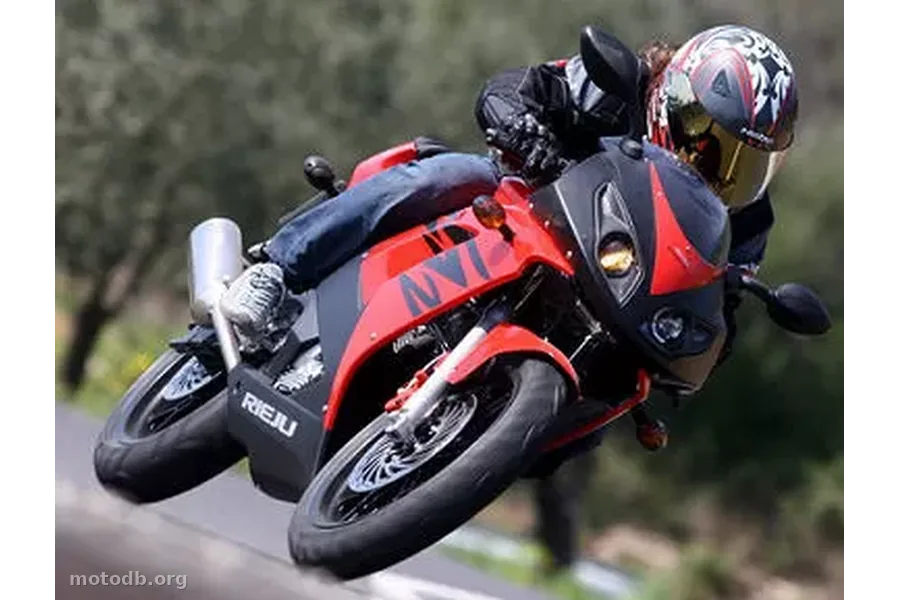
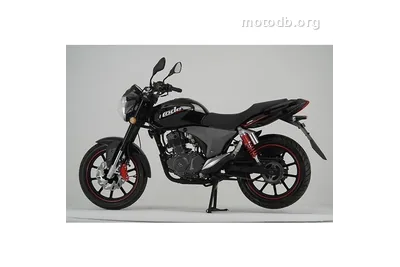
The name announces the color, or rather promises it. RS, two letters that evoke racetracks, taut fairings, razor-sharp lines. On that front, the little Spaniard keeps its promise visually: the fairing is aggressive, the lines are taut, and the steel double-tube triangular frame draws its design inspiration from what Aprilia does on some of its machines. Steel versus aluminum-magnesium, granted, but the visual result is flattering for a 125. The instrument cluster mixes analog and digital with a restraint that cuts through the usual showiness of the segment. The RS2 is a good-looking machine.
Under the bodywork, reality is more pragmatic — and that turns out to be good news. The engine is an air-cooled Yamaha four-stroke single-cylinder, 54 mm bore and stroke, a classic square architecture producing 15 horsepower. It's no rocket, but on a dry weight of 110 kg, that's more than enough to express yourself up to 120 km/h. The appeal of the Yamaha unit lies in its reputation for reliability. Where Italian sportbikes of the same size play the premium equipment card — upside-down forks and radial calipers leading the charge — the RS2 opts for proven mechanical dependability. A coherent choice for a machine that will likely spend its life in urban environments or on small country roads.
The direct competition goes by the name Honda CBR 125, and the comparison is unavoidable. The Rieju lists at around €2,999, about a hundred more than the Japanese machine. For that difference, you gain a noticeably more assertive style and a less conservative silhouette. You may lose a little in terms of dealer network and resale value. The target audience is clearly the young A1 license holder who wants to ride something that looks like a real sportbike without paying the price of larger displacements. On that specific niche, the RS2 has solid arguments.
One final detail, not entirely trivial: Carlos Checa, who had a fine career in the 500cc Grand Prix class, was Spanish champion with Rieju in his youth. That's no guarantee of performance, but it says something about the brand's pedigree. The RS2 clearly deserves better than indifference.
Practical info
- La moto est accessible aux permis : A
Reviews & comments
No reviews yet. Be the first to share your opinion!