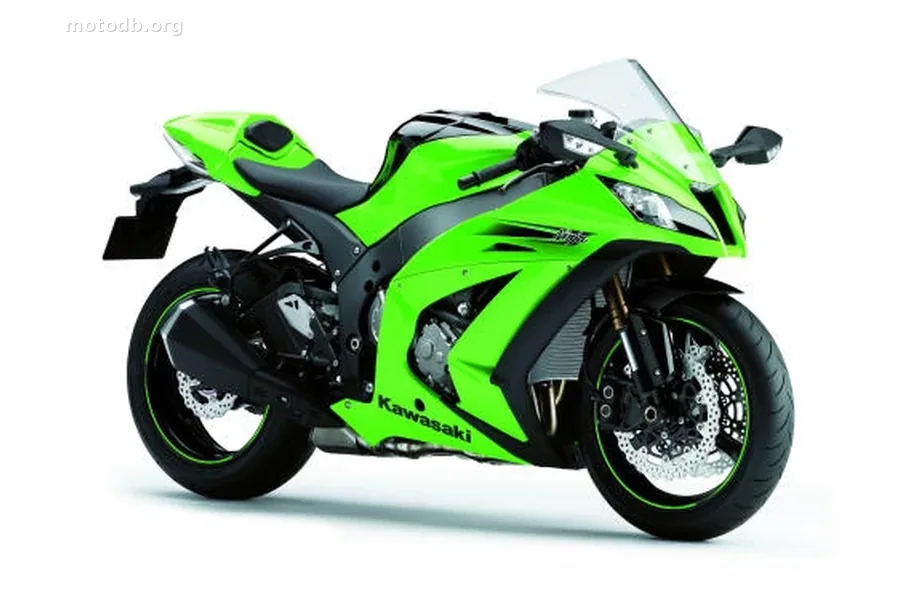
Key performance
Technical specifications
Engine
- Displacement
- 998 cc
- Power
- 200.0 ch @ 13000 tr/min (147.1 kW)
- Torque
- 114.7 Nm @ 11500 tr/min
- Engine type
- 4 cylindres en ligne, 4 temps
- Cooling
- liquide
- Compression ratio
- 13 : 1
- Bore × stroke
- 76 x 55 mm
- Valves/cylinder
- 4
- Camshafts
- 2 ACT
- Fuel system
- Injection Ø 47 mm
Chassis
- Frame
- double poutre périmétrique en alu
- Gearbox
- boîte à 6 rapports
- Final drive
- Chaîne
- Front suspension
- Fourche téléhydraulique inversée BPF Ø 43 mm, déb : 120 mm
- Rear suspension
- Mono-amortisseur, déb : 125 mm
Brakes
- Front brakes
- Freinage 2 disques Ø 310 mm, fixation radiale, étrier 4 pistons
- Rear brakes
- Freinage 1 disque Ø 220 mm, étrier simple piston
- Front tyre
- 120/70-17
- Rear tyre
- 190/55-17
Dimensions
- Seat height
- 813.00 mm
- Fuel capacity
- 17.00 L
- Weight
- 198.00 kg
- New price
- 16 199 €
Overview
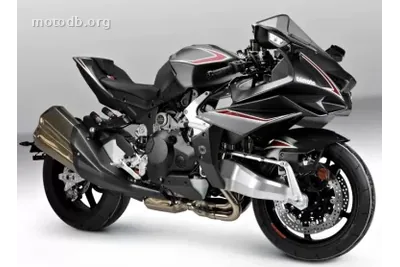
You remember that period in the early 2010s when the hyperbike war was at its peak? The BMW S1000RR had arrived with its 193 horsepower and full ABS, shaking up the Japanese establishment. Kawasaki, with its ZX-10R, couldn't simply stand by. The response in 2011, and then its evolution in 2013, was a declaration of war in its purest form. It's not just a motorcycle; it's a race weapon disguised, forged in the fires of the 24 Hours of Le Mans and WSBK victories. The goal was clear: to reclaim the crown of absolute power and pair it with formidable handling.
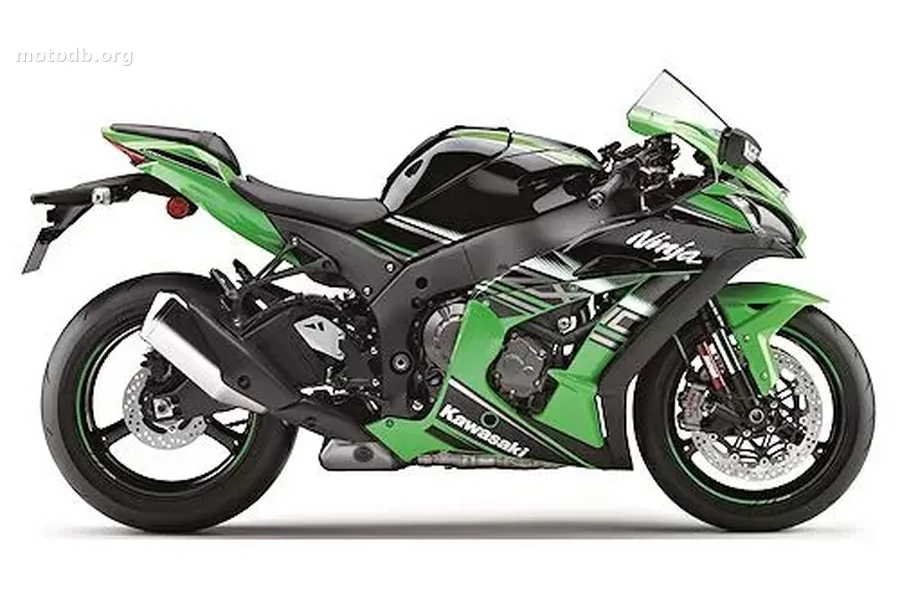
The heart of this machine is a 998 cm3 powerhouse just waiting to explode. The figures are staggering: 200 horsepower at 13,000 rpm, 114.7 Nm of torque at 11,500 rpm. But these impressive figures on paper take on a terrifying dimension when the RAM Air system comes into play, boosting power to over 210 horsepower. It's a demonstration of brute force, a sharp response to those asking "what is the power of the 2008 Kawasaki ZX-10R 1000?". The 2011-2013 generation answered: "More. Much more." To channel this fury, Kawasaki deployed a suite of sophisticated electronics. The S-KTRC, a sporty traction control system, analyzes the situation every 5 milliseconds, capable of distinguishing a wheelie from a loss of control. Braking is under the care of the KIBS, an intelligent ABS that optimizes pressure on each disc. The real feat, however, lies in the balance. With a wet weight of 198 kg, it achieves the mythical ratio of 1 kg per horsepower, but this time with all fluids full. This lightness, achieved gram by gram on the battery, wheels, ABS, and chassis, transforms power into agility.
The evolution for 2013 focuses on one precise but crucial point: the steering damper. Now electronically controlled by the central unit, it adjusts its firmness based on speed, acceleration, and braking. This makes the beast more docile in the city or in tight corners, and infinitely more stable and precise when speed becomes... suggestive. The frame, already redesigned in 2011 to be stiffer and more communicative, and the 43 mm inverted BPF fork, complete this chassis with formidable efficiency. The horizontal mounting of the single shock absorber, directly on the swingarm, is a bold choice that centralizes the masses and frees up space for a more compact exhaust.
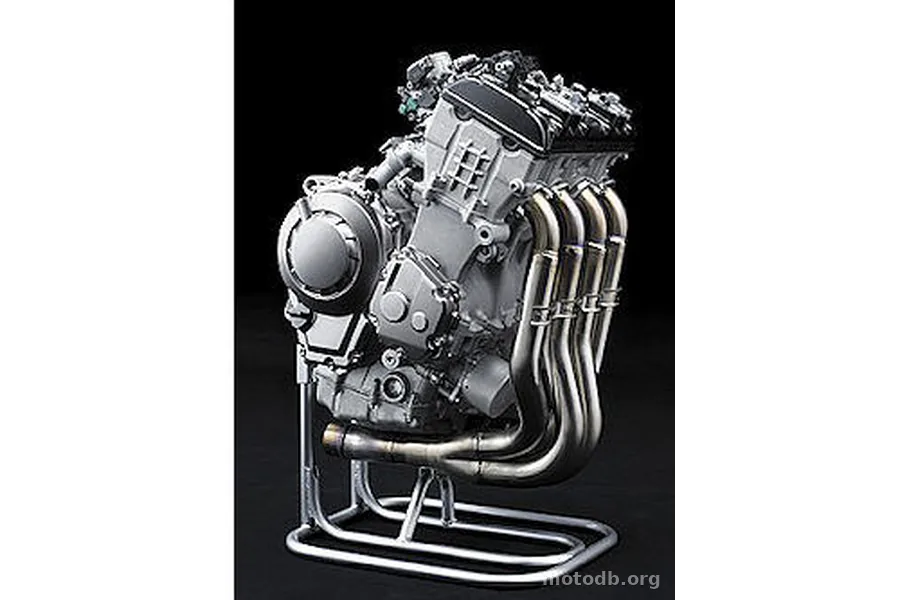
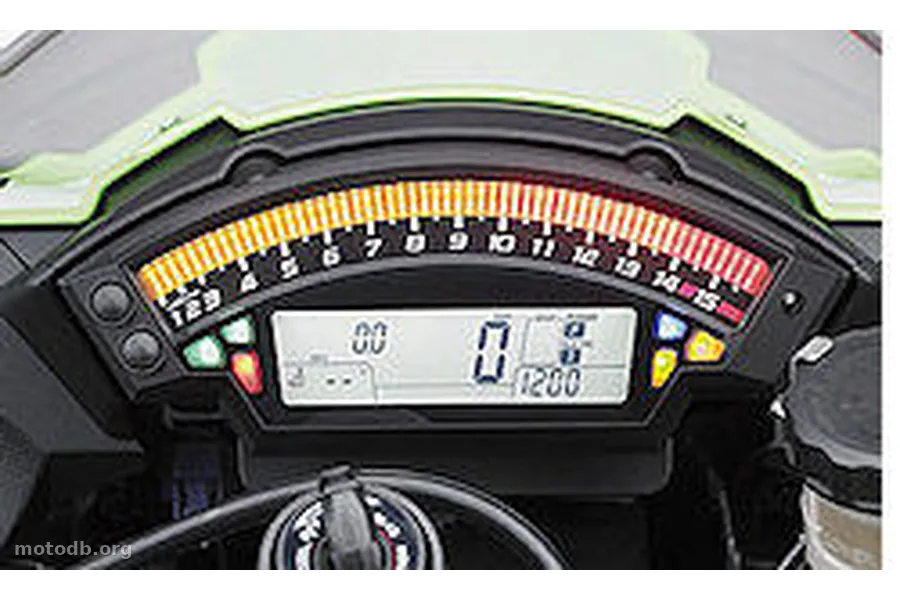
So, who is it for? This ZX-10R is not a compromise motorcycle. It targets the experienced track rider, the rider seeking the ultimate tool for the track, the one who understands that its 200 hp demands respect and skill. It is less versatile than an S1000RR, more radical and less "civilized." Its design, with its large ventilation ducts and the rear light unit with sharp shapes, clearly announces its intentions. The fully digital dashboard, with its Race mode that transforms the display, is pure functionality. Passenger comfort? A simple excuse, a slice of white bread as they say. Everything is oriented towards performance.
Its price, at the time, was a significant investment, around €16,000. This positioned the machine at the top of the hyperbike range. Today, if you are searching "what is the price of a 2016 Kawasaki ZX-10R 1000 in France?" or for a 2018 model, you need to understand that this 2011-2013 generation marked a milestone. It proved that Kawasaki could build a machine dominating both the track and the circuit, a Ninja whose reviews, even on earlier versions like the 2005 Kawasaki ZX-10R 1000, were always tinged with respect for its racing character. This ZX-10R is the expression of a philosophy: power, mastered by technology and served by a precision chassis, creates a benchmark. It didn't seek to be loved, but to be undeniable. And on that point, it largely fulfilled its contract.
Standard equipment
- Assistance au freinage : ABS sport y opcional
Practical info
- La moto est accessible aux permis : A
Reviews & comments
No reviews yet. Be the first to share your opinion!