Key performance
Technical specifications
Engine
- Displacement
- 998 cc
- Power
- 200.0 ch @ 13000 tr/min (147.1 kW)
- Torque
- 114.7 Nm @ 11500 tr/min
- Engine type
- 4 cylindres en ligne, 4 temps
- Cooling
- liquide
- Compression ratio
- 13 : 1
- Bore × stroke
- 76 x 55 mm
- Valves/cylinder
- 4
- Camshafts
- 2 ACT
- Fuel system
- Injection Ø 47 mm
Chassis
- Frame
- double poutre périmétrique en alu
- Gearbox
- boîte à 6 rapports
- Final drive
- Chaîne
- Front suspension
- Fourche téléhydraulique inversée BPF Ø 43 mm, déb : 120 mm
- Rear suspension
- Mono-amortisseur, déb : 125 mm
Brakes
- Front brakes
- Freinage 2 disques Ø 310 mm, fixation radiale, étrier 4 pistons
- Rear brakes
- Freinage 1 disque Ø 220 mm, étrier simple piston
- Front tyre
- 120/70-17
- Rear tyre
- 190/55-17
Dimensions
- Seat height
- 813.00 mm
- Fuel capacity
- 17.00 L
- Weight
- 198.00 kg
- New price
- 15 899 €
Overview
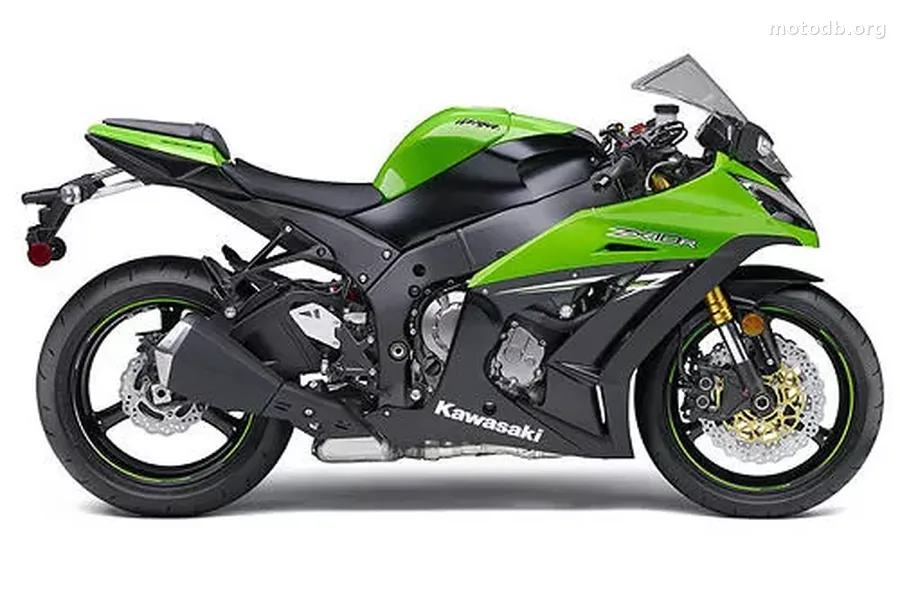
Do you remember that feeling, when the competition starts to graze your bodywork on the track? In 2011, Kawasaki responded to that itch with a massive resharpening. The new ZX-10R wasn't a simple update; it was a declaration of war, a missile tailored for WSBK and ready to pulverize the gauges. We're talking about a machine that swallowed compromises and spat out 200 horsepower, without the aid of RAM Air. At the time, that figure made the BMW S 1000 RR and its 193 hp blanch, rewriting the rules of the game in the premier category.
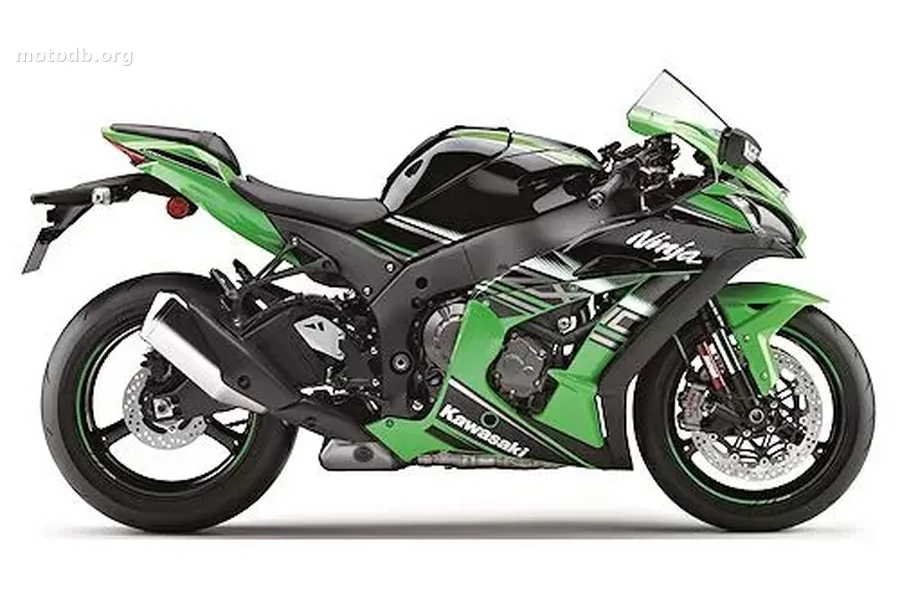
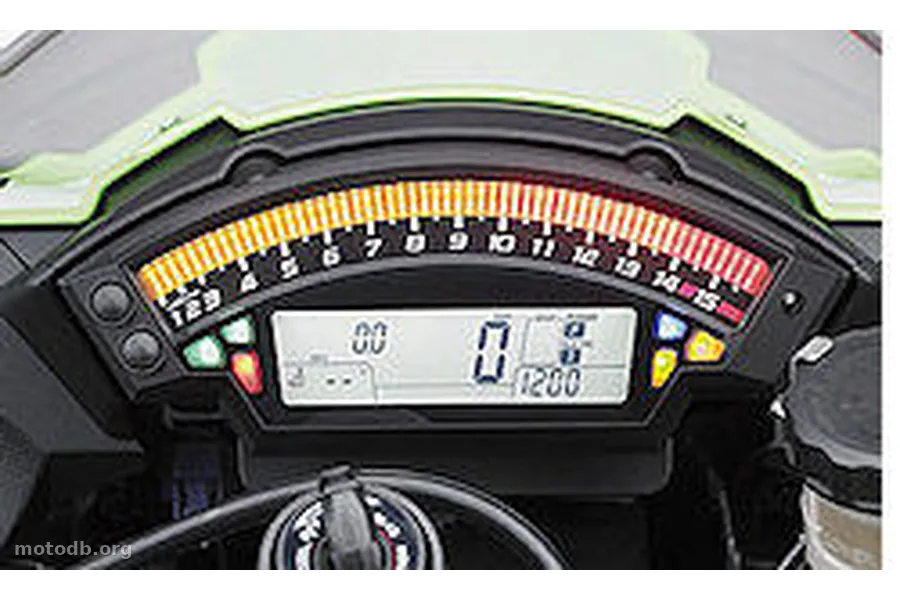
Under the hood, it wasn't just about power. The engineers at Akashi played cosmetic surgeons on the engine, raising the crankshaft, lightening pistons and camshafts, and polishing the ducts as in race shop engines. The result? A four-cylinder that explodes at 13,000 rpm, with a torque curve displaced higher in the rev range. It took a firm wrist, but what a reward. To tame this fury, Kawasaki integrated its first serious electronic system: S-KTRC, a traction control system that acted on the ignition every 5 milliseconds, and KIBS, an intelligent ABS. A first for the brand, essential to make this power exploitable on the track.
The real feat remains the slimming cure. By cutting 10 kilos from the previous version, the 2011 ZX-10R weighed in at 198 kg fully fueled, becoming the lightest in its generation. They lightened everything, from the battery to the wheels, including a more refined onboard electronics. The chassis, a seven-piece perimeter frame, was unprecedented, as was the horizontal mounting of the monoshock above the swingarm, an idea borrowed from the Z 1000 to centralize the masses. Paired with 43 mm BPF forks, the machine promised the agility of a will-o'-the-wisp.
Today, when looking for a hypersportive from the 2010s with a racing pedigree, this ZX-10R 1000 remains a safe bet. Its market price, whether for a 2016 or 2018 model, reflects its reputation as a track bomb. It is not suitable for beginners; it is the tool of the experienced track rider or the demanding road rider looking for raw sensations. Compared to its contemporaries, it stood out for its total commitment to pure performance, sometimes at the expense of a certain versatility. A track weapon, end of story.
Practical info
- La moto est accessible aux permis : A
Reviews & comments
No reviews yet. Be the first to share your opinion!