Key performance
Technical specifications
Engine
- Displacement
- 998 cc
- Power
- 200.0 ch @ 13000 tr/min (147.1 kW)
- Torque
- 113.8 Nm @ 11500 tr/min
- Engine type
- 4 cylindres en ligne, 4 temps
- Cooling
- liquide
- Compression ratio
- 13 : 1
- Bore × stroke
- 76 x 55 mm
- Valves/cylinder
- 4
- Camshafts
- 2 ACT
- Fuel system
- Injection Ø 47 mm
Chassis
- Frame
- double poutre périmétrique en alu
- Gearbox
- boîte à 6 rapports
- Final drive
- Chaîne
- Front suspension
- Fourche téléhydraulique inversée BPF Ø 43 mm, déb : 120 mm
- Rear suspension
- Mono-amortisseur, déb : 114 mm
Brakes
- Front brakes
- Freinage 2 disques Ø 330 mm, fixation radiale, étrier 4 pistons
- Rear brakes
- Freinage 1 disque Ø 220 mm, étrier simple piston
- Front tyre
- 120/70-17
- Rear tyre
- 190/55-17
Dimensions
- Seat height
- 835.00 mm
- Fuel capacity
- 17.00 L
- Weight
- 206.00 kg
- New price
- 17 899 €
Overview
Are you looking for the very definition of a race motorcycle homologated for the road? A tool so sharp it seems straight out of the Kawasaki Racing Team’s pit box in WSBK? Stop right there. The 2017 ZX-10R is exactly that: a massive riding weapon, refined with the help of Rea and Sykes, that whispers in your ear that your limits are far beyond its own. With 200 horsepower at 13,000 rpm, it doesn’t joke around. One might be surprised that the announced power hasn't increased since the previous generation, but that’s a misunderstanding of Kawasaki’s philosophy. The objective wasn't to add feverishness, but mastery. The 998 cm³ engine has undergone a refinement inspired directly from competition: a 20% lighter crankshaft, polished and redesigned intake ducts, lighter pistons. The result is an even more voracious engine, more responsive, that reacts to the slightest input without hesitation. The gearbox, for its part, has been repositioned higher up for easier access, a detail that appeals to mechanics and serious riders.
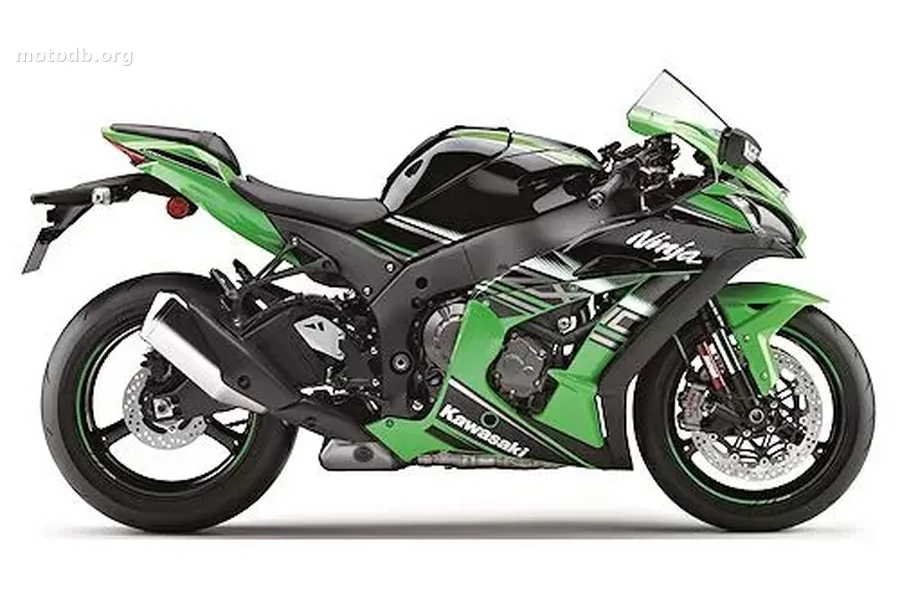
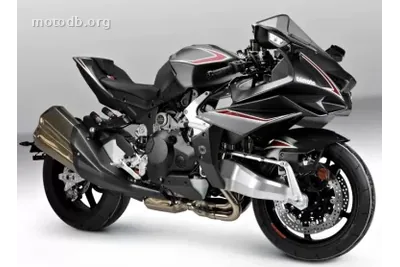
Where this Ninja really hurts the competition is in its standard equipment. Look at this front end. Those strange tubes in front of the calipers aren't an aesthetic gimmick; it's the Showa Balance Free Front Fork, a technology previously reserved for professional circuits. The principle? Externalizing nitrogen chambers for more stable damping and a clarity of feel at the handlebars. And then there are the brakes. We go from serious to sublime with Brembo M50 monoblock calipers and 330 mm discs. Stopping becomes an obvious formality that the machine executes with terrifying coldness. Facing a BMW S 1000 RR or a Yamaha YZF-R1, the Kawasaki aligns a material argument that makes the difference on the track. The aluminum double-beam frame has been subtly retouched, with thinner but equally rigid walls, and the geometry has evolved to put more weight on the front. The slightly extended wheelbase promises reinforced stability, even if, admittedly, the previous one wasn't already a weathervane.
The true generational leap, however, is hidden in the electronics. The ZX-10R features the Bosch 5-axis inertial module, the same one found on the latest Ducati Panigale. This black box allows the S-KTRC anti-wheelie system to see the motorcycle in 3D: it no longer simply compares wheel speeds; it understands the lean angle, roll, and pitch. It can be adjusted in five levels, and its intervention is disconcertingly intelligent, whether in a tight corner or during a power wheelie. Add to that an optimized Launch Control, a KQS quickshifter for upshifts without clutching, and an engine braking control, and you get a complete kit to tame the beast. All this for a starting price of €17,899. A sum, certainly, but consistent with the technology offered. For those wondering what the price of a 2018 or 2016 Kawasaki ZX-10R 1000 is, know that this sophistication justifies the price.
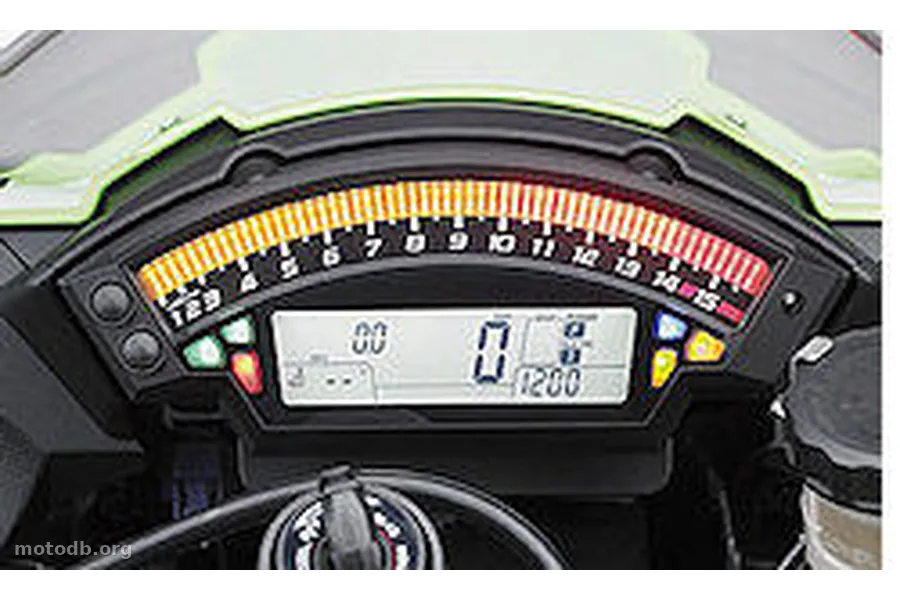
So, who is this machine for? Clearly not for beginners. The 2017 ZX-10R is aimed at the seasoned track rider, at those who understand that pure speed is nothing without a chassis and electronics capable of channeling it. It demands active, engaged riding. Its weight of 206 kg fully fueled is forgotten after the first few meters, but it is an athlete who does not forgive the slightest weakness. Kawasaki even had to launch a recall campaign for some 2016 to 2018 machines regarding the resistance of transmission gears, proof that even engineers sometimes underestimate the vigor with which some riders use their gearbox. That's the nature of a motorcycle designed to the limit. If you are looking for a raw and charming hypersportive like the ZX-10R of 2005, move on. Here, everything is calculated, optimized, digitized. It is the quintessence of the modern sportbike: terribly effective, incredibly fast, and demanding as never before. A true world champion disguised as a production motorcycle.
Standard equipment
- Assistance au freinage : Standard sport ABS
Practical info
- La moto est accessible aux permis : A
Reviews & comments
No reviews yet. Be the first to share your opinion!