Key performance
Technical specifications
Engine
- Displacement
- 999 cc
- Power
- 210.0 ch @ 13750 tr/min (154.5 kW)
- Torque
- 112.6 Nm @ 11000 tr/min
- Engine type
- 4 cylindres en ligne, 4 temps
- Cooling
- Liquid
- Compression ratio
- 13.3:1
- Bore × stroke
- 80.0 x 49.7 mm (3.1 x 2.0 inches)
- Valves/cylinder
- 4
- Camshafts
- 2 ACT
- Fuel system
- Injection. Electronic injection, variable intake pibe
- Valve timing
- Double Overhead Cams/Twin Cam (DOHC)
- Lubrication
- Wet sump
- Starter
- Electric
Chassis
- Frame
- Aluminium composite bridge frame, partially self-supporting engine
- Gearbox
- 6-speed
- Final drive
- Chain (final drive)
- Clutch
- Multiplate clutch in oil bath, anti-hopping clutch, mechanically controlled
- Front suspension
- Upside-down telescopic fork 46 mm, compression and rebound stage adjustable.
- Rear suspension
- Aluminium swing arm, full floater pro, compression and rebound damping adjustable, adjustable preload
- Front wheel travel
- 120 mm (4.7 inches)
- Rear wheel travel
- 117 mm (4.6 inches)
Brakes
- Front brakes
- Double disc. ABS. Floating discs. Four-piston calipers.
- Rear brakes
- Single disc. ABS. Floating disc. Single-piston caliper.
- Front tyre
- 120/70-ZR17
- Front tyre pressure
- 2.50 bar
- Rear tyre
- 190/55-ZR17
- Rear tyre pressure
- 2.90 bar
Dimensions
- Seat height
- 833.00 mm
- Wheelbase
- 1455.00 mm
- Length
- 2073.00 mm
- Width
- 848.00 mm
- Height
- 1151.00 mm
- Fuel capacity
- 16.50 L
- Weight
- 196.90 kg
- Dry weight
- 175.00 kg
- New price
- 20 740 €
Overview
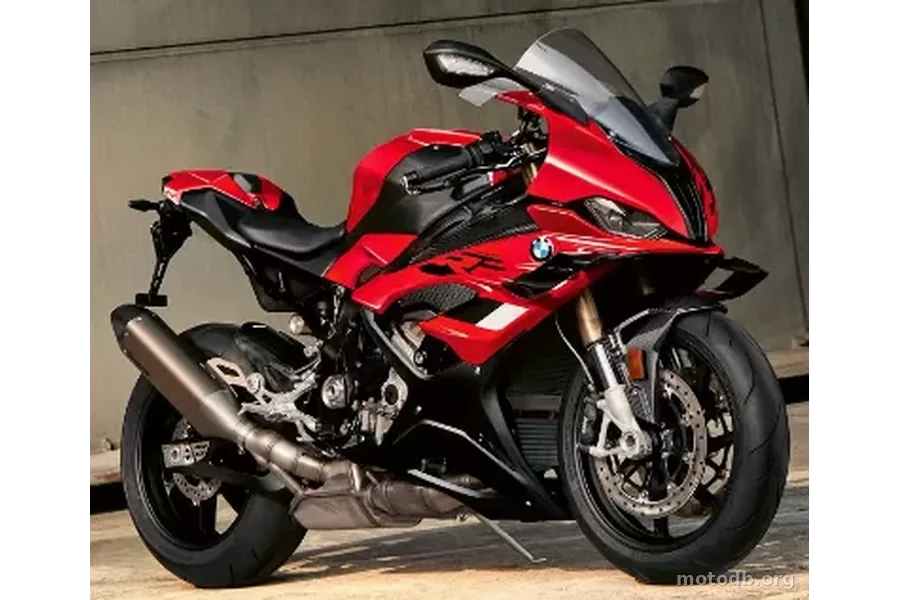
Sixteen years after shaking up the Japanese and Italian competition, the BMW S 1000 RR has lost none of its ability to shift the cards. The 2023 version doesn't reinvent the formula, it sharpens it. And when you start with a base that is already formidable, sharpening is quite enough to maintain pressure on a Honda CBR 1000 RR-R and a Ducati Panigale V4 that play in the same league of champions.
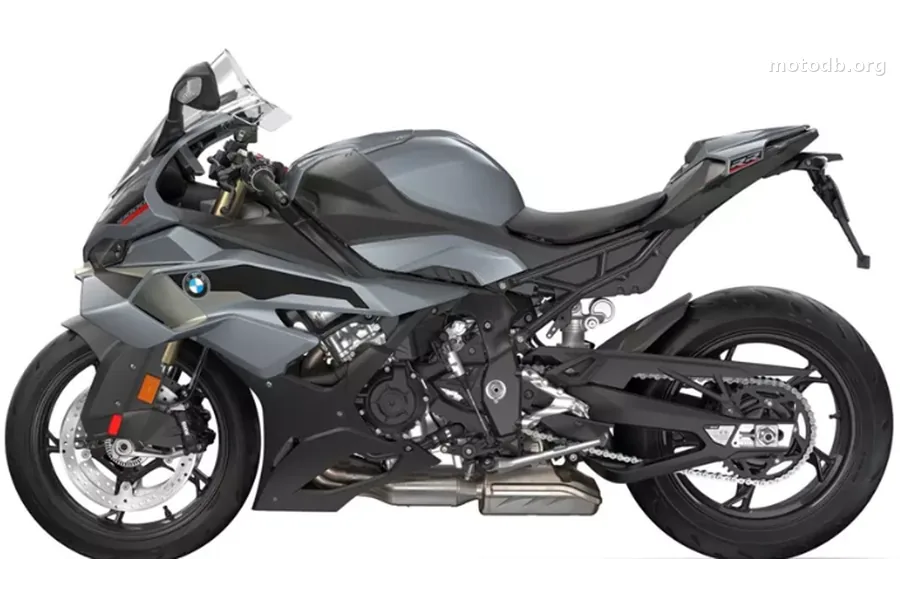
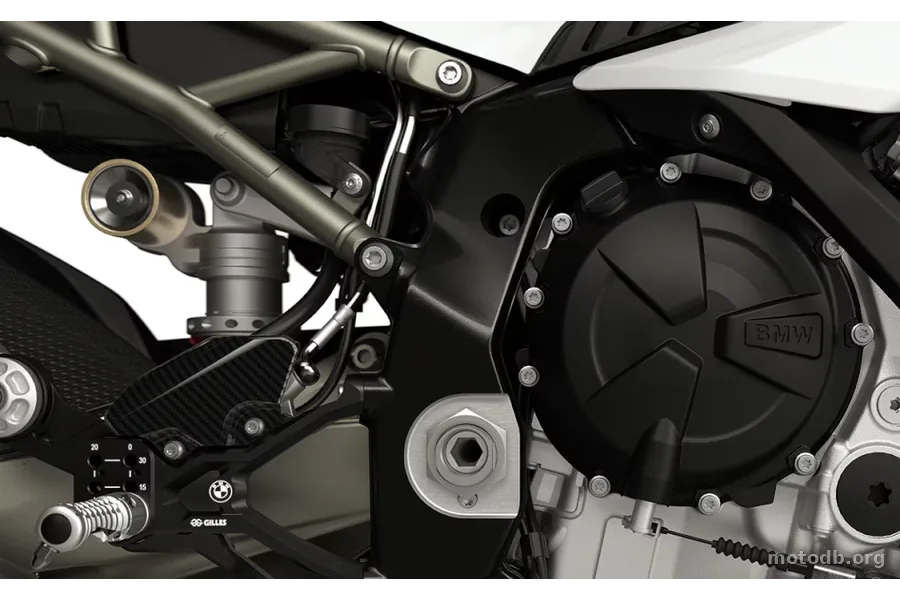
The 999 cc inline four-cylinder engine remains the heart of the powerplant. Thanks to a reworked intake and the Shiftcam system that manages valve timing, peak power climbs to 210 horsepower at 13,750 rpm, three more than on previous generations like the BMW S 1000 RR 2020 or 2021. Torque follows the same logic with 112.6 Nm available at 11,000 rpm. These figures are not read on a specification sheet, they are felt in the right forearm. The secondary ratio has also evolved, with a 46-tooth sprocket instead of 45: a seemingly minor detail, a noticeable difference on acceleration. The announced top speed of 302 km/h is not just a selling point, it is the logical result of this work on the powertrain.
Aerodynamics constitute the most visible change on this BMW S 1000 RR 2023. The winglets inherited from the M 1000 RR flank the headstock and generate up to 17 kilograms of downforce at high speed. In concrete terms, the front end remains better planted on the ground during acceleration and braking, which allows the electronic aids to work with wider margins. The rest of the bodywork has undergone only subtle refinements: a few adjustments to the vents, a slightly raised bubble for better protection, a revised seat cowl. Nothing that warrants a double take in the street, but everything that matters happens under the fairing.
The composite aluminum chassis has also received attention. The steering head angle has been opened by half a degree, the fork offset reduced by 3 mm, and the wheelbase lengthened by 16 mm to reach 1,455 mm. These coordinated modifications improve stability at high speed and cornering ability. The suspension, an inverted 46 mm fork and a rear shock absorber, remain adjustable in all phases, with the DDC piloted damping available as an option. At 196 kg fully fueled for 175 kg dry, the BMW S 1000 RR displays a power-to-weight ratio that leaves few adversaries comfortable.
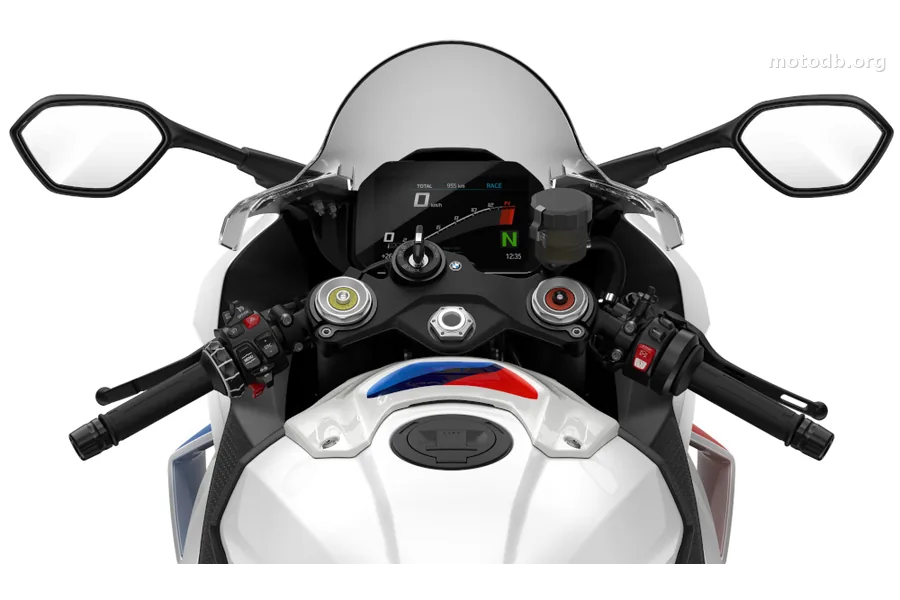
The electronic arsenal of this S 1000 RR deserves closer examination. The four standard riding modes cover rain to circuit, three additional Race Pro modes are available as an option. Slide Control, based on lean angle sensors, allows a controlled rear wheel slip on corner exit according to a parameter defined by the rider. Brake Slide Assist works on the same principle during braking. Cornering ABS, the lean-sensitive traction control, Launch Control and the bidirectional shifter complete the package. The Hayes four-piston calipers on 320 mm discs work well, but in a category where Brembo equips the direct competition, the question of a return to Italian hardware remains. The 165 mm TFT screen and the M Laptrigger GPS are part of the standard equipment, which is consistent with a price of 20,740 euros.
This entry price positions the BMW S 1000 RR in the upper echelons of production sportbikes, but the M pack with the carbon rims, the Sport seat and the Pro modes quickly drives up the bill. This machine is clearly aimed at riders who frequent circuits and know their equipment, not Sunday riders looking for easy handling. It forgives nothing from those who are not ready, but generously rewards those who are. For the BMW S 1000 RR test, it will be necessary to arrive prepared.
Standard equipment
- Assistance au freinage : ABS Pro
Practical info
- La moto est accessible aux permis : A
Reviews & comments
No reviews yet. Be the first to share your opinion!