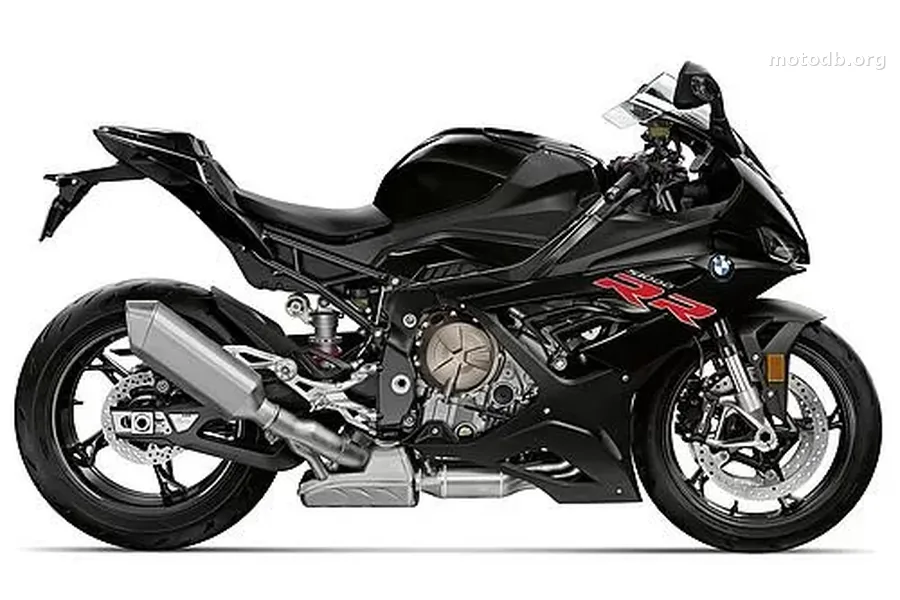
Key performance
Technical specifications
Engine
- Displacement
- 999 cc
- Power
- 207.0 ch @ 13000 tr/min (149.6 kW)
- Torque
- 112.6 Nm @ 11000 tr/min
- Engine type
- In-line four, four-stroke
- Cooling
- Liquid
- Compression ratio
- 13.3:1
- Bore × stroke
- 80.0 x 49.7 mm (3.1 x 2.0 inches)
- Valves/cylinder
- 4
- Camshafts
- 2 ACT
- Fuel system
- Injection. Electronic fuel injection with ride-by-wire throttle system, variable intake, and knock sensor
- Valve timing
- Double Overhead Cams/Twin Cam (DOHC)
- Lubrication
- Wet sump
- Starter
- Electric
Chassis
- Frame
- Aluminium composite bridge frame, partially self-supporting engine
- Gearbox
- 6-speed
- Final drive
- Chain (final drive)
- Clutch
- Multiplate clutch in oil bath, anti-hopping clutch, mechanically controlled
- Front suspension
- Upside-down telescopic fork 46 mm, compression and rebound stage adjustable.
- Rear suspension
- WSBK Aluminium swing arm, full floater pro, compression and rebound damping adjustable, adjustable preload
- Front wheel travel
- 120 mm (4.7 inches)
- Rear wheel travel
- 117 mm (4.6 inches)
Brakes
- Front brakes
- Double disc. ABS. Floating discs. Four-piston calipers.
- Rear brakes
- Single disc. ABS. Floating disc. Single-piston caliper.
- Front tyre
- 120/70-ZR17
- Front tyre pressure
- 2.50 bar
- Rear tyre
- 190/55-ZR17
- Rear tyre pressure
- 2.90 bar
Dimensions
- Seat height
- 823.00 mm
- Wheelbase
- 1441.00 mm
- Length
- 2073.00 mm
- Width
- 848.00 mm
- Height
- 1151.00 mm
- Fuel capacity
- 16.50 L
- Weight
- 196.90 kg
- Dry weight
- 208.00 kg
- New price
- 19 200 €
Overview
Fifteen years of dominance, and Munich hasn’t said its last word. Since the BMW S 1000 RR arrived on the market like a slap to Japanese manufacturers, each new generation has strengthened the argument without ever betraying the original intention. The 2022 model doesn’t represent a revolution; it refines a copy that was already very successful. The M Chassis kit now comes as standard equipment, bringing the M swingarm and rear rebound adjustment to those who hadn’t yet ticked the box. The Road, Race, and M packs are reorganized, enriched, and can be combined freely. That's the language of Munich engineers when they no longer have much to correct.
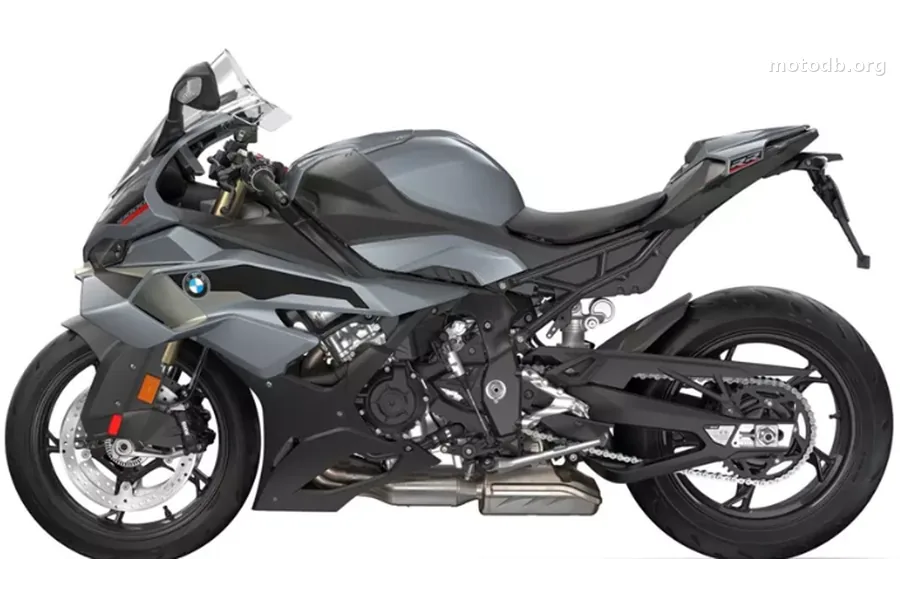
The BMW S 1000 RR engine remains the central argument, and it doesn’t need advocating. This 999 cm3 inline four-cylinder engine, bore of 80 mm for a stroke of 49.7 mm, delivers 207 horsepower at 13,000 rpm and 112.6 Nm of torque at 11,000 rpm. For 196.9 kilograms fully fueled. This power-to-weight ratio places the Bavarian in a category where the air thins: the Ducati Panigale V4 S plays in the same league, as does the Honda CBR 1000 RR-R Fireblade, but each with its own compromises. The BMW assumes a versatility that its Italian and Japanese rivals don’t always claim. ShiftCam technology, which switches the inlet cam profiles at 9,000 rpm, offers a civilized engine behavior below and a ferocious one above. On the open road, this is a virtue that experienced riders know how to appreciate before moving on to the track.
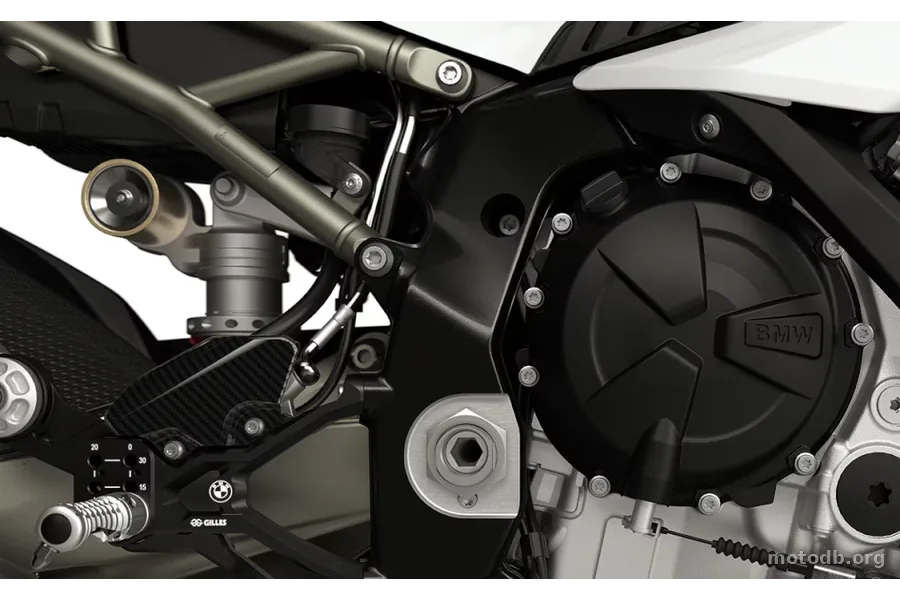
The composite aluminum chassis, partially self-supporting thanks to the engine itself, works in symbiosis with a 46 mm inverted fork and a single adjustable shock absorber for compression, rebound, and preload. The wheelbase of 1,441 mm gives the machine a frank directional stability, without making it sluggish in changes of support. The 823 mm seat caters to a wide range of riders, from those of average height to seasoned practitioners seeking a machine capable of going from daily use to the track without changing garages. The brakes, two 320 mm discs gripped by four-piston calipers with radial fixation branded BMW, do the job seriously. One might have hoped for Brembo Stylema on a machine priced at €19,200, but the engineers preferred to keep control of the system integration, particularly for the active cornering ABSPro.
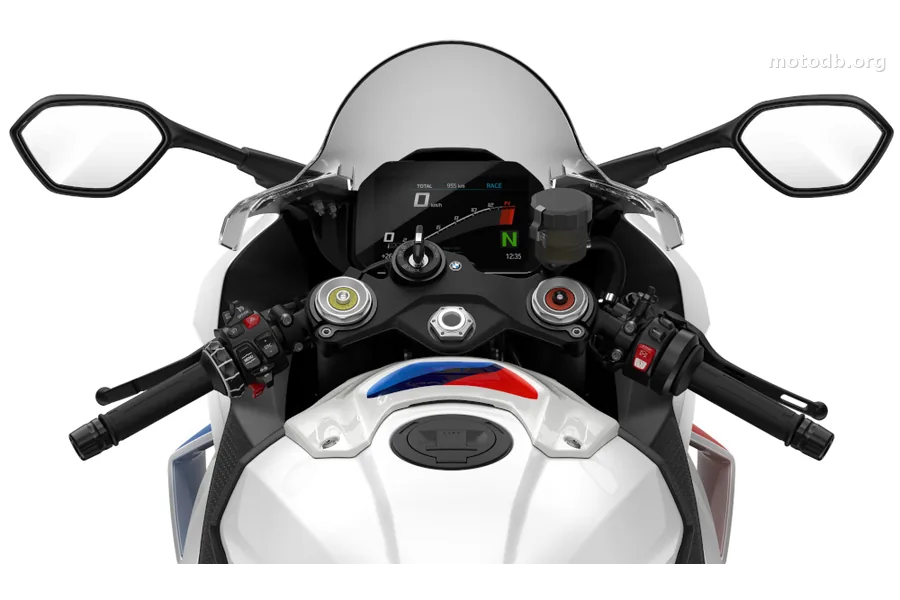
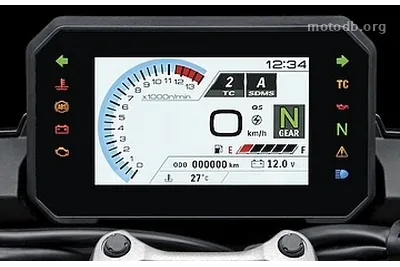
The onboard electronics deserve attention. The six-axis inertial unit governs traction control, wheelie control, and braking with a consistency that was not found on the early years of the BMW S 1000 RR. The Race Pro modes, available as an option, open access to three maps exclusively oriented towards the track, with engine braking adjustment and fine parameterization of each assistance. The 6.5-inch TFT screen centralizes all of this with four display themes, lap time data, real-time lean angle, and throttle position. It's dense, sometimes too much for a quick BMW S 1000 RR test, but the track rider who spends their weekends in the paddocks will find plenty to occupy them.
A used BMW S 1000 RR remains a serious option for those who are put off by the €19,200 price tag. The 2019-2021 generations share the essence of the architecture, and the 2022 evolutions are more cosmetic and packaged than fundamental. For the rest, this machine is unambiguously aimed at experienced riders, capable of taming 207 horsepower on the road as well as on the track, and who are looking for a hypersport capable of winning during the week and timing on the weekend. A top speed announced at 297 km/h, a 16.5-liter tank to keep the pace, and the conviction that Munich can still scare the competition. The recipe hasn't changed in fifteen years; it has simply been perfected.
Standard equipment
- Assistance au freinage : ABS Pro
Practical info
- La moto est accessible aux permis : A
Reviews & comments
No reviews yet. Be the first to share your opinion!