Key performance
Technical specifications
Engine
- Displacement
- 999 cc
- Power
- 199.0 ch @ 13500 tr/min (142.9 kW)
- Torque
- 113.0 Nm @ 10500 tr/min
- Engine type
- In-line four, four-stroke
- Cooling
- Oil & air
- Compression ratio
- 13.0:1
- Bore × stroke
- 80.0 x 49.7 mm (3.1 x 2.0 inches)
- Valves/cylinder
- 4
- Camshafts
- 2 ACT
- Fuel system
- Injection. Electronic injection
- Valve timing
- Double Overhead Cams/Twin Cam (DOHC)
- Starter
- Electric
Chassis
- Frame
- Aluminium composite bridge frame, partially self-supporting engine
- Gearbox
- 6-speed
- Final drive
- Chain (final drive)
- Clutch
- Multiplate clutch in oil bath, anti-hopping clutch, mechanically controlled
- Front suspension
- Upside-down telescopic fork 46 mm, compression and rebound stage adjustable
- Rear suspension
- Aluminium 2-sided swing arm, compression and rebound damping adjustable
- Front wheel travel
- 120 mm (4.7 inches)
- Rear wheel travel
- 120 mm (4.7 inches)
Brakes
- Front brakes
- Double disc. Floating discs. Four-piston calipers.
- Rear brakes
- Single disc. Floating disc. Single-piston caliper.
- Front tyre
- 120/70-17
- Rear tyre
- 190/55-17
Dimensions
- Seat height
- 815.00 mm
- Wheelbase
- 1425.00 mm
- Length
- 2050.00 mm
- Width
- 826.00 mm
- Height
- 1138.00 mm
- Fuel capacity
- 17.50 L
- Weight
- 204.00 kg
- Dry weight
- 175.50 kg
- New price
- 17 450 €
Overview
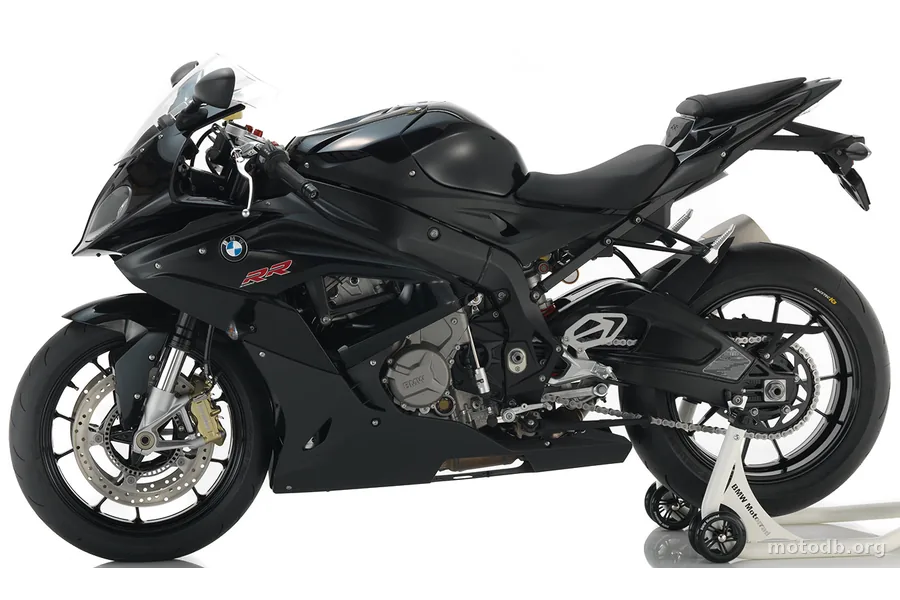
When Munich decides to raise the bar, the others would do well to take note. The BMW S 1000 RR, born in 2009 as a time bomb in the hypersport peloton, has always had this double-edged character: brutal with the reckless, generous with those who know how to tame it. The 2015 version pushes this logic even further, with a clearly stated obsession of gaining power without losing accessibility.
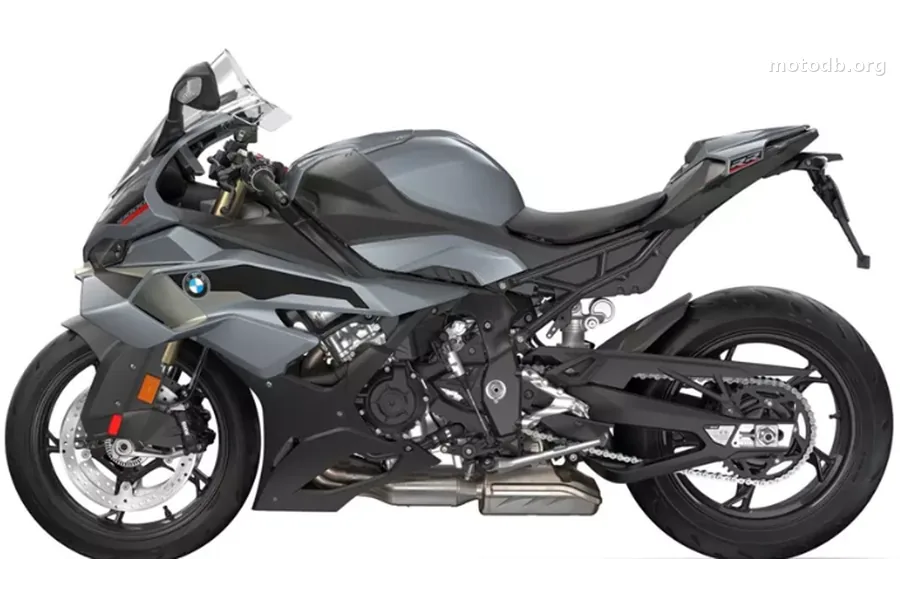
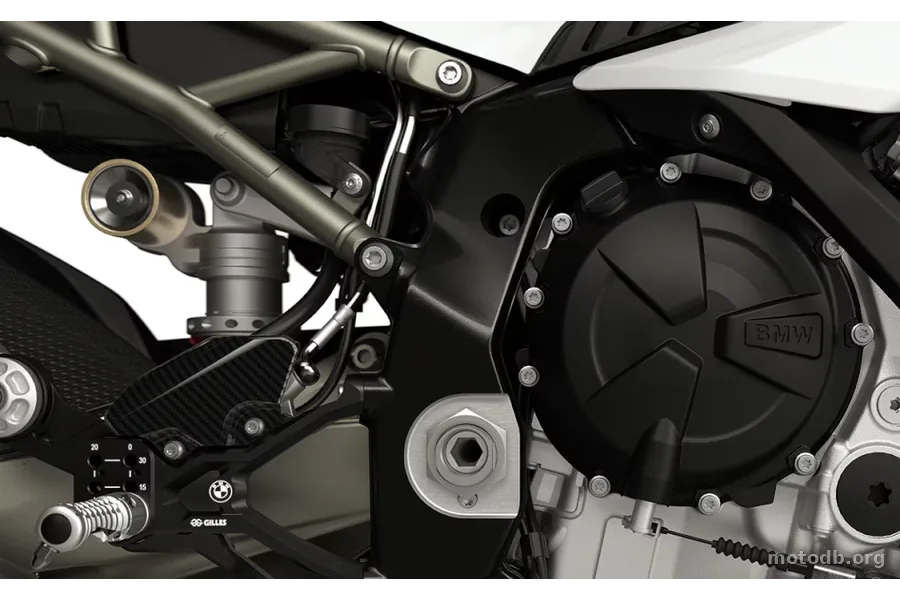
Six additional horsepower in the program, bringing the total to 199 hp at 13,500 rpm. On paper, this looks like a marketing argument against an R1, a ZX-10R, or an RSV4 that cheerfully exceed the 200 hp mark. But what truly distinguishes the BMW S 1000 RR engine from the rest is its torque density. At 10,500 rpm it peaks at 113 Nm, certainly, but at 9,500 rpm it already delivers 112. In other words, there's no need to rev the needle into the red to feel the machine transform into a catapult. Engineers reworked the cylinder head, modified the intake ducts, lightened the valves, shortened the intake trumpets, and lightened the exhaust line by three kilos. All of this for an engine that pulls harder, earlier, and more cleanly. The result is felt in the wrists before even the tachometer explodes.
The chassis deserves the same level of seriousness. The aluminum frame has been revised in its deep geometry: rake angle, wheelbase of 1,425 mm, swingarm pivot point, everything has changed. The 46 mm inverted fork gains a few millimeters of travel to allow for more pronounced lean angles without the machine losing its stability. At the front, Brembo radial four-piston calipers bite down on 320 mm floating discs with that surgical precision that inspires confidence. BMW also shaved four kilos off the entire machine, including a lighter battery, to bring the weight down to 204 kg fully fueled. Faced with a 1299 Panigale playing in the same waters, this diet effort is not superfluous.
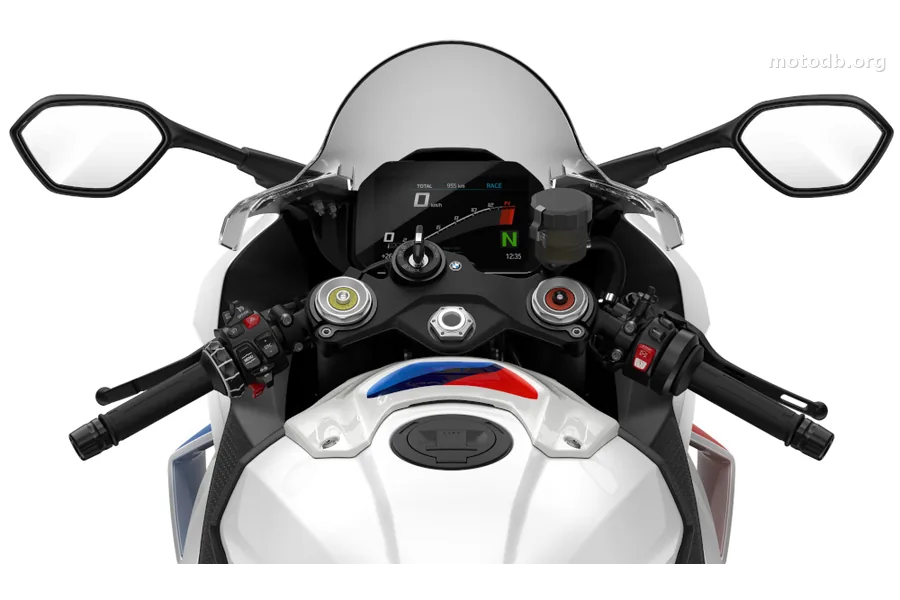
Electronics is where the BMW S 1000 RR engine reveals the ambition of the manufacturer. Three basic modes are delivered as standard equipment: Rain, Sport, Race, and two additional modes, Slick and User, accessible via the Pro pack. This pack also integrates Launch Control, Pit Lane Limiter, traction control DTC with lean angle sensor, and a bidirectional quickshifter. For someone who regularly practices on the track, this equipment represents a real toolbox. The standard RaceABS, adjustable on seven levels in both directions, complements an electronic package that Japanese competitors were only beginning to sketch out at the time. BMW was already anticipating what the standard would become.
On the aesthetic front, the asymmetrical headlights that divided opinion are still there, simply permuted. The signature of this evolution is mainly the centrally located air intake, widely open between the two headlight blocks, which gives the nose a frankly aggressive expression. The high-end side exhaust abandons the discretion of the previous version to clearly display itself. At €17,450, the 2015 BMW S 1000 RR is not for beginners. It is a machine for experienced riders, capable of managing 199 hp under 175 kg dry weight, and who want a hypersport that is both competitive on the track and manageable in everyday use. For others, the subsequent generations, BMW S 1000 RR 2020, 2021, 2022, 2023, or 2024, have further refined this recipe. But it is here, in 2015, that the current character of the machine truly took shape.
Standard equipment
- Assistance au freinage : Race ABS
- Nombre de mode de conduite : 3
- Jantes aluminium
- Indicateur de vitesse engagée
- Contrôle de traction
- ABS déconnectable
Practical info
- La moto est accessible aux permis : A
Reviews & comments
No reviews yet. Be the first to share your opinion!