Key performance
Technical specifications
Engine
- Displacement
- 999 cc
- Power
- 207.0 ch @ 13500 tr/min (149.6 kW)
- Torque
- 112.6 Nm @ 11000 tr/min
- Engine type
- In-line four, four-stroke
- Cooling
- Liquid
- Compression ratio
- 13.3:1
- Bore × stroke
- 80.0 x 49.7 mm (3.1 x 2.0 inches)
- Valves/cylinder
- 4
- Camshafts
- 2 ACT
- Fuel system
- Injection. Electronic fuel injection with ride-by-wire throttle system, variable intake, and knock sensor
- Valve timing
- Double Overhead Cams/Twin Cam (DOHC)
- Lubrication
- Wet sump
- Starter
- Electric
Chassis
- Frame
- Aluminium composite bridge frame, partially self-supporting engine
- Gearbox
- 6-speed
- Final drive
- Chain (final drive)
- Clutch
- Multiplate clutch in oil bath, anti-hopping clutch, mechanically controlled
- Front suspension
- Upside-down telescopic fork 46 mm, compression and rebound stage adjustable,
- Rear suspension
- WSBK Aluminium swing arm, full floater pro, compression and rebound damping adjustable, adjustable preload
- Front wheel travel
- 120 mm (4.7 inches)
- Rear wheel travel
- 117 mm (4.6 inches)
Brakes
- Front brakes
- Double disc. ABS. Floating discs. Four-piston calipers.
- Rear brakes
- Single disc. ABS. Floating disc. Single-piston caliper.
- Front tyre
- 120/70-ZR17
- Front tyre pressure
- 2.50 bar
- Rear tyre
- 190/55-ZR17
- Rear tyre pressure
- 2.90 bar
Dimensions
- Seat height
- 823.00 mm
- Wheelbase
- 1441.00 mm
- Length
- 2073.00 mm
- Width
- 848.00 mm
- Height
- 1151.00 mm
- Fuel capacity
- 16.50 L
- Weight
- 197.00 kg
- New price
- 19 200 €
Overview
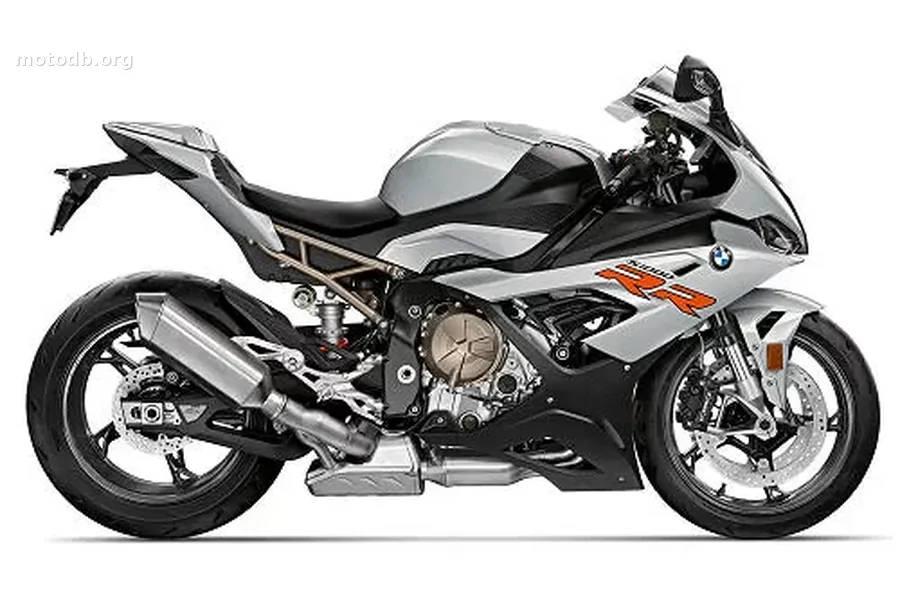
Ten years. Ten years that Munich has imposed its vision of the superbike on convinced Japanese manufacturers and Italians who believe they hold its soul. The BMW S 1000 RR disrupted everything at its debut, then it aged. Not bad, but it was aging. The Panigale V4 had put the pressure on, the CBR 1000 RR Fireblade SP had regained its footing, and Munich risked becoming a spectator in a fight it had started. The Bavarian response is this 2020 model year, a complete overhaul that leaves nothing untouched.
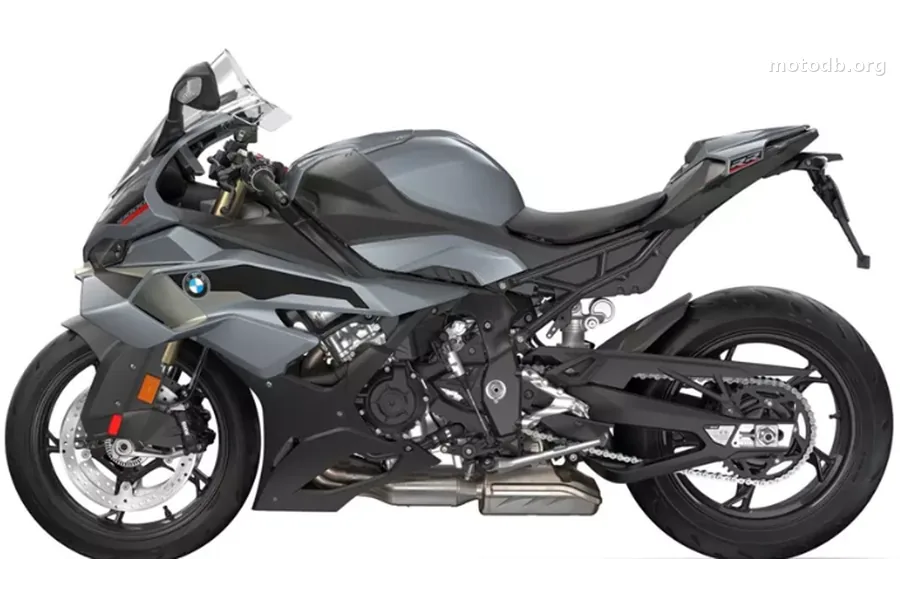
Let's start with what immediately stands out. The 2020 BMW S 1000 RR abandons the asymmetrical face that has been its signature since the first generation. The game of mismatched headlights is over; the look is now symmetrical, aggressive, and shaped like a machined part. Some will see this as a betrayal of the machine's identity, and they are not entirely wrong. The result sometimes flirts with the aesthetics of large-displacement Japanese sportbikes where one would have hoped for an Italian influence. One detail, however, betrays the lineage: at the cylinder head height, the characteristic gills persist on one side only. Munich has not abandoned everything.
But the real work is happening beneath the fairing. The BMW S 1000 RR engine inherits ShiftCam technology, a variable valve timing system with two cam profiles on the intake camshaft. Below 9,000 rpm, the engine behaves like a well-mannered four-cylinder, generous in torque across the midrange. Beyond that, the actuators switch to the high-performance profile and the engine expresses its 207 hp at 13,500 rpm without restraint. How many horsepower does the BMW S 1000 RR have, novices often ask. The official answer is 207, but dyno tests consistently exceed that figure for this machine. Peak torque is 112.6 Nm at 11,000 rpm, and more importantly, it remains above 100 Nm across a range from 5,500 to 14,500 rpm. For a track rider, this is the difference between a motorcycle that must be kept within a narrow RPM window and a machine that propels you out of every corner, regardless of speed.
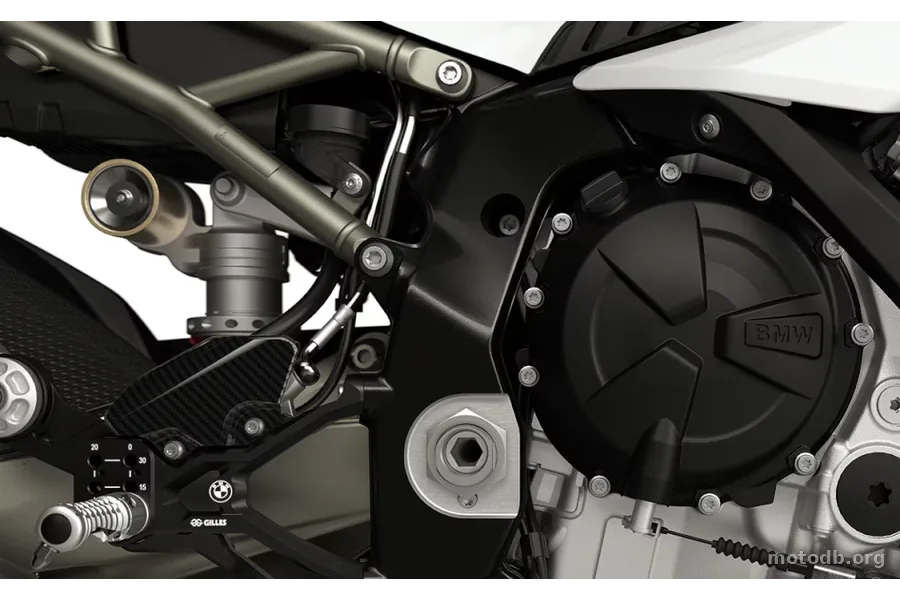
The work on mass deserves attention. BMW has shaved grams everywhere with the meticulousness of a Swiss watchmaker: hollow titanium valves, combined water and oil pumps, a compact silencer, a new, lighter swingarm reduced by 300 grams, and redesigned wheels. The net result is a weight reduction of 11 kg compared to the previous generation. The 2020 BMW S 1000 RR weighs in at 197 kg fully fueled, placing it exactly between the Ducati Panigale V4 and the Honda CBR 1000 RR. This was one of the recurring criticisms of earlier model years, this lack of agility compared to the lighter competitors. The optional M package pushes this even further with an additional 3.5 kg evaporated thanks to carbon wheels. The aluminum frame has also evolved, relying more on the engine as a stressed member to gain rigidity without sacrificing mass.
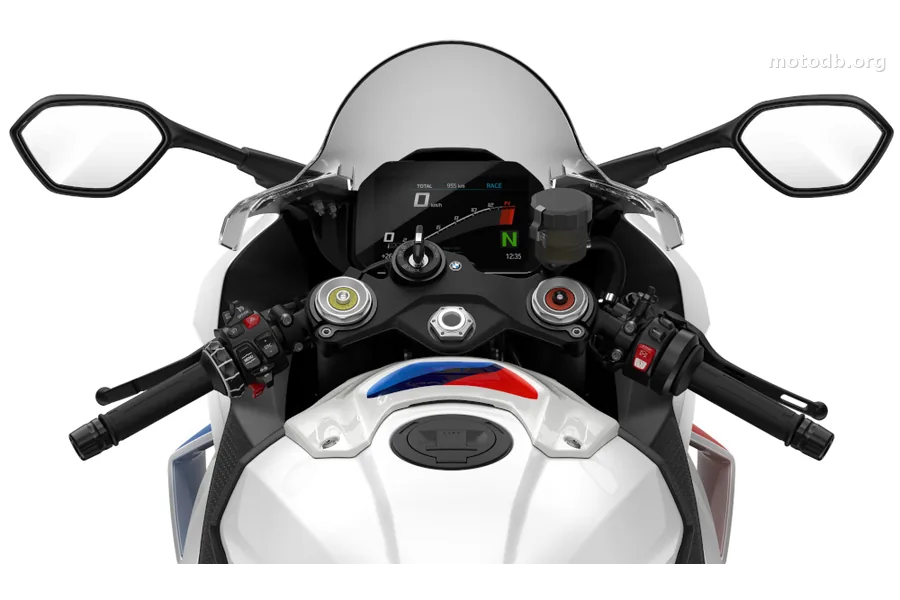
The electronics are up to the standard of a motorcycle priced at €19,200. The six-axis inertial sensor orchestrates traction control, wheelie control, and active ABS in corners. The bidirectional quickshifter, launch control, and stand-alone speed limiter are standard. The optional Race Pro modes open access to three fully configurable circuit configurations, including adjustable engine braking. The optional DDC pilot suspension reacts in 10 milliseconds according to the selected riding mode. The 6.5-inch TFT screen replaces the analog combination of another era; it displays lap times, lean angle, and electronic settings according to four configurable themes. For braking, BMW has replaced the Brembo M4 calipers with its own four-piston calipers on 320 mm discs. It is functional, but it remains the point where one can legitimately wonder if a pair of Stylema calipers would not have better suited the ambitions of the machine.
The used BMW S 1000 RR is negotiated on the secondary market with significant variations depending on the model year, and the 2020 version maintains a strong value. This is logical for a motorcycle that exclusively addresses experienced riders, capable of exploiting these 207 horsepower in a wheelbase of 1,441 mm. It is not a machine for learning. It is a machine for those who already know, and who want to push further.
Standard equipment
- Assistance au freinage : ABS Pro
Practical info
- La moto est accessible aux permis : A
Reviews & comments
No reviews yet. Be the first to share your opinion!