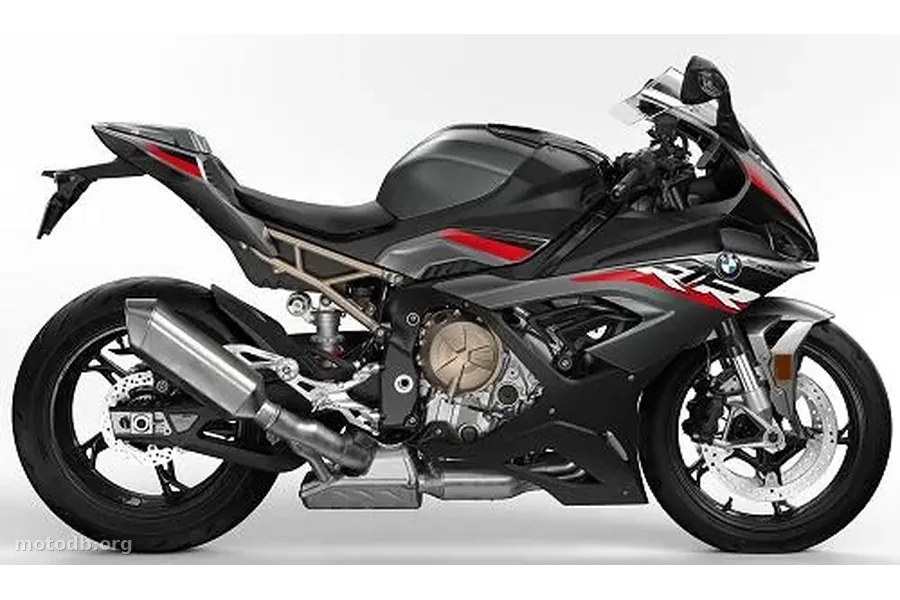
Key performance
Technical specifications
Engine
- Displacement
- 999 cc
- Power
- 207.0 ch @ 13000 tr/min (149.6 kW)
- Torque
- 112.6 Nm @ 11000 tr/min
- Engine type
- In-line four, four-stroke
- Cooling
- Liquid
- Compression ratio
- 13.3:1
- Bore × stroke
- 80.0 x 49.7 mm (3.1 x 2.0 inches)
- Valves/cylinder
- 4
- Camshafts
- 2 ACT
- Fuel system
- Injection. Electronic fuel injection with ride-by-wire throttle system, variable intake, and knock sensor
- Valve timing
- Double Overhead Cams/Twin Cam (DOHC)
- Lubrication
- Wet sump
- Starter
- Electric
Chassis
- Frame
- Aluminium composite bridge frame, partially self-supporting engine
- Gearbox
- 6-speed
- Final drive
- Chain (final drive)
- Clutch
- Multiplate clutch in oil bath, anti-hopping clutch, mechanically controlled
- Front suspension
- Upside-down telescopic fork 46 mm, compression and rebound stage adjustable,
- Rear suspension
- WSBK Aluminium swing arm, full floater pro, compression and rebound damping adjustable, adjustable preload
- Front wheel travel
- 120 mm (4.7 inches)
- Rear wheel travel
- 117 mm (4.6 inches)
Brakes
- Front brakes
- Double disc. ABS. Floating discs. Four-piston calipers.
- Rear brakes
- Single disc. ABS. Floating disc. Single-piston caliper.
- Front tyre
- 120/70-ZR17
- Front tyre pressure
- 2.50 bar
- Rear tyre
- 190/55-ZR17
- Rear tyre pressure
- 2.90 bar
Dimensions
- Seat height
- 823.00 mm
- Wheelbase
- 1441.00 mm
- Length
- 2073.00 mm
- Width
- 848.00 mm
- Height
- 1151.00 mm
- Fuel capacity
- 16.50 L
- Weight
- 197.00 kg
- Dry weight
- 175.00 kg
- New price
- 19 200 €
Overview
When Munich decides to reset the counters, it doesn’t resemble a simple mid-cycle facelift. The 2021 BMW S 1000 RR is the result of a complete overhaul started in 2019, a machine that erases its own foundations to rebuild them better. Ten years after shaking up the hypersportive category, the German manufacturer returns with a clean slate and arguments that hit hard.
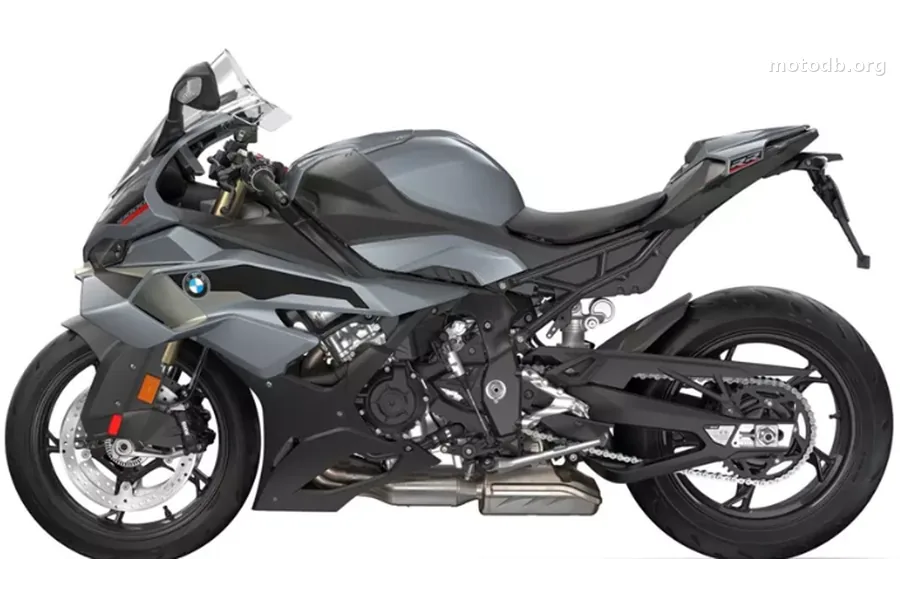
The figure that sums it all up: 207 horsepower for 197 kilograms. This ratio places the BMW S 1000 RR in a zone of turbulence that few machines inhabit. The Ducati Panigale V4 and the Honda CBR 1000 RR play in the same league, but Munich worked differently to achieve this result. Not by overloading the factory, but by slimming down wherever possible. Eleven kilograms were shaved off the previous generation, a result achieved by machining the titanium valves, melting the exhaust, and rethinking the frame structure so that the engine becomes load-bearing. The optional M package offers an additional 3.5 kilograms thanks to carbon rims, for those whose budget already exceeds the announced €19,200.
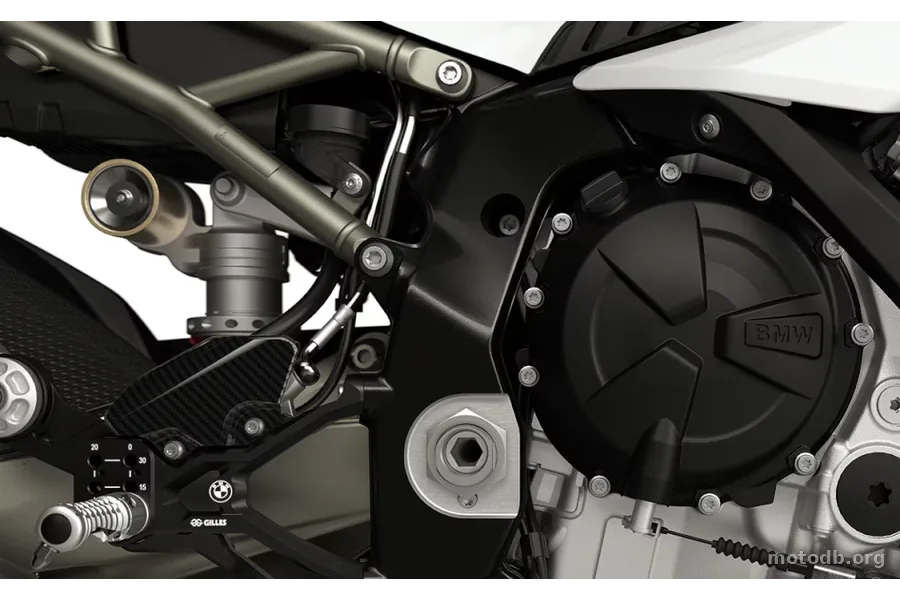
The BMW S 1000 RR engine deserves closer attention. The 999 cm3 inline four-cylinder now incorporates ShiftCam technology, a variable valve timing system that BMW initially tested on the R 1250 family. Two cam profiles coexist on the intake shaft. Below 9,000 rpm, the motorcycle behaves almost reasonably, with generous torque and progressivity that doesn't betray the rider. Beyond that, the electromechanical actuators switch to the high-performance profile, and the engine expresses its 112.6 Nm at 11,000 rpm without restraint. Maximum power, meanwhile, peaks at 13,000 rpm. It's not a motorcycle for beginners, that's obvious. It's a machine for experienced track riders, for those who know how to read a stopwatch and manage adrenaline in corners.
The chassis has undergone surgery just as radical. The aluminum frame now shares its rigidity with the engine block, which has made it possible to lighten the structure while tightening tolerances. Knee clearance has been reduced by several centimeters in certain areas, making handling more natural. The swingarm abandons its banana shape for a reinforced architecture under the spars, with an adjustable anchor point of plus or minus 2 mm. The 46 mm inverted fork is adjustable for compression and rebound. The rear shock has been repositioned vertically, away from engine heat sources. For those who want to go further, the DDC pilot damping adapts its responses in 10 milliseconds according to the selected riding mode, from Road to Race Pro 3.
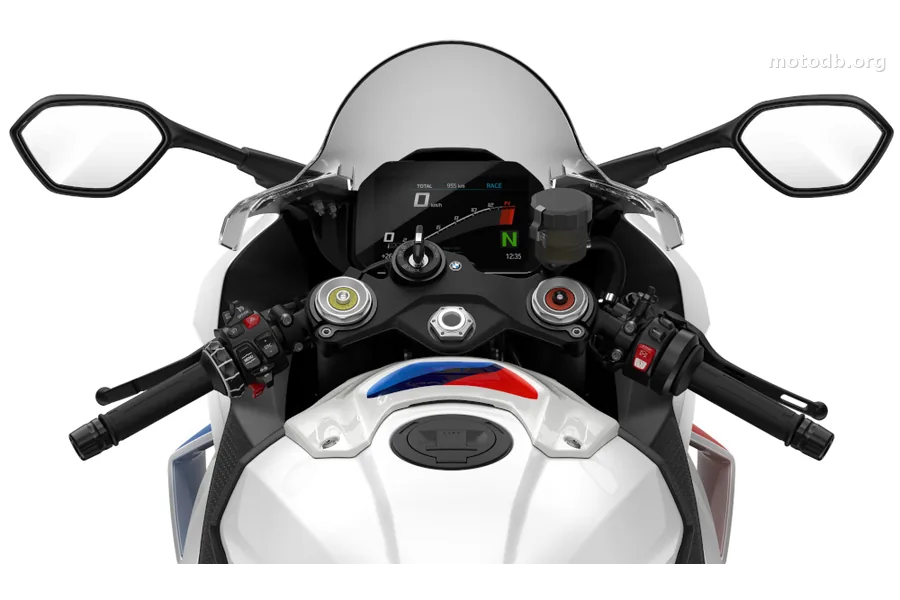
The onboard electronics rely on a six-axis inertial unit. Traction control, anti-wheelie, ABS Pro active in corners, bidirectional quickshifter, launch control assistant, speed limiter on the stand. The 6.5-inch TFT screen finally replaces the old analog combination, with four display themes and data covering lap times to lean angle. Braking entrusts its 320 mm discs to in-house four-piston radially mounted calipers. One can regret the abandonment of the Brembo M4 from the previous generation, but the new parts do the job without faulting.
For those buying a used or new BMW S 1000 RR in recent model years, the observation remains the same regardless of the year considered, whether it's a 2020, a 2022 BMW S 1000 RR, or the current version. The machine is aimed at a specific profile: the experienced rider who alternates between track and open road, who is not afraid of a seat height of 823 mm and who accepts a 16.5-liter tank consumed at 6.36 liters per hundred. It's not a compromise motorcycle. It's a statement of intent, priced accordingly, designed for those seeking the limit and know where to find it.
Standard equipment
- Assistance au freinage : ABS Pro
Practical info
- La moto est accessible aux permis : A
Reviews & comments
No reviews yet. Be the first to share your opinion!