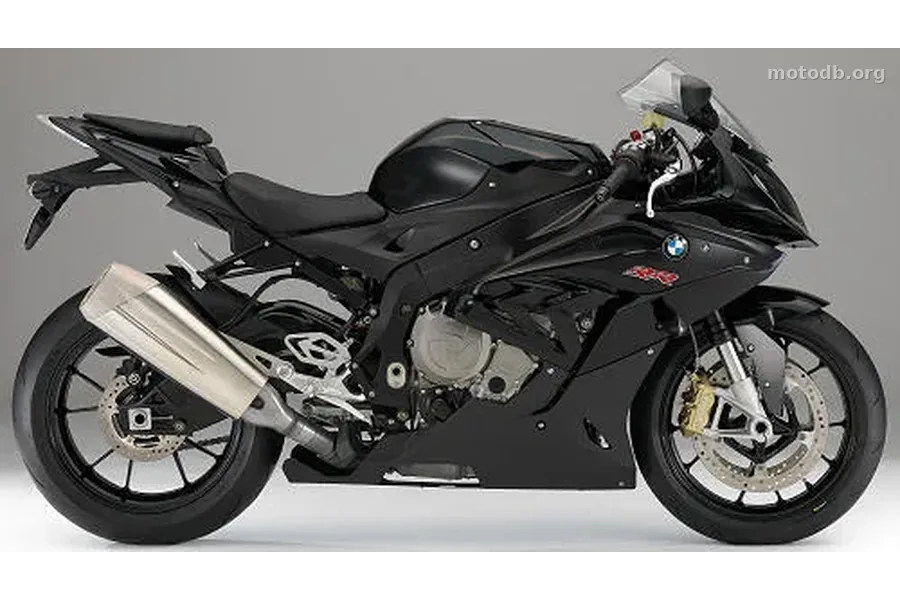
Key performance
Technical specifications
- Power
- 193.0 ch @ 13000 tr/min (139.0 kW) → 199.0 ch @ 13500 tr/min (145.3 kW)
- Torque
- 112.0 Nm @ 9750 tr/min → 113.0 Nm @ 10500 tr/min
- Cooling
- Liquid → Oil & air
- Fuel system
- Injection. Electronic intake pipe injection/digital engine management including knock sensor (BMS-K-P) → Injection. Electronic injection
- Lubrication
- Dry sump → Wet sump
- Frame
- Bridge-type frame, cast aluminium, load-bearing engine → Aluminium composite bridge frame, partially self-supporting engine
- Clutch
- Multiple-disc clutch in oil bath, anti hopping clutch, cable operated → Multiplate clutch in oil bath, anti-hopping clutch, mechanically controlled
- Front suspension
- 46 mm Upside-down fork, rebound and compression adjustable → Upside-down telescopic fork 46 mm, compression and rebound stage adjustable
- Rear suspension
- Cast aluminium swing arm, Continuously adjustable rear inbound-rebound damping, high and low speed → Aluminium 2-sided swing arm, compression and rebound damping adjustable
- Rear wheel travel
- 130 mm (5.1 inches) → 120 mm (4.7 inches)
- Front brakes
- Double disc. Race ABS. Can be switched off. → Double disc. Floating discs. Four-piston calipers.
- Rear brakes
- Single disc. Race ABS. Can be switched off. → Single disc. Floating disc. Single-piston caliper.
- Front tyre pressure
- 2.50 bar → —
- Rear tyre pressure
- 2.90 bar → —
- Seat height
- 820.00 mm → 815.00 mm
- Wheelbase
- 1432.00 mm → 1425.00 mm
- Length
- 2056.00 mm → 2050.00 mm
- Weight
- 202.00 kg → 204.00 kg
- Dry weight
- 178.00 kg → 175.50 kg
- New price
- 16 500 € → 17 650 €
Engine
- Displacement
- 999 cc
- Power
- 199.0 ch @ 13500 tr/min (145.3 kW)
- Torque
- 113.0 Nm @ 10500 tr/min
- Engine type
- In-line four, four-stroke
- Cooling
- Oil & air
- Compression ratio
- 13.0:1
- Bore × stroke
- 80.0 x 49.7 mm (3.1 x 2.0 inches)
- Valves/cylinder
- 4
- Camshafts
- 2 ACT
- Fuel system
- Injection. Electronic injection
- Valve timing
- Double Overhead Cams/Twin Cam (DOHC)
- Lubrication
- Wet sump
- Starter
- Electric
Chassis
- Frame
- Aluminium composite bridge frame, partially self-supporting engine
- Gearbox
- 6-speed
- Final drive
- Chain (final drive)
- Clutch
- Multiplate clutch in oil bath, anti-hopping clutch, mechanically controlled
- Front suspension
- Upside-down telescopic fork 46 mm, compression and rebound stage adjustable
- Rear suspension
- Aluminium 2-sided swing arm, compression and rebound damping adjustable
- Front wheel travel
- 120 mm (4.7 inches)
- Rear wheel travel
- 120 mm (4.7 inches)
Brakes
- Front brakes
- Double disc. Floating discs. Four-piston calipers.
- Rear brakes
- Single disc. Floating disc. Single-piston caliper.
- Front tyre
- 120/70-ZR17
- Rear tyre
- 190/55-ZR17
Dimensions
- Seat height
- 815.00 mm
- Wheelbase
- 1425.00 mm
- Length
- 2050.00 mm
- Width
- 826.00 mm
- Height
- 1138.00 mm
- Fuel capacity
- 17.50 L
- Weight
- 204.00 kg
- Dry weight
- 175.50 kg
- New price
- 17 650 €
Overview
When Munich decides to raise the tone in the hyperbike war, the result is anything but unremarkable. The 2016 version of the BMW S 1000 RR takes a proven base and pushes it further on every metric that matters. Engine, chassis, electronics: the work is methodical, almost surgical, in line with what Bavarian engineers do better than anyone.
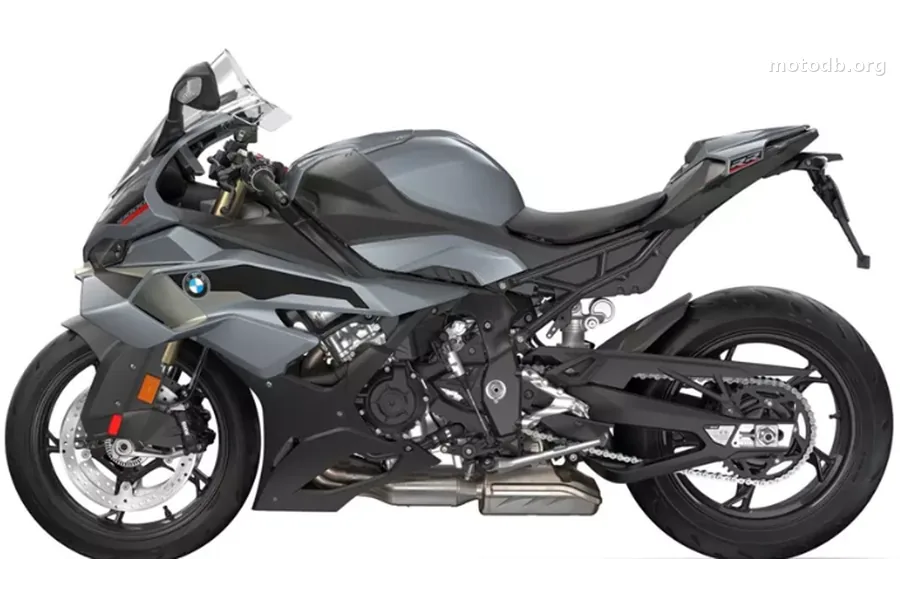
How many horsepower does the BMW S 1000 RR have in this configuration? The answer is 199 hp, achieved at 13,500 rpm thanks to a completely reworked 999 cc inline four-cylinder engine. Redesigned cylinder head, intake ducts with refined geometry, a new intake camshaft, even lighter valves, an airbox with recalculated volume. Every detail counts at this level of compression, set at 13.0:1. What’s more striking than the horsepower figure is the fullness of the torque. The 113 Nm are available at 10,500 rpm, but the BMW S 1000 RR engine maintains a curve of almost disconcerting regularity in the mid-range. Where some rivals, the Yamaha R1 in particular, give it everything in the high revs, the Bavarian retains a density of thrust that makes piloting less anxiety-inducing in everyday use. The exhaust line, reduced by three kilos, contributes to this result as much as to the musicality of the whole.
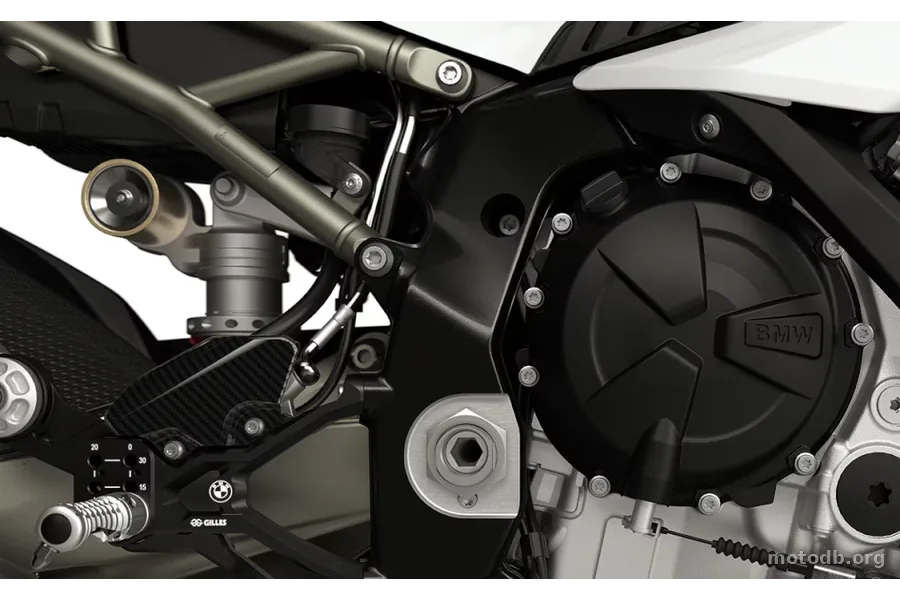
The chassis deserves attention, because it precisely embodies what this revision wanted to bring. The composite aluminum frame, whose structure has been redesigned to seek a better balance between torsional rigidity and longitudinal flexibility, changes the game at the attack. The geometry is new, with head angle, rake, and a wheelbase of 1,425 mm recalculated. The 46 mm inverted fork, adjustable in compression and rebound, gains a few millimeters of travel. The whole weighs 204 kg fully fueled, four kilos less than the previous generation. It’s little on paper, a lot in the hands. Compared to an Aprilia RSV4 or a Panigale, the S 1000 RR is not the lightest, but it compensates with a well-distributed mass and more predictable behavior at the limit of adhesion. The Brembo dual floating disc braking system with four-piston calipers up front does the job without discussion.
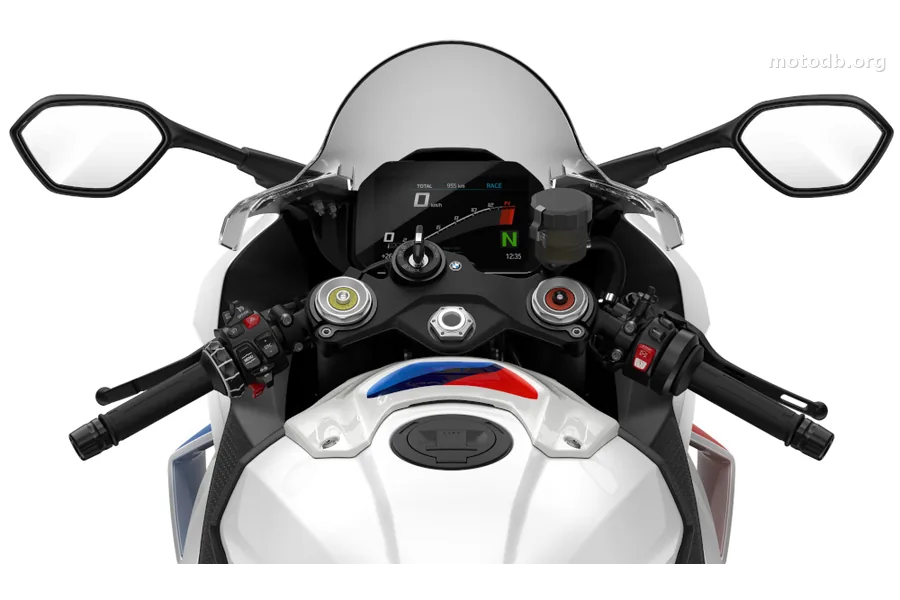
The onboard electronics are the third pillar of this evolution, and probably the one that most clearly distinguishes the 2016 S 1000 RR from its immediate competitors. Three riding modes as standard, two more with the Pro option, Launch Control, Pit-Lane Limiter, traction control DTC with lean angle sensor. All configurable with a precision that would make some professional track systems blush. The HP Pro shifter, optional, allows up and down gear changes without a clutch. Dynamic Damping Control (DDC) suspension, already known on the HP4, remains available as an option for those who want to push automation even further. There is something almost intimidating in this catalog of technologies, but each function has a concrete use on the track, which is not always the case with the competition.
The test of the 2016 BMW S 1000 RR confirms a machine tailored for riders who already have a solid track background. The 815 mm seat height and the closed riding position do not make it a learning tool, and the €17,650 base price clearly excludes hesitation. The target audience is that of regular track days, amateur competition pilots, confirmed athletes who want a machine capable of progressing with them without reaching its own ceiling. The versions that followed, whether the BMW S 1000 RR 2020 or more recent editions, have further refined this recipe. But the S 1000 RR 2016 remains a pivotal step, the one where the brand clearly chose to make electronics a central selling point rather than a simple accessory. Retrospectively, this bet was the right one.
Standard equipment
- Assistance au freinage : Race ABS
- Nombre de mode de conduite : 3
- Jantes aluminium
- Indicateur de vitesse engagée
- Contrôle de traction
- ABS déconnectable
Practical info
- La moto est accessible aux permis : A
Reviews & comments
No reviews yet. Be the first to share your opinion!