Key performance
Technical specifications
Engine
- Displacement
- 321 cc
- Power
- 42.0 ch @ 10750 tr/min (30.9 kW)
- Torque
- 29.4 Nm @ 9000 tr/min
- Engine type
- Bicylindre en ligne, 4 temps
- Cooling
- liquide
- Compression ratio
- 11.2 : 1
- Bore × stroke
- 68 x 44.1 mm
- Valves/cylinder
- 4
- Camshafts
- 2 ACT
- Fuel system
- Injection
Chassis
- Frame
- en acier de type diamond
- Gearbox
- boîte à 6 rapports
- Final drive
- Chaîne
- Front suspension
- Fourche téléhydraulique inversée Ø 37 mm, déb : 130 mm
- Rear suspension
- Mono-amortisseur, déb : 125 mm
Brakes
- Front brakes
- Freinage 1 disque Ø 298 mm, étrier 2 pistons
- Rear brakes
- Freinage 1 disque Ø 220 mm, étrier simple piston
- Front tyre
- 110/70-17
- Rear tyre
- 140/70-17
Dimensions
- Seat height
- 780.00 mm
- Fuel capacity
- 14.00 L
- Weight
- 167.00 kg
- New price
- 5 899 €
Overview
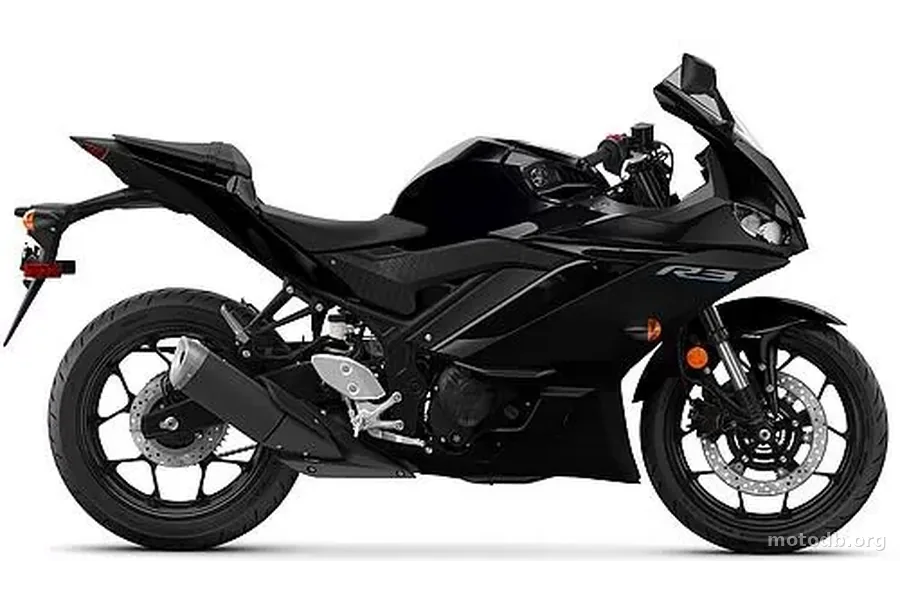
Who would have bet that a 300 could drape itself with so much aplomb in the attributes of the great R1? Yamaha proves to us that even in the anteroom of sportbikes, the spirit of the M1 can intrude. This 2019 R3 is no longer the shy little one playing hide-and-seek with its elders. It now displays a stature, a jawline, and a gaze that are as striking as those of an R6, and its redesigned fairing is not just a coat of paint: the manufacturer promises a reduced aerodynamic drag of 7%, which should allow it to gain a few extra kilometers towards the announced 170 km/h. We are far from the faltering beginnings of the CBR250 and Ninja250; today the category has gained muscle, and the R3 intends to be a spearhead, especially on the circuits of the WSS300 championship where it plays a tactical role.
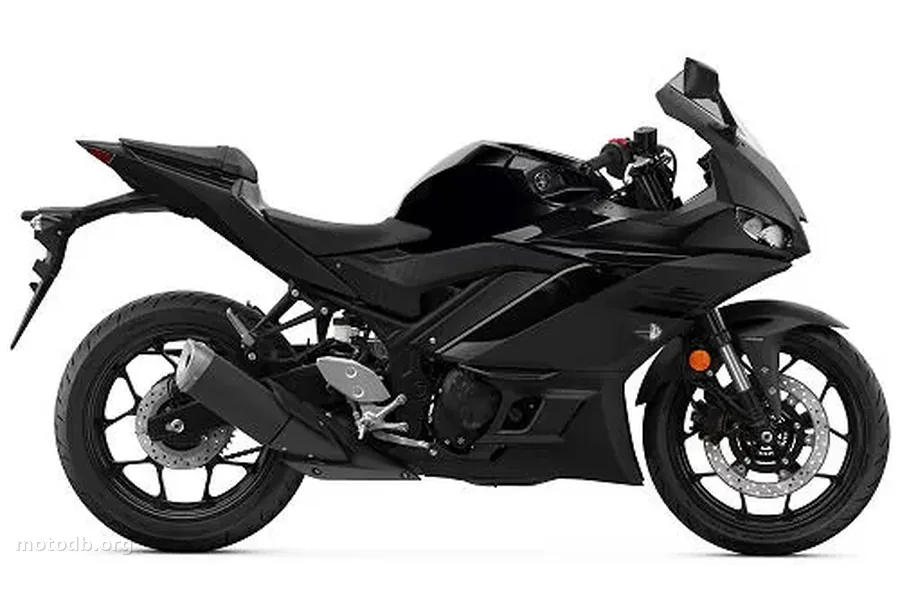
The heart remains the same, a 321 cm3 inline twin-cylinder engine that releases its 42 horsepower at 10,750 rpm, with a torque of 29.4 Nm available fairly high, at 9000 rpm. This engine, already known, is paired with the same steel tubular frame which gains rigidity by relying on the engine block. The six-speed gearbox and braking – a 298 mm disc at the front with a two-piston caliper, a 220 mm disc at the rear – are also carried over unchanged, all topped with an ABS. Yamaha has therefore concentrated its efforts on the front suspension and ergonomics, to give this lightweight sportbike a more assertive character.
The notable novelty is this 37 mm inverted telescopic fork, more imposing and more rigid than that of the previous generation. It offers no adjustment, but for a machine at 5899 euros and intended mainly for road or beginner circuit use, it is an acceptable compromise. The goal is clear: to allow the chassis to better absorb attacks in corners without increasing the bill or complicating use. The ergonomics follow this logic: the 14-liter fuel tank has been reshaped to be wider at the knees, the clip-on handlebars are lowered by 22 mm, and the saddle remains at 780 mm. One adopts a more engaged position, closer to that of a pure sportbike, even if the R3 is still between the sportbike and the sport-GT, far from the cutting edge of a 600 SuperSport.
The dashboard switches to the modern world with an LCD screen that draws directly from the R1, abandoning the needles for a digital display where the rev graph and the gear engaged take precedence. The fuel gauge, trips, clock, and temperature remain present for everyday use. The lights switch to LEDs, completing this facelift that aims to unify the YZF family. A small technical mystery: Yamaha announces a wet weight of 167 kg, two kilos less than the 2015-2018 version, without specifying where these grams have evaporated.
This 2019 R3 is therefore a stylistic and dynamic evolution rather than a mechanical revolution. It clearly targets the young racer or touring rider seeking an accessible, fun, and stylish sportbike, without the constraints and cost of a 600. It plays in the same league as the Kawasaki Ninja 400, more powerful but also more expensive, and must convince by its balance and new character. Yamaha signs here a successful family consistency exercise: the youngest now carries the badge with the pride of its older sisters.
Standard equipment
- Assistance au freinage : ABS de série
Practical info
- La moto est accessible aux permis : A
Indicators & positioning
Similar bikes
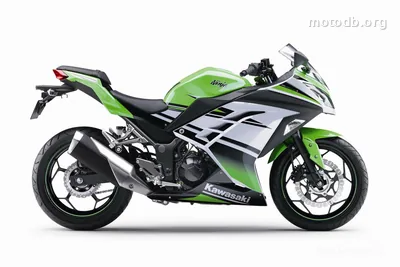
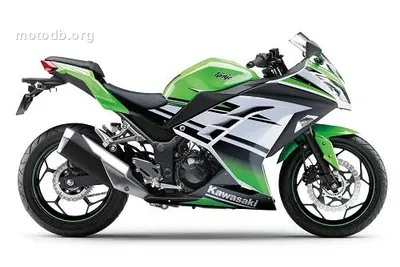
Ninja 300 30th Anniversary Edition
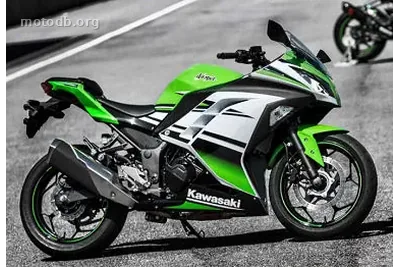
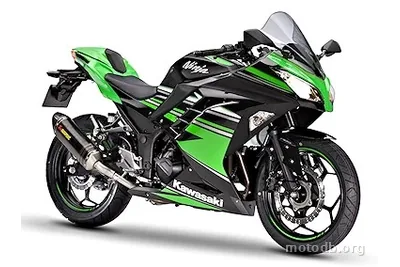
Ninja 300 R KRT Edition
Reviews & comments
No reviews yet. Be the first to share your opinion!