Key performance
Technical specifications
Engine
- Displacement
- 296 cc
- Power
- 39.0 ch @ 11000 tr/min (28.7 kW)
- Torque
- 27.5 Nm @ 10000 tr/min
- Engine type
- Bicylindre en ligne, 4 temps
- Cooling
- liquide
- Compression ratio
- 10.6 : 1
- Bore × stroke
- 62 x 49 mm
- Valves/cylinder
- 4
- Camshafts
- 2 ACT
- Fuel system
- Injection Ø 32 mm
Chassis
- Frame
- tubulaire en acier
- Gearbox
- boîte à 6 rapports
- Final drive
- Chaîne
- Front suspension
- Fourche téléhydraulique Ø 37 mm, déb : 120 mm
- Rear suspension
- Mono-amortisseur, déb : 132 mm
Brakes
- Front brakes
- Freinage 1 disque en pétale Ø 290 mm, étrier 2 pistons
- Rear brakes
- Freinage 1 disque en pétale Ø 220 mm, étrier 2 pistons
- Front tyre
- 110/70-17
- Front tyre pressure
- 2.00 bar
- Rear tyre
- 140/70-17
- Rear tyre pressure
- 2.25 bar
Dimensions
- Seat height
- 785.00 mm
- Fuel capacity
- 17.00 L
- Weight
- 174.00 kg
- New price
- 5 649 €
Overview
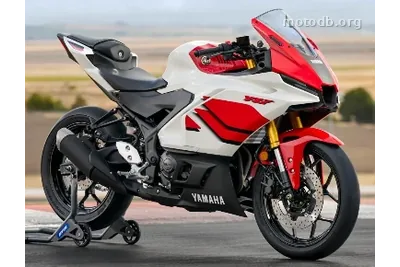
Who hasn't dreamed of riding in the colors of an official Superbike team? In 2016, Kawasaki plays the emotion card by offering its Ninja 300 R exclusively in KRT Edition livery. The green and black factory machine look is a clever move. It speaks to young A2 license holders, it flatters the ego without breaking the bank. And you have to admit, the little sportbike wears the outfit well. The lines borrow unapologetically from the big sisters' catalog: the fairing cut recalls the ZZR 1400, the windscreen evokes the ZX-10R, the sharp face takes cues from the ZX-6R. From ten feet away, you'd swear it was a much larger displacement. Kawasaki has mastered the art of illusion.
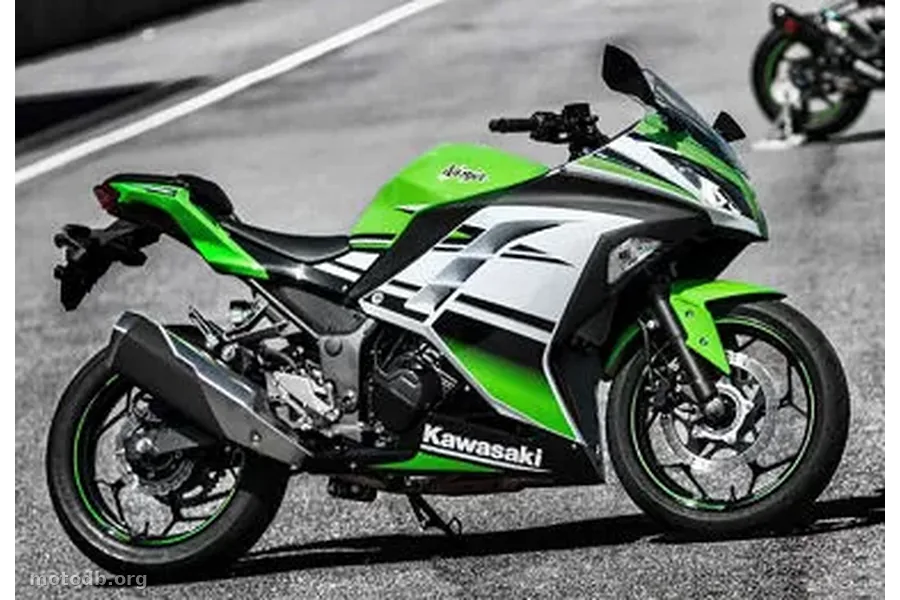
Under the plastic, the parallel twin displaces only 296 cc. Four valves per cylinder, a 62 mm bore with a 49 mm stroke, and a compression ratio of 10.6:1. The result: 39 horsepower delivered at 11,000 rpm and 27.5 Nm of torque at 10,000 rpm. Let's be honest, you need to chase the revs to extract every last drop of performance. But the engine doesn't lack refinement for the category. The dual-throttle-valve injection ensures a clean throttle response, and the slipper clutch forgives poorly judged downshifts. This kind of equipment was found ten years ago only on pure sportbikes. Seeing it here, on an entry-level machine priced at 5,649 euros, is a real selling point against the KTM RC 390 and Yamaha R3 that occupy the same segment.
The tubular steel frame, specific to the 300, gains rigidity over the old 250. The 37 mm telescopic fork offers 120 mm of travel at the front, while the rear monoshock provides 132 mm. Nothing adjustable, but the package remains well-suited for a mix of road use and Sunday rides. The petal disc brakes, 290 mm at the front and 220 mm at the rear with twin-piston calipers, do the job honestly. Standard ABS secures braking for novice riders, and that's a good thing. The 140/70-17 rear tire brings a welcome boost in stability over the previous generation. At 174 kg wet and with a seat height of 785 mm, the Ninja 300 R proves accessible to nearly all rider sizes.
The instrument panel combines a central analog tachometer, readable and sport-oriented, with an offset digital screen displaying speed, fuel gauge, clock, and dual trip meters. An eco-riding indicator rounds out the package. You can't help but smile at this green-minded touch on a sportbike, but with a 17-liter tank and a frugal engine, range is clearly not an issue. Top speed maxes out at around 160 km/h, enough to have fun on track without putting yourself in danger on the open road.
The Kawasaki Ninja 300 R KRT Edition targets a specific audience: the A2 license holder who wants a sportbike with a serious look, reliability, and low running costs. It doesn't pretend to play in the middleweight league, but it delivers on its promise with conviction. Against the KTM RC 390, more powerful but also more high-strung, and the Yamaha R3, with its smoother character, the Kawasaki bets on balance and the prestige of its livery. In a French market historically drawn to large displacements, the 300 cc segment remains niche. Yet, with the ongoing rise in energy costs and tightening regulations, these small sportbikes might well end up winning over more than just the beginner crowd.
Standard equipment
- Assistance au freinage : ABS de série
Practical info
- Véhicule accessible au permis A2 ou bridable à 47.5ch / 35 Kw
- La moto est accessible aux permis : A, A2
Reviews & comments
No reviews yet. Be the first to share your opinion!