Key performance
Technical specifications
Engine
- Displacement
- 296 cc
- Power
- 39.0 ch @ 11000 tr/min (28.7 kW)
- Torque
- 27.5 Nm @ 10000 tr/min
- Engine type
- Bicylindre en ligne, 4 temps
- Cooling
- liquide
- Compression ratio
- 10.6 : 1
- Bore × stroke
- 62 x 49 mm
- Valves/cylinder
- 4
- Camshafts
- 2 ACT
- Fuel system
- Injection Ø 32 mm
Chassis
- Frame
- tubulaire en acier
- Gearbox
- boîte à 6 rapports
- Final drive
- Chaîne
- Front suspension
- Fourche téléhydraulique Ø 37 mm, déb : 120 mm
- Rear suspension
- Mono-amortisseur, déb : 132 mm
Brakes
- Front brakes
- Freinage 1 disque en pétale Ø 290 mm, étrier 2 pistons
- Rear brakes
- Freinage 1 disque en pétale Ø 220 mm, étrier 2 pistons
- Front tyre
- 110/70-17
- Front tyre pressure
- 2.00 bar
- Rear tyre
- 140/70-17
- Rear tyre pressure
- 2.25 bar
Dimensions
- Seat height
- 785.00 mm
- Fuel capacity
- 17.00 L
- Weight
- 172.00 kg
- New price
- 5 149 €
Overview
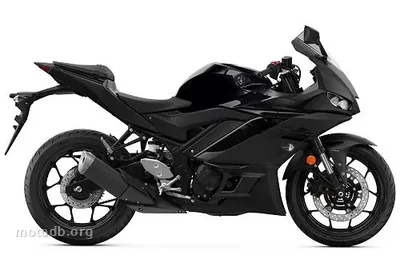
What sets one motorcycle apart from another when, beneath the skin, everything remains strictly identical? Paint. And that's exactly the gamble Kawasaki took in 2014 with this Ninja 300 R Special Edition. Take the small sportbike from the lineup, the one that earns its stripes in the hands of restricted license holders, and slap on livery worthy of Supersport paddocks. The result is an eye-catcher. You could almost mistake it for a race machine, with aggressive color schemes and wheel stripe decals that add character to an already well-sculpted silhouette.
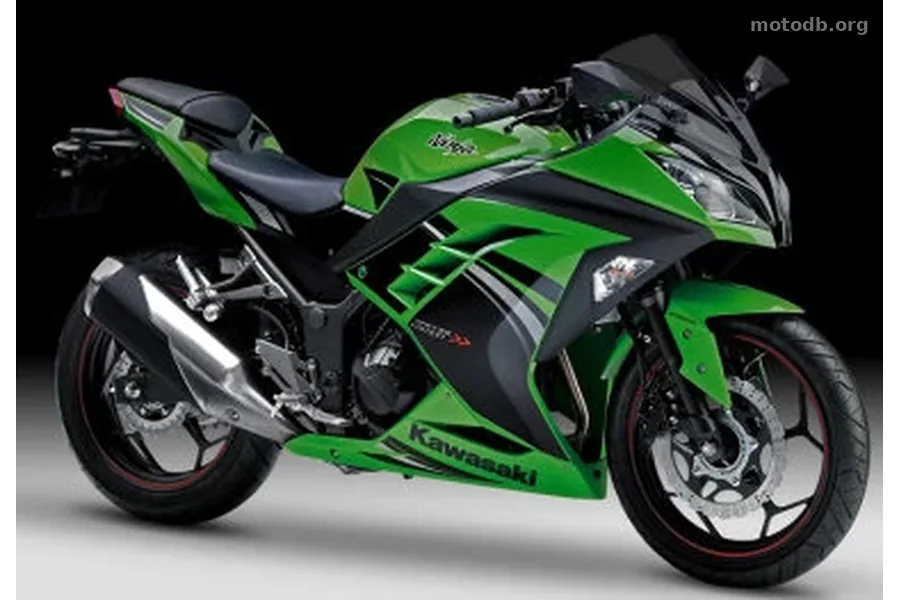
Let's be clear, the word "Special" in the name does all the marketing heavy lifting. On the mechanical side, nothing changes by a single millimeter. You get the trusty 296cc inline twin, fitted with four valves per cylinder and a 10.6:1 compression ratio, delivering 39 horsepower at 11,000 rpm and 27.5 Nm of torque at 10,000 rpm. This is an engine you have to wring out to extract every last drop of performance, a little twin that loves revs and rewards the patient rider. The six-speed gearbox does its job without any particular brilliance, and the chain drive remains conventional. Top speed caps out at 160 km/h, which is more than enough for its intended use. No racing kit, no revised engine mapping, no dedicated exhaust. Just a dedicated tank pad and those famous wheel stripes. That's thin justification for a special edition.
Where the Ninja 300 remains relevant is in its overall balance. At 172 kg wet, it's nimble and reassuring, and its 785 mm seat height lets most riders plant their feet on the ground without stress. The tubular steel frame won't revolutionize the category, but it provides sufficient rigidity to tackle a few corners with confidence. The 37 mm hydraulic telescopic fork and rear mono-shock make up a suspension package that's adequate for mixed use between city streets and country roads. Braking, handled by 290 mm petal discs up front and 220 mm at the rear with twin-piston calipers, proves progressive and effective for the machine's size. It's a shame that ABS remained optional on this model year, especially for a motorcycle aimed at newly licensed riders.
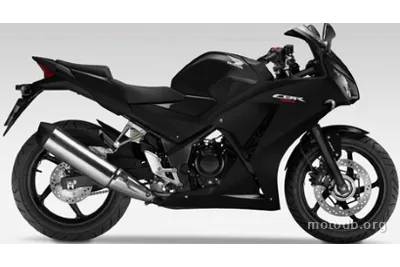
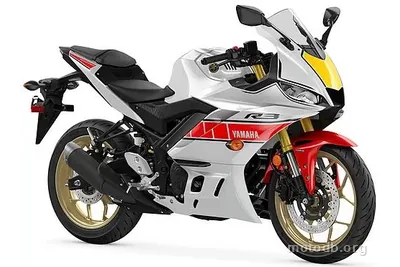
Against the competition, the Ninja 300 was then jostling for position with the Yamaha YZF-R3 and the Honda CBR300R. The Yamaha, more powerful with its 321cc engine, had the advantage of mid-range torque. The Honda banked on the reliability and smoothness of its single-cylinder. The Kawasaki compensated with a sportier temperament through corners and a dashboard that was particularly legible and comprehensive for the category. At 5,149 euros, this Special Edition sat slightly above the standard version without bringing any technical argument to justify it. The premium buys you bragging rights. And bragging rights are debatable when you're just starting out and every euro counts.
This Ninja 300 R Special Edition is therefore aimed first and foremost at those who want to ride a Ninja, sport a paddock look, and enjoy a solid foundation for learning. It's an excellent school, a two-wheeled teaching tool that forgives mistakes while delivering real thrills once you start understanding how to nail a racing line. But let's not kid ourselves. Remove the word "Special" from the tank, and what remains is a Ninja 300. Nothing more, nothing less. And that's already very good.
Standard equipment
- Assistance au freinage : ABS en option
Practical info
- Véhicule accessible au permis A2 ou bridable à 47.5ch / 35 Kw
- La moto est accessible aux permis : A, A2
Reviews & comments
No reviews yet. Be the first to share your opinion!