Key performance
Technical specifications
Engine
- Displacement
- 296 cc
- Power
- 39.0 ch @ 11000 tr/min (28.7 kW)
- Torque
- 27.5 Nm @ 10000 tr/min
- Engine type
- Bicylindre en ligne, 4 temps
- Cooling
- liquide
- Compression ratio
- 10.6 : 1
- Bore × stroke
- 62 x 49 mm
- Valves/cylinder
- 4
- Camshafts
- 2 ACT
- Fuel system
- Injection Ø 32 mm
Chassis
- Frame
- tubulaire en acier
- Gearbox
- boîte à 6 rapports
- Final drive
- Chaîne
- Front suspension
- Fourche téléhydraulique Ø 37 mm, déb : 120 mm
- Rear suspension
- Mono-amortisseur, déb : 132 mm
Brakes
- Front brakes
- Freinage 1 disque en pétale Ø 290 mm, étrier 2 pistons
- Rear brakes
- Freinage 1 disque en pétale Ø 220 mm, étrier 2 pistons
- Front tyre
- 110/70-17
- Front tyre pressure
- 2.00 bar
- Rear tyre
- 140/70-17
- Rear tyre pressure
- 2.25 bar
Dimensions
- Seat height
- 785.00 mm
- Fuel capacity
- 17.00 L
- Weight
- 172.00 kg
- New price
- 5 149 €
Overview
Thirty years after the GPZ 900 R, the bike that invented the very concept of the Ninja, Kawasaki decided to repaint its entire lineup in World Superbike colors. And the little 300 was no exception to the celebration. Green and black livery inspired by the machines of Tom Sykes and Loris Baz, a commemorative sticker on the fork crown, a badge in front of the fuel cap, and a model-specific tank pad. On paper, it's a cosmetic exercise. In reality, it transforms a sensible small sportbike into an object of desire that makes you forget its displacement.
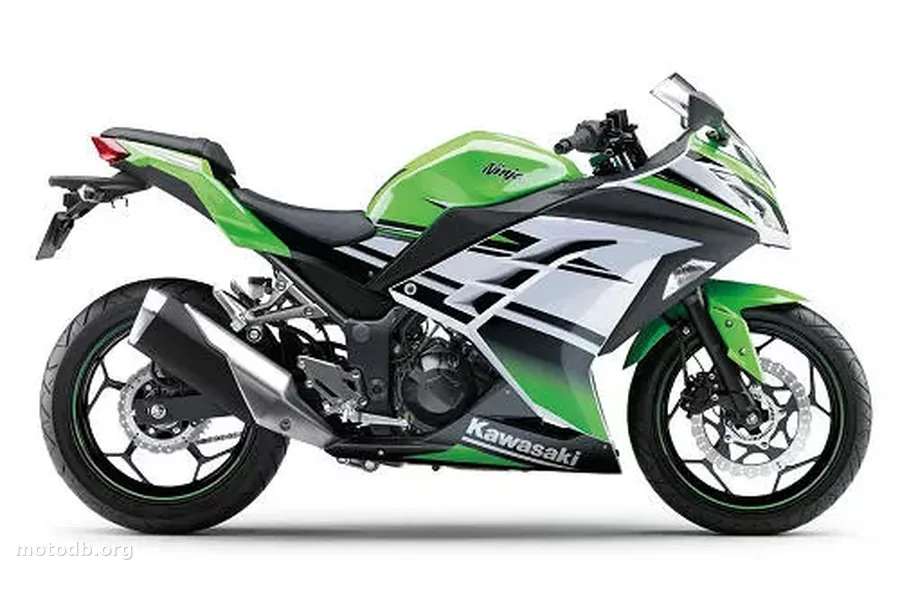
Beneath this race-replica dress, the mechanicals remain strictly identical to the standard Ninja 300 R. The fuel-injected 296 cc parallel twin produces 39 horsepower at 11,000 rpm and 27.5 Nm of torque at 10,000 rpm. Not enough to chase down a Yamaha R3 on long straights, but more than sufficient to have fun on back roads or at a track day school. The engine loves to rev — you have to wring its neck to extract every last drop of performance, and that's precisely what makes it so entertaining to ride. You work on your lines, you refine your braking, you learn to exploit every available horse rather than manage a surplus of power. That's the whole philosophy of this displacement class.
The tubular steel frame, the 37 mm telescopic fork, and the rear monoshock are nothing fancy from a technology standpoint, but the package works with real coherence. At 172 kg wet, it's nimble and reassuring, including for a freshly licensed A2 rider. The 785 mm seat height lets most body types put their feet down without stress. Braking is handled by a 290 mm petal disc up front and a 220 mm disc at the rear — adequate for the intended purpose — and Kawasaki offered ABS as an option on this anniversary edition. The 17-liter tank provides comfortable range for weekend rides without constant fuel stops.
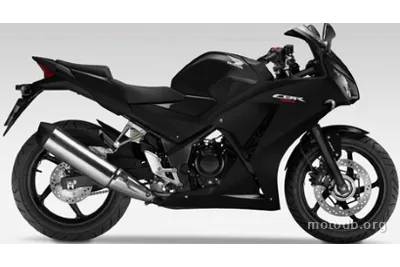
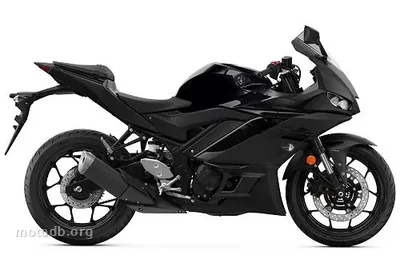
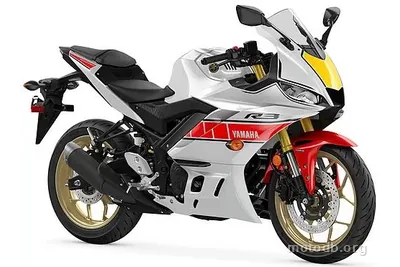
Against the competition, the Ninja 300 falls short on certain points. The Honda CBR300R plays the economical single-cylinder card, while the Yamaha YZF-R3 boasts a more powerful twin and improved fit and finish. But neither offered in 2015 a special edition this visually striking, at the same price as the base model. Because that's the real surprise of this 30th anniversary: Kawasaki priced this limited series at 5,149 euros — not a single cent more than the standard 300. For once, marketing doesn't come with a surcharge.
This anniversary Ninja 300 R is aimed at new riders who want a machine with character without breaking the bank, and at experienced motorcyclists looking for a lightweight toy for back roads or introductory track days. It won't revolutionize the segment, and it doesn't pretend to rival mid-displacement sportbikes. But it proudly carries a legacy — that of a lineage that began in 1984 with the GPZ and, three decades later, continues to make Kawasaki green shine all the way down to its entry-level models. Perhaps that's the real birthday gift.
Standard equipment
- Assistance au freinage : ABS en option
Practical info
- Véhicule accessible au permis A2 ou bridable à 47.5ch / 35 Kw
- La moto est accessible aux permis : A, A2
Reviews & comments
No reviews yet. Be the first to share your opinion!