Key performance
Technical specifications
Engine
- Displacement
- 321 cc
- Power
- 42.0 ch @ 10750 tr/min (30.2 kW)
- Torque
- 29.5 Nm @ 9000 tr/min
- Engine type
- In-line four, four-stroke
- Cooling
- Liquid
- Compression ratio
- 11.2:1
- Bore × stroke
- 68.0 x 44.1 mm (2.7 x 1.7 inches)
- Valves/cylinder
- 2
- Camshafts
- 2 ACT
- Fuel system
- Injection
- Valve timing
- Double Overhead Cams/Twin Cam (DOHC)
- Lubrication
- Wet sump
- Ignition
- TCI
- Starter
- Electric
Chassis
- Frame
- Diamond
- Gearbox
- 6-speed
- Final drive
- Chain (final drive)
- Front suspension
- 37mm KYB inverted front forks
- Rear suspension
- Swingarm
- Front wheel travel
- 130 mm (5.1 inches)
- Rear wheel travel
- 125 mm (4.9 inches)
Brakes
- Front brakes
- Single disc. Hydraulic. ABS.
- Rear brakes
- Single disc. Hydraulic. ABS.
- Front tyre
- 110/70-R17
- Front tyre pressure
- 2.00 bar
- Rear tyre
- 140/70-R17
- Rear tyre pressure
- 2.50 bar
Dimensions
- Seat height
- 780.00 mm
- Wheelbase
- 1380.00 mm
- Ground clearance
- 160.00 mm
- Length
- 2090.00 mm
- Width
- 730.00 mm
- Height
- 1140.00 mm
- Fuel capacity
- 14.00 L
- Weight
- 169.00 kg
- New price
- 6 399 €
Overview
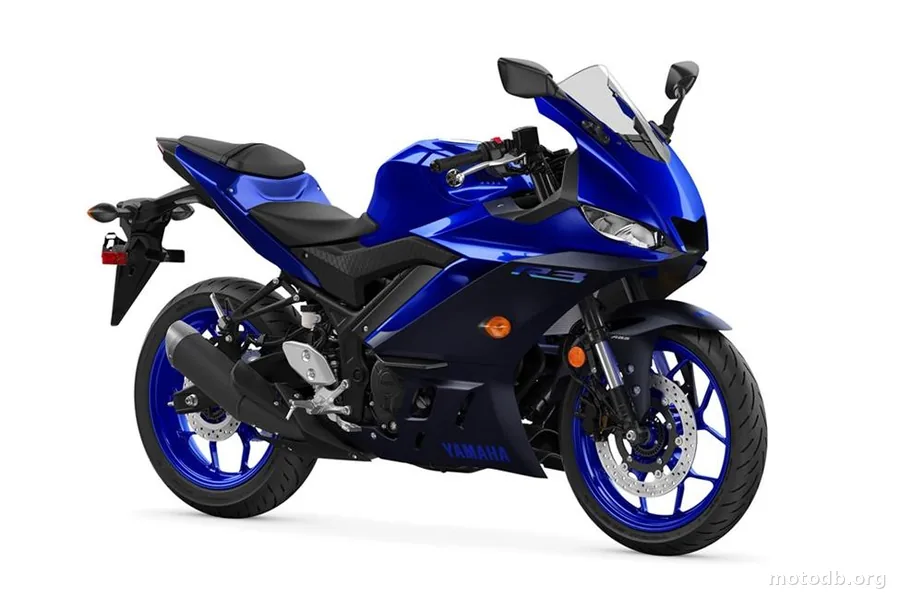
What does a sportbike under €7,000 look like in 2022? If you’re expecting a plastic toy or a simple “A2 machine,” the Yamaha R3 is likely to surprise you. Iwata has indeed grafted the DNA of its R1 onto this 321 cm³ twin-cylinder engine, and the result is a motorcycle that fully embraces its status as a serious small sportbike, far from the timid 250s of yesteryear.
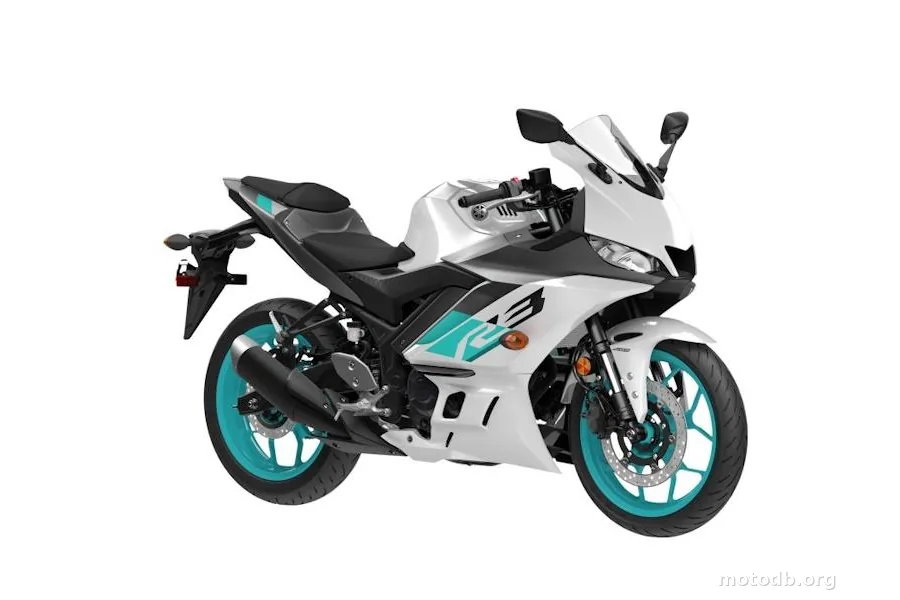
The heart of the machine, a 321 cm³ inline twin, delivers its 42 horsepower with a liveliness that honors the lineage. You need to wind it up, beyond 9,000 rpm, to feel the 29.5 Nm of torque really awaken. That's where the sporty character expresses itself, with a gritty sound and a frank progression to its limit. With an announced weight of 169 kg fully fueled, the Yamaha R3 proves to be alert, and its maximum speed flirting with 170 km/h is more than honest for this segment. Faced with competitors such as the Kawasaki Ninja 400, a little more powerful, or the KTM RC 390, more radical, the R3 plays the card of balance and Yamaha refinement.
The major new feature for this 2022 model, besides the inevitable adaptation to Euro5 standards, lies in its attitude. The fairing has been completely redesigned to echo the codes of the R1 and R6, with an aggressive fork head and LED lights. This is far from simple bodywork; it’s a true sportbike identity that is claimed. This transformation is accompanied by ergonomic modifications: the 14-liter fuel tank is redesigned to better position the knees, and the clip-on handlebars are lowered by 22 mm. The rider is naturally invited to tuck in, even though the seat height of 780 mm remains accessible. The dashboard adopts an LCD display inspired by the larger models, clear and modern, highlighting the essentials for riding.
On the chassis side, Yamaha has made a pragmatic choice. The steel trellis frame remains identical, solid and predictable. The real evolution comes from the front, with a new 37 mm inverted fork, stiffer. It is not adjustable, a deliberate choice to contain the price of the new Yamaha R3, but it offers noticeably improved handling in fast corners. The brakes, with a 298 mm disc at the front and ABS, do their job correctly without being extraordinary. It is a coherent ensemble, tailored for winding roads and joyful revs, more than for pure circuit riding.
So, who should consider a used or new Yamaha R3? Clearly, the young license holder looking for a first sportbike with real style, or the experienced rider seeking a fun and economical machine for everyday use. Its price, around €6,400, places it in the high average of the category, but it justifies it by its finish, its image and its accomplished behavior. It’s not the fastest, nor the most radical, but the 2022 Yamaha R3 is probably the most mature and desirable in its class. It proves that you can have the shoulders of a big one without the corresponding displacement.
Standard equipment
- Assistance au freinage : ABS de série
Practical info
- La moto est accessible aux permis : A
Indicators & positioning
Similar bikes
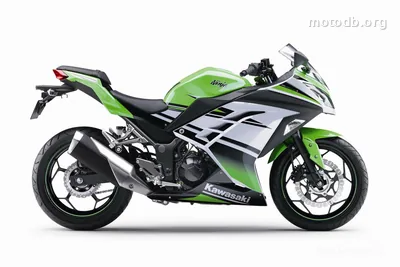
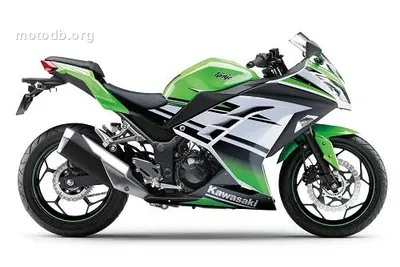
Ninja 300 30th Anniversary Edition
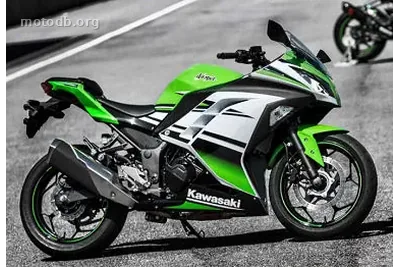
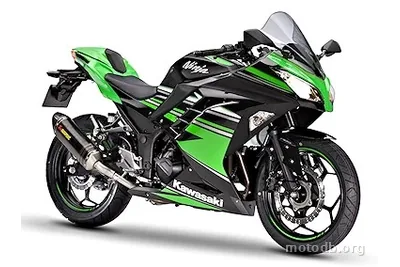
Ninja 300 R KRT Edition
Reviews & comments
No reviews yet. Be the first to share your opinion!