Key performance
Technical specifications
- Power
- 42.0 ch @ 10750 tr/min (30.7 kW) → 42.0 ch @ 10750 tr/min (30.9 kW)
- Torque
- 29.6 Nm @ 9000 tr/min → 29.5 Nm @ 9000 tr/min
- Engine type
- Twin, four-stroke → Bicylindre en ligne, 4 temps, calé à 180°
- Cooling
- Liquid → liquide
- Compression ratio
- 11.2:1 → 11.2 : 1
- Bore × stroke
- 68.0 x 44.1 mm (2.7 x 1.7 inches) → 68 x 44.1 mm
- Camshafts
- — → 2 ACT
- Fuel system
- Injection. Fuel Injection with YCC-T and YCC-I → Injection
- Valve timing
- Double Overhead Cams/Twin Cam (DOHC) → —
- Ignition
- TCI: Transistor Controlled Ignition → —
- Starter
- Electric → électrique
- Frame
- Steel frame and swingarm → en acier de type diamond
- Gearbox
- 6-speed → boîte à 6 rapports
- Final drive
- Chain (final drive) → Chaîne
- Front suspension
- 41mm KYB telescopic fork → Fourche téléhydraulique inversée Ø 37 mm, déb : 130 mm
- Rear suspension
- KYB single shock → Mono-amortisseur, déb : 125 mm
- Front wheel travel
- 130 mm (5.1 inches) → —
- Rear wheel travel
- 124 mm (4.9 inches) → —
- Front brakes
- Single disc → Freinage 1 disque Ø 298 mm, étrier 2 pistons
- Rear brakes
- Single disc → Freinage 1 disque Ø 220 mm, étrier simple piston
- Front tyre
- 110/70-M17 → 110/70-17
- Front tyre pressure
- — → 2.00 bar
- Rear tyre
- 140/70-M17 → 140/70-17
- Rear tyre pressure
- — → 2.50 bar
- Seat type
- — → Selle biplaces
- Wheelbase
- 1379.00 mm → —
- Length
- 2090.00 mm → —
- Width
- 719.00 mm → —
- Height
- 1135.00 mm → —
- Weight
- 166.90 kg → 169.00 kg
- New price
- — → 6 999 €
Engine
- Displacement
- 321 cc
- Power
- 42.0 ch @ 10750 tr/min (30.9 kW)
- Torque
- 29.5 Nm @ 9000 tr/min
- Engine type
- Bicylindre en ligne, 4 temps, calé à 180°
- Cooling
- liquide
- Compression ratio
- 11.2 : 1
- Bore × stroke
- 68 x 44.1 mm
- Valves/cylinder
- 4
- Camshafts
- 2 ACT
- Fuel system
- Injection
- Starter
- électrique
Chassis
- Frame
- en acier de type diamond
- Gearbox
- boîte à 6 rapports
- Final drive
- Chaîne
- Front suspension
- Fourche téléhydraulique inversée Ø 37 mm, déb : 130 mm
- Rear suspension
- Mono-amortisseur, déb : 125 mm
Brakes
- Front brakes
- Freinage 1 disque Ø 298 mm, étrier 2 pistons
- Rear brakes
- Freinage 1 disque Ø 220 mm, étrier simple piston
- Front tyre
- 110/70-17
- Front tyre pressure
- 2.00 bar
- Rear tyre
- 140/70-17
- Rear tyre pressure
- 2.50 bar
Dimensions
- Seat height
- 780.00 mm
- Seat type
- Selle biplaces
- Fuel capacity
- 14.00 L
- Weight
- 169.00 kg
- New price
- 6 999 €
Overview
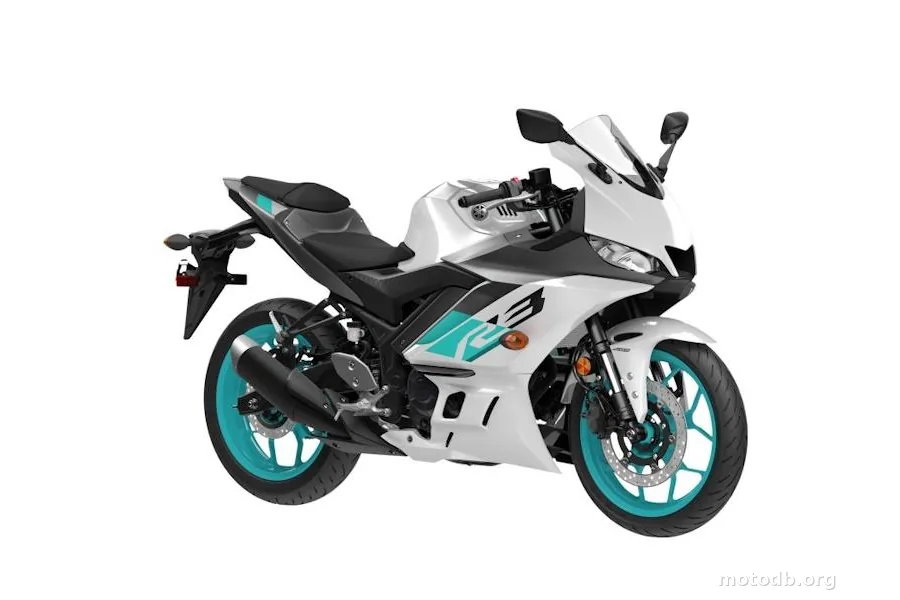
The Yamaha R3 draws its design cues from the R9. The latest sporty model at the heart of the MT-09 has influenced the new design of the R-series, and the little 300 embraces it. A face full of promise for ambitions that remain within a consistent framework.
Slender eyes, a pinched nose, a constricted nostril, subtle aerodynamics – the face of the R3 wants to defy trends and establish its own dimension, with echoes of techno-symbiosis. Its cheeks see the birth of winglet substitutes, more for following the trend than for real effectiveness. Only experienced riders know how to take advantage of the potential of winglets on a 200 horsepower hypersport; on a 40 horsepower machine...
Which relies on other assets to seduce, although the public is always sensitive to arguments coming from the aura of competition. The R3 gains a USB-A port and a new LCD dashboard. No color TFT screen? No handlebar-mounted controls? Yamaha seems to be limiting its modernization efforts. But connected motorcyclists are not forgotten, as it is possible to connect your smartphone and enjoy the MyRide app. This allows you to access a host of motorcycle parameters, check where you last parked, create a logbook, view data on engine speed or acceleration rate (for example), and receive notifications for calls, texts, and emails. To name a few.
The R3 aims to improve the rider’s life with a narrower seat and a slimmer profile, a clutch lever closer to the handlebar, and the addition of an assist and slipper clutch. It reduces lever effort and helps to calm rear-end instability under hard braking.
This modernized exterior hides the same mechanical specifications and chassis as the previous R3 – a combination that has not evolved much since the first generation, except for the suspension. Head down, knees tucked in, and right wrist twisted, it’s time to relax the connecting rods while the engine goes on to conquer its 42 horsepower, produced by the 321 cm3 twin-cylinder engine – Euro5+ validated. Its steel tubular frame complements its rigidity by relying on the engine block. Braking is provided by a 298 mm front disc, a 220 mm rear disc, dual and single piston calipers (depending on the size of the bite), and ABS to top it all off. There, nothing changes; it’s for the ground connection that Yamaha has offered new parts on the Phase II.
The road, you have to cut into it. To that end, a 37 mm inverted fork is called to the rescue. More imposing and stiffer than the 41 mm of the classic format, it will allow you to demand a little more from the chassis during spirited outings. Alas, it offers no adjustment possibilities. But it doesn’t care. Apart from those who will take it to the track, most of its users will not want to touch the parameters to fine-tune the handling. And a more advanced fork would have significantly increased the price. A 300 positioned between a sporty and a sport-GT motorcycle is not intended to offer the sharpness of a 600 SuperSport.
This will not prevent a tight dance with the R3. A motorcycle is held. The fuel tank was redesigned in this sense in 2019. Without losing a drop of its 14 liters, it revises its shape to be wider in its upper part and lose a little height. The clip-on handlebars also dropped, by 22 mm. Here is how to adopt a slightly more sporty attitude.
The R3 seems to have changed categories, from sporty-road to pure sporty motorcycle, by adopting a M1-style fairing and a more muscular front end. A beautiful exercise from Yamaha, indicating the confidence that some manufacturers develop in this segment. This 300 is playing the game and wants to have a little more fun with a touch of mischief.
M.B - Photos constructeur
Standard equipment
- Assistance au freinage : ABS
- Jantes aluminium
- Indicateur de vitesse engagée
- Bluetooth
- Prise USB
- Embrayage anti-dribble
Practical info
- La moto est accessible aux permis : A
Indicators & positioning
Similar bikes
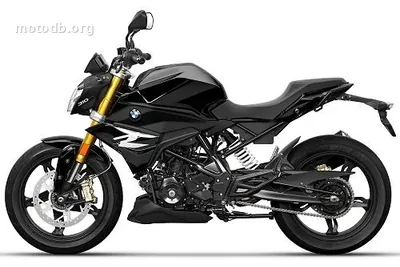
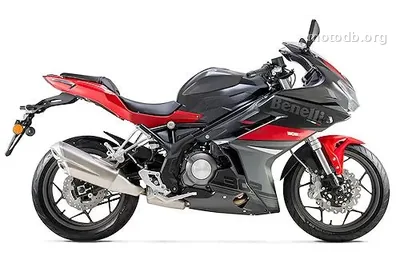
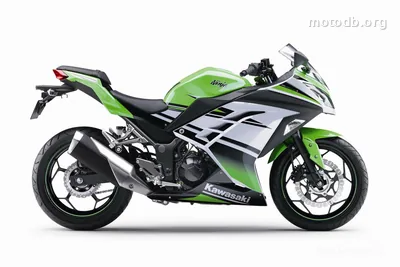
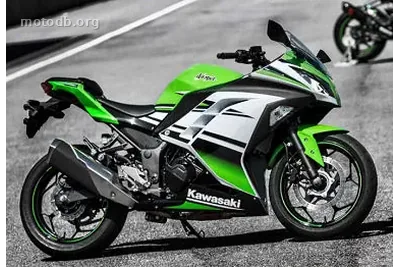
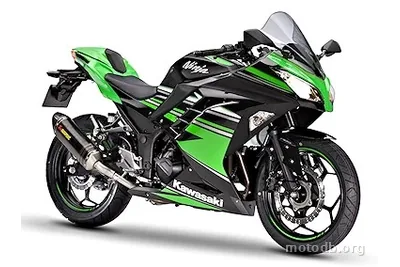
Ninja 300 30th Anniversary Edition
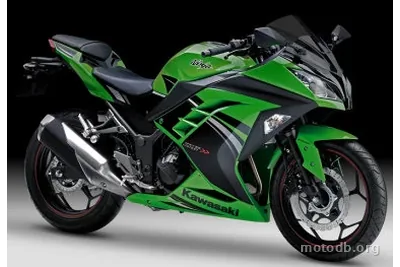
Ninja 300 R KRT Edition
Reviews & comments
No reviews yet. Be the first to share your opinion!