Key performance
Technical specifications
Engine
- Displacement
- 250 cc
- Engine type
- Single cylinder, four-stroke
- Cooling
- Liquid
- Bore × stroke
- 78.0 x 52.3 mm (3.1 x 2.1 inches)
- Fuel system
- Injection
- Valve timing
- Double Overhead Cams/Twin Cam (DOHC)
- Ignition
- Keihin EMS
- Starter
- Electric & kick
Chassis
- Frame
- Central double-cradle-type 25CrMo4 steel
- Gearbox
- 6-speed
- Final drive
- Chain (final drive)
- Clutch
- Wet, DDS multi-disc clutch, Brembo hydraulics
- Front suspension
- WP-USD Xplor 48 with preload adjuster
- Rear suspension
- WP Xplor PDS shock absorber
- Front wheel travel
- 300 mm (11.8 inches)
- Rear wheel travel
- 310 mm (12.2 inches)
Brakes
- Front brakes
- Single disc. Brake calipers on floating bearings
- Rear brakes
- Single disc. Brake calipers on floating bearings
Dimensions
- Seat height
- 960.00 mm
- Wheelbase
- 1482.00 mm
- Ground clearance
- 355.00 mm
- Fuel capacity
- 9.00 L
- Dry weight
- 103.00 kg
Overview
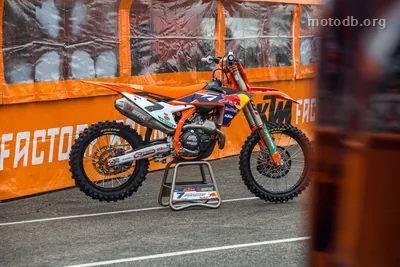
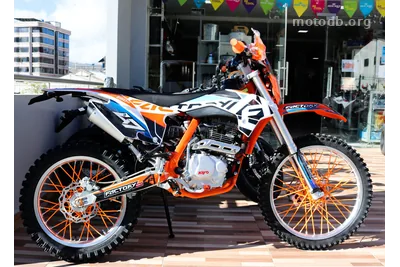
When KTM decides to put 103.5 kg on a scale and graft a 250 cc fuel-injected single-cylinder onto it, the result is called the KTM 250 EXC-F 2020, and it seriously reshuffles the deck in its category. Since its earliest versions, the KTM 250 EXC-F has always carried a reputation as the Swiss Army knife of enduro: light, nimble, accessible to riders still developing their skills without leaving experts out in the cold. The 2020 model year pushes the exercise even further, with a fully revised chromoly steel frame and refined WP Xplor suspension tuned to match the chassis updates.
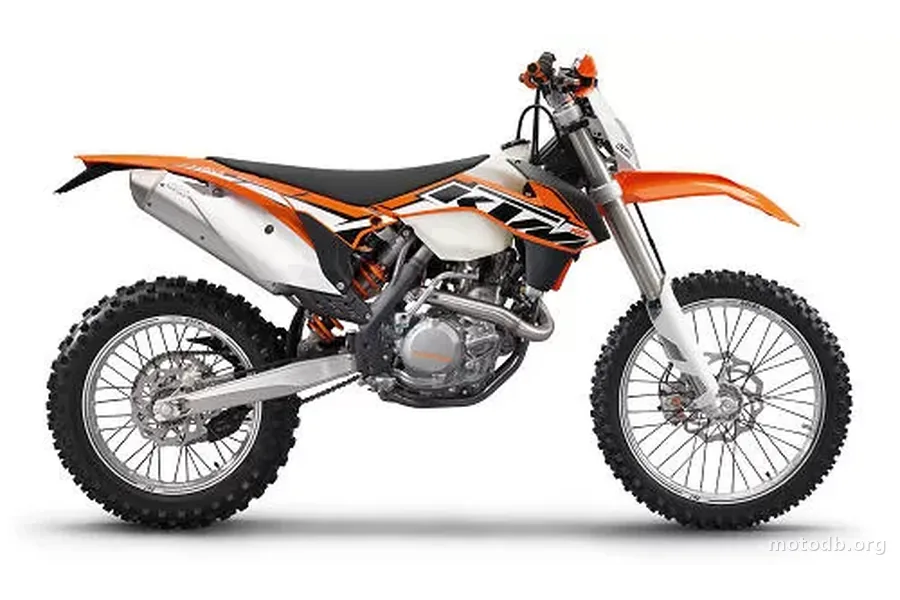
The engine is where everything gets decided. The 249.9 cc four-stroke single produces 35 horsepower, which looks modest on paper compared to a Husqvarna FE 250 or a Beta RR 250 4T, but raw power is not the point here. The 78 mm bore with a 52.3 mm stroke defines a short-stroke engine character — snappy and eager to rev. The 12.8:1 compression ratio, paired with the 42 mm Keihin fuel injection, produces a linear, easy-to-meter power curve, which is precisely what a rider building pace needs. The DOHC cylinder head with its titanium valves and DLC-coated finger followers limits friction at high rpm; the repositioned crankshaft, moved toward the center of gravity, shortens internal distances and improves responsiveness on tight corner exits. Those looking to further optimize their machine will find the KTM 250 EXC-F workshop manual useful before touching the KTM 250 EXC-F exhaust or adjusting engine maps through the ECU.
The chassis deserves as much attention as the mechanics. The central frame in automatically welded hydroformed tubes adopts increased torsional rigidity, with aluminum cylinder head mounts that better absorb vibrations and sharpen trajectory in technical sections. The WP-USD Xplor 48 mm open-cartridge fork remains the benchmark in its category: compression on the left, rebound on the right, thirty adjustment positions on each leg. The rear PDS shock absorber, linkage-free, simplifies the kinematics and reduces the risk of snagging on rocks. With 355 mm of ground clearance and a seat height of 960 mm, the machine is aimed at riders of average stature, still progressing or already seasoned, rather than complete beginners who have never left the tarmac. The 9-liter translucent polyethylene tank is sufficient for a standard enduro special stage, without being generous for long riding days.
At €10,299, the KTM 250 EXC-F 2020 sits at the top of its price segment. That is the cost of a motorcycle directly derived from competition platforms, delivered with a Mitsuba electric starter powered by a 2 Ah lithium battery and Brembo Wave disc brakes at both wheels. The power-to-equipment ratio can be compared to a Yamaha WR250F or a Honda CRF250RX, but both Japanese machines remain less well equipped on the electronics side, with noticeably less sophisticated engine management. The used KTM 250 EXC-F holds its value well on the secondhand market, reflecting buyers' lasting confidence in the platform's reliability — whether it is a KTM 250 EXC-F 2009, a KTM 250 EXC-F 2012, or more recent versions such as the KTM 250 EXC-F 2021 and the KTM 250 EXC-F 2022. That is a solid argument for anyone torn between buying new or a well-maintained used example.
What this machine fully owns is its identity as a homologated competition tool. It does not have the low-end tractability of a versatile trail bike, nor the comfort of a mid-size adventure motorcycle. On a marked trail, however, in a timed section, or during a club enduro outing, the KTM 250 EXC-F finds its register with a precision that leaves little room for criticism. The intermediate rider looking to progress quickly, the seasoned endurist seeking a light and easily tunable machine: those are the two profiles this motorcycle was built for, without compromise.
Reviews & comments
No reviews yet. Be the first to share your opinion!