Key performance
Technical specifications
Engine
- Displacement
- 998 cc
- Power
- 200.0 ch @ 11000 tr/min (147.1 kW)
- Torque
- 137.3 Nm @ 8500 tr/min
- Engine type
- 4 cylindres en ligne, 4 temps
- Cooling
- liquide
- Compression ratio
- 11.2 : 1
- Bore × stroke
- 76 x 55 mm
- Valves/cylinder
- 4
- Camshafts
- 2 ACT
- Fuel system
- Injection Ø 40 mm + compresseur
- Starter
- électrique
Chassis
- Frame
- treillis tubulaire en tubes d'acier
- Gearbox
- boîte à 6 rapports
- Final drive
- Chaîne
- Front suspension
- Fourche téléhydraulique inversée Ø 43 mm, déb : 120 mm
- Rear suspension
- Mono-amortisseur et monobras, déb : 139 mm
Brakes
- Front brakes
- Freinage 2 disques Brembo Ø 320 mm, fixation radiale, étrier 4 pistons (M50 monobloc)
- Rear brakes
- Freinage 1 disque Ø 250 mm, étrier 2 pistons
- Front tyre
- 120/70-17
- Rear tyre
- 190/55-17
Dimensions
- Seat height
- 835.00 mm
- Seat type
- Selle biplaces
- Fuel capacity
- 19.00 L
- Weight
- 247.00 kg
- Dry weight
- 247.00 kg
- New price
- 29 000 €
Overview
Imagine an aeronautical engineer who decides one fine morning to build a sport-GT. Not one of those sensible machines that claim to do everything without truly excelling at anything, but a device conceived like a jet engine fitted with luggage. That is roughly what Kawasaki concocted in 2018 with the H2 SX, transposing the supercharger technology from its track-bred H2 models into grand touring. Eight years on, the 2026 version continues to refine this radical philosophy, millimetre by millimetre.
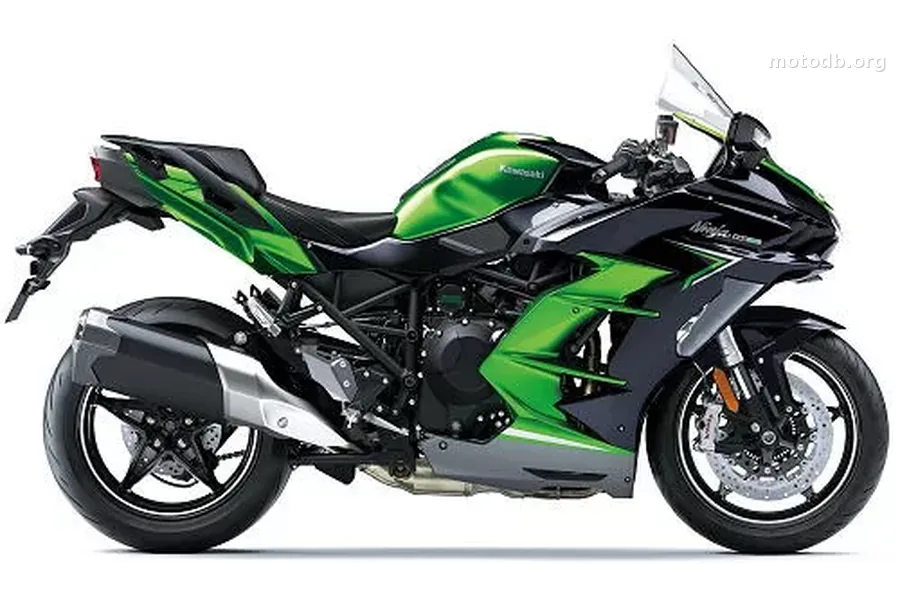
The engine remains the beating heart of the legend: a 998 cc inline four-cylinder fed by a proprietary positive-displacement supercharger, developing 200 hp at 11,000 rpm and 137.3 Nm at 8,500 rpm. With the Ram Air system in action, that figure climbs to 210 hp. Against a BMW S 1000 XR at 165 hp or a Ducati Multistrada V4 S at 170 hp, the Ninja stands its ground without any inferiority complex, and the 247 kg on the scales only deepens the mystery: how can a machine this heavy feel so alive once it is let loose on an open road? The answer comes down to one word — Supercharger — and to the unrelenting physics of mid-range torque.
For 2026, Kawasaki has grafted onto its already substantial electronics suite an AHB system, Auto High Beam, which manages the main beam via a camera that analyses ambient light levels and the lights of surrounding vehicles. A discreet addition, but a useful one for long night stages. More structurally significant, the dual-radar system fitted since 2022 places the SE on ground few motorcycles dare tread: a front sensor drives the Forward Collision Warning FCW and the Adaptive Cruise Control ACC, while a rear sensor monitors blind spots via BSD. The latter deserves special mention, because anyone who has tried to check their mirror at 130 km/h on a motorway immediately understands why this technology — commonplace in cars — makes complete sense on two wheels. The ACC, on the other hand, raises more reservations: entrusting part of the braking and throttle management to an algorithm on a 200 hp machine requires a degree of faith that not every rider will possess. The warning alone might perhaps have sufficed.
The SE version is distinguished by its Skyhook semi-active suspension, a system that adapts the damper response in real time to riding conditions. Add to that multi-level traction control, launch control, engine braking management, a bidirectional quickshifter, customisable riding modes, LED cornering lights, tyre pressure monitoring and hill hold assist: the list is dizzying. Kawasaki indeed claims that no motorcycle in its lineup had ever packed so many rider aids. Yet, with a 835 mm seat height and this overall stature, the H2 SX SE is not aimed at the Sunday rider. It targets the seasoned tourer who devours kilometres the way others turn pages — someone who wants modern safety without sacrificing raw sensation.
The 6.5-inch TFT dashboard connected to a smartphone opens a legitimate debate. The idea of consulting applications at the handlebars of a motorcycle capable of approaching 300 km/h, with Brembo M50 radially mounted four-piston callipers as the last line of defence, gives one pause. Kawasaki speaks of freedom, and it is true that the H2 SX SE is a modern, loud, and technological embodiment of it. But real freedom — the kind delivered by an open mountain road and 200 hp on tap — has no need for notifications. The 19-litre tank promises a reasonable range, and the €29,000 price tag is a reminder that this is an avowed object of passion. In a market that is progressively embracing electrification and restraint, this supercharged Ninja resembles a final act of mechanical rebellion. And that is precisely why it fascinates.
Standard equipment
- Assistance au freinage : ABS
- Nombre de mode de conduite : 3
- Taille de l'écran TFT couleur : 16,51 cm / 6.5 pouces
- ABS Cornering
- Jantes aluminium
- Shifter
- Béquille centrale
- Indicateur de vitesse engagée
- Régulateur de vitesse
- Prise USB
- Aide au démarrage en côte (Hill Hold Control)
- Aide au départ arrêté (Launch Control)
- Démarrage sans clé
- Contrôle de traction
- Poignées chauffantes
- Suspensions réglables électroniquement
- Système radar
- Embrayage anti-dribble
- Centrale inertielle
- Phares adaptatifs en virage
- Contrôle du frein moteur
- Surveillance de la pression des pneus
Practical info
- La moto est accessible aux permis : A
Indicators & positioning
Similar bikes
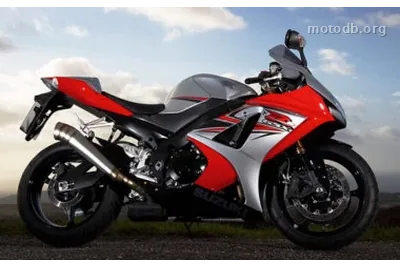
1000 GSX-R Edition Speciale Tourist Trophy
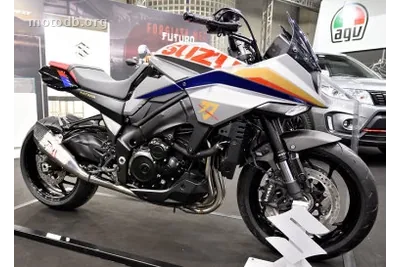
1000 Katana 7584
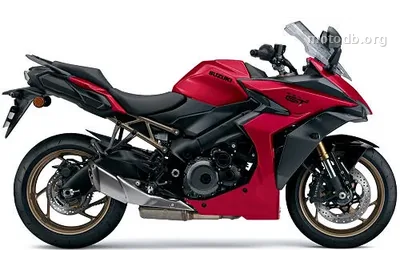
GSX-S1000GT
Reviews & comments
No reviews yet. Be the first to share your opinion!