Key performance
Technical specifications
Engine
- Displacement
- 999 cc
- Power
- 200.0 ch (147.1 kW)
- Engine type
- 4 cylindres en ligne, 4 temps
- Cooling
- liquide
- Compression ratio
- 12.5 : 1
- Bore × stroke
- 80 x 49.7 mm
- Valves/cylinder
- 4
- Camshafts
- 2 ACT
- Fuel system
- Injection Ø 48 mm
Chassis
- Frame
- double poutre périmetrique en aluminium
- Gearbox
- boîte à 6 rapports
- Final drive
- Chaîne
- Front suspension
- Fourche téléhydraulique inversée Ø 45 mm
- Rear suspension
- Mono-amortisseur
Brakes
- Front brakes
- Freinage 2 disques Ø 320 mm, fixation radiale, étrier 4 pistons
- Rear brakes
- Freinage 1 disque Ø 265 mm, étrier 2 pistons
- Front tyre
- 120/70-17
- Rear tyre
- 190/55-17
Dimensions
- Seat height
- 840.00 mm
- Weight
- 223.00 kg
- Dry weight
- 202.00 kg
- New price
- 26 990 €
Overview
Who would have thought that one day, a road crossover would claim 200 horsepower without flinching? BMW has decided to shake things up with the M 1000 XR prototype, a machine that pushes the boundaries of what was considered acceptable on a sport-tourer. In the world of high-performance adventure bikes, the arms race was already in full swing between the S 1000 XR, the KTM 1290 Super Adventure, and the Ducati Multistrada V4. But none of these rivals had dared to break through the 200 hp barrier. BMW, with its Bavarian temperament, decided that restraint was for everyone else.
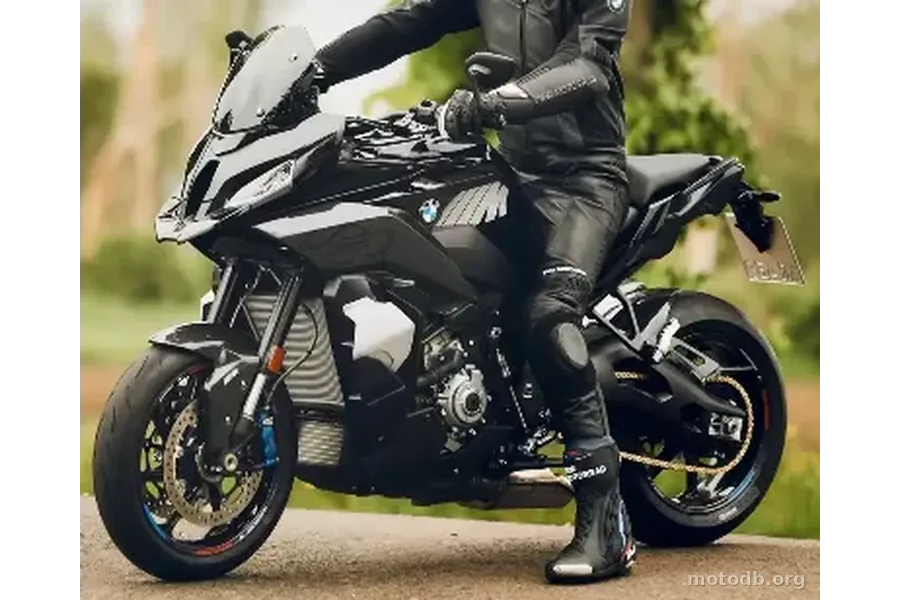
Beneath the fairing sits the 999 cc inline four-cylinder with ShiftCam technology, lifted straight from the M 1000 R and M 1000 RR. An engine built for the track, with a 12.5:1 compression ratio, an 80 mm bore, and an ultra-short 49.7 mm stroke. This powerplant, in its crossover guise, delivers 200 hp for a wet weight of 223 kg. The power-to-weight ratio flirts with that of some full-blooded sportbikes. And top speed reflects it: 280 km/h on the clock, a figure that places this adventure bike in the highway comfort zone of a four-wheeled GT. We're a long way from the leisurely globe-trotter.
BMW has nonetheless made a few adjustments to rein in all that horsepower. The brakes switch to M-spec Nissin calipers, derived from World Superbike hardware, with two radially mounted 320 mm front discs and four pistons per caliper. A 265 mm rear disc rounds out the setup. Winglets make an appearance on the sides of the radiator, designed to keep the front planted and ease the workload on the traction control. On paper, the intention is commendable. In practice, the aerodynamic effectiveness of these appendages remains to be proven on a machine whose frontal area has nothing in common with that of an RR shaped for outright speed. The aluminum twin-spar frame and 45 mm inverted fork provide solid foundations, but the 840 mm seat height serves as a reminder that this is still a sport-touring architecture, not a superbike.
On the electronics front, BMW remains tight-lipped about this prototype, but the in-house catalog leaves little room for doubt. Traction control, anti-wheelie, engine brake management, quickshifter, multiple riding modes, and keyless ignition are all likely on the menu. The prototype on display sported an Akrapovic exhaust, rearsets, M levers, and bar-end mirrors. What will survive the transition to production remains to be seen. The weight savings over the S 1000 XR amount to a mere three kilograms, a sign that optimization has its limits when you retain crossover ergonomics.
At €26,990, the BMW M 1000 XR positions itself as an object of desire for a very specific clientele. Not a beginner, not an adventurer looking to chew through gravel, but a demanding road rider who wants sportbike power with the comfort of a high handlebar and a less aggressive riding position. The kind of rider who strings mountain passes together at a brisk pace on Saturday and parks the bike outside a café on Sunday, with the quiet satisfaction of riding the most powerful crossover ever built. One question is bound to divide opinion: did we really need 200 hp on this type of machine? BMW says yes. The market will decide.
Standard equipment
- Assistance au freinage : ABS de serie
Practical info
- La moto est accessible aux permis : A
Indicators & positioning
Similar bikes
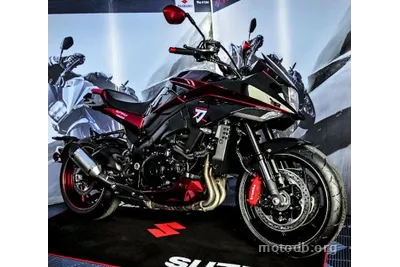
1000 Katana Motorlive Edition
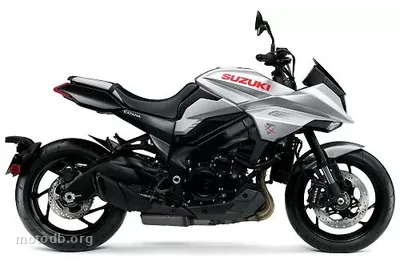
1000 Katana S
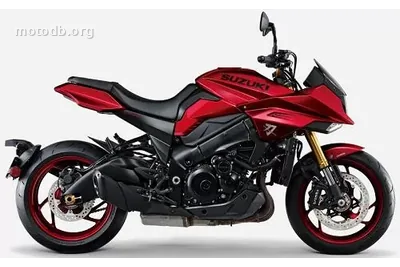
1000 Katana Candy Darling Red
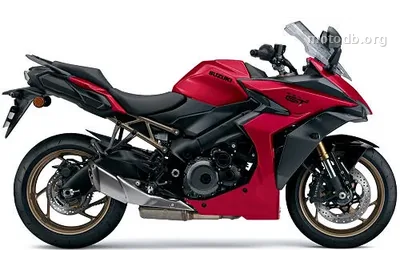
GSX-S1000GT
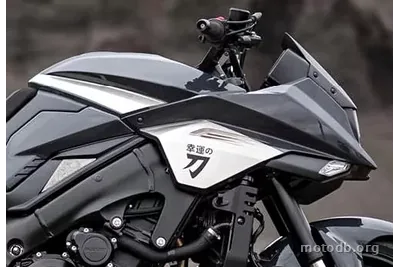
1000 Katana Royal Serie
Reviews & comments
No reviews yet. Be the first to share your opinion!