Key performance
Technical specifications
Engine
- Displacement
- 997 cc
- Power
- 91.0 ch @ 8600 tr/min (66.9 kW)
- Torque
- 84.3 Nm @ 6250 tr/min
- Engine type
- 4 cylindres en ligne, 4 temps
- Cooling
- liquide
- Compression ratio
- 10.2:1
- Bore × stroke
- 74 x 58 mm
- Valves/cylinder
- 4
- Camshafts
- 2 ACT
Chassis
- Frame
- ouvert de type Diamond en acier
- Gearbox
- boîte à 6 rapports
- Final drive
- Cardan
- Front suspension
- Fourche téléhydraulique Ø 41 mm, déb : 140 mm
- Rear suspension
- mono-amortisseur unitrack, déb : 140 mm
Brakes
- Front brakes
- Freinage 2 disques Ø 300 mm, étrier 2 pistons
- Rear brakes
- Freinage 1 disque Ø 280 mm, étrier simple piston
- Front tyre
- 110/80-18
- Front tyre pressure
- 2.50 bar
- Rear tyre
- 150/80-16
- Rear tyre pressure
- 2.50 bar
Dimensions
- Seat height
- 790.00 mm
- Fuel capacity
- 28.50 L
- Weight
- 294.00 kg
- Dry weight
- 270.00 kg
- New price
- 9 298 €
Overview
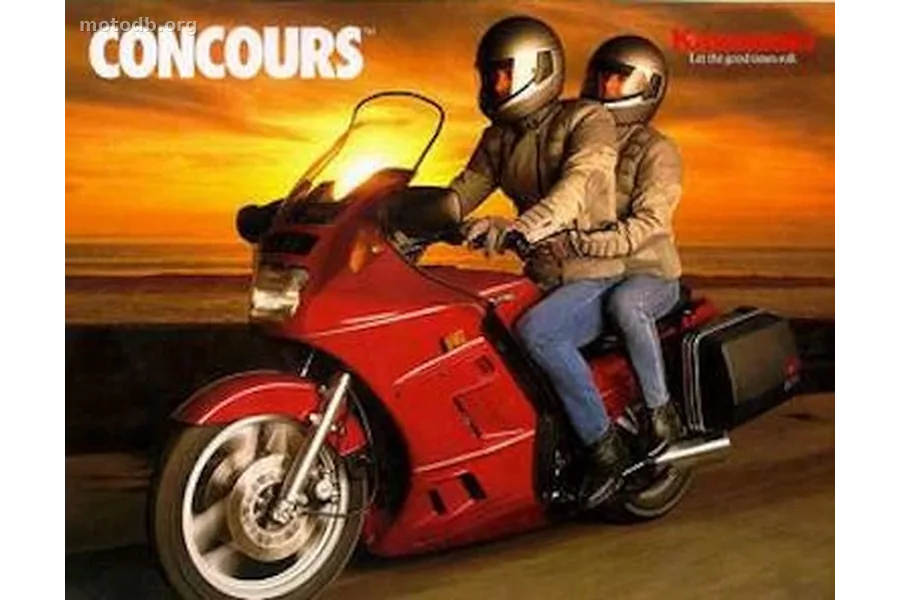
Forty years on the road and the Kawasaki 1000 GTR is still there, stoic, impervious to trends. Born in 1986 when Japanese grand touring was still finding its footing, it has aged without ever truly being renewed, and it is paradoxically what makes its charm today. The 2002 version we are examining here hardly differs from the 1994 model, which itself did not differ much from the first 1986, 1987 or 1988 models. Kawasaki refreshed the plastics, trimmed the intake noise to comply with standards, and the engine, formerly more boisterous, lost a few decibels of character in the process.
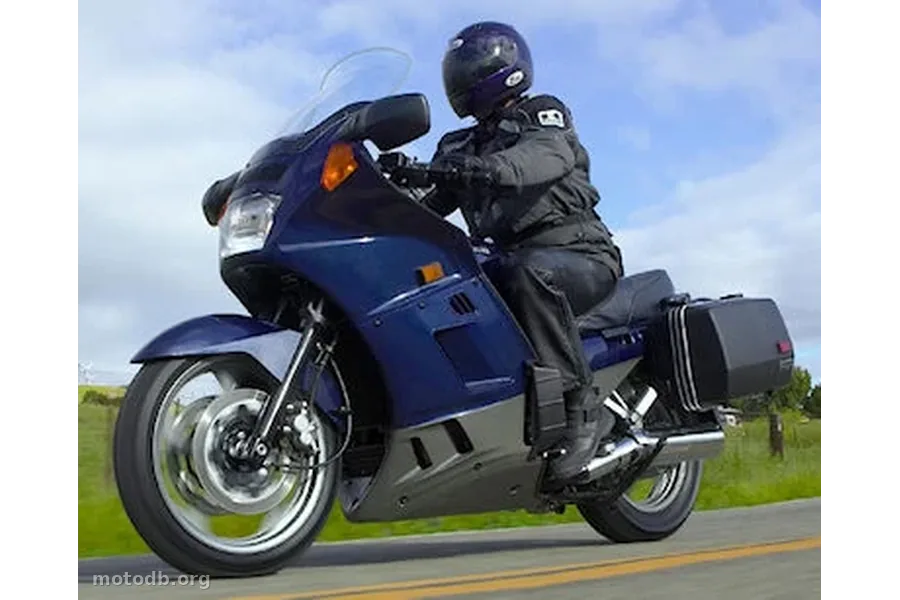
Under the massive fairing, this inline four-cylinder engine of 997 cc develops 91 horsepower at 8600 rpm and 84.3 Nm of torque at 6250 rpm. This is not dizzying in 2002, and European competition, the BMW R 1150 RT in particular, plays in a different league in terms of technical modernity. But the GTR does not claim to run that hare. Its 294 kg when fully fueled demands respect when stationary and at low speed, the turning radius doesn't help, and when you load the side cases with a passenger to swallow highway miles, you begin to feel the limits of the mechanics. The Diamond-type steel chassis, with its 41 mm fork and Unitrack monoshock, is healthy but dated; at sustained speed on poor road surfaces, you perceive some undulations that modern geometries have managed to erase.
It would be a mistake to stop there. The Kawasaki 1000 GTR crossed sixteen years of production, from 1986 to 2002, because it responded to a real demand: that of a thrifty, reliable, protective long-distance tourer. The fairing does a remarkable job, the riding position holds out for two thousand kilometers without medical intervention, and the shaft drive eliminates any chain maintenance constraints. On this specific point, Kawasaki 1000 GTR reliability is legendary; specialized forums, user feedback over decades of practice, all converge on the same observation: it does not break down. The 28.5-liter tank, the largest in its class at the time, offers a range that easily exceeds 400 kilometers, a decisive argument for those who hate gas stations.
At 9298 euros in original price, then in progressive decline on the Kawasaki 1000 GTR used market, it represents an equation difficult to beat. Searching for a Kawasaki 1000 GTR used on the good coin today often leads to machines with high mileage but with healthy mechanics, so ingrained is the robustness. Kawasaki 1000 GTR maintenance remains accessible; parts circulate, the community is active, and some enthusiasts even push the machine towards unrestricted performance to regain some of the original punch. The idea of transforming this block into a Kawasaki 1000 GTR cafe racer or scrambler is gaining traction on the forums, even if it's like dressing up a Volvo 240 in luxury off-road gear.
The target audience for this machine has never been ambiguous: the serious long-distance tourer, the one who prefers to arrive than to race, who measures his pleasure in kilometers traveled rather than in lap times. It will never seduce by its aesthetics, which remained prisoner of the style of its 1994 restyling. But if the question is which GT motorcycle for less than 4000 euros used offers protection, reliability and range combined, the answer often comes back on the table with three letters.
Practical info
- La moto est accessible aux permis : A
Indicators & positioning
Similar bikes
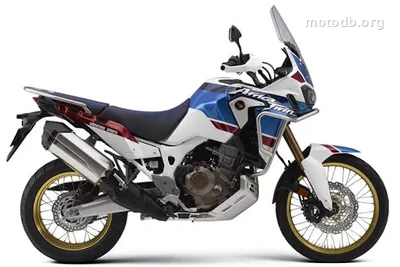
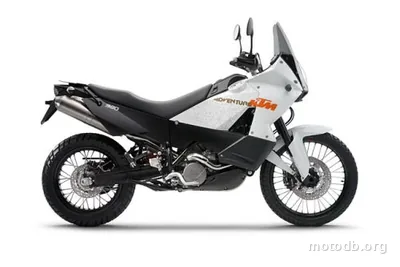
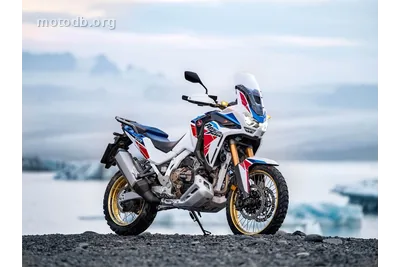
CRF 1000 L AFRICA TWIN Adventure Sports
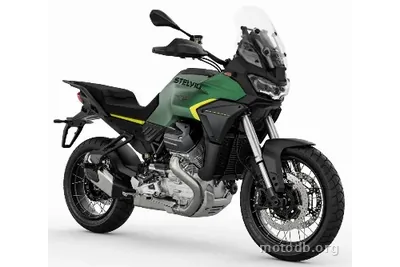
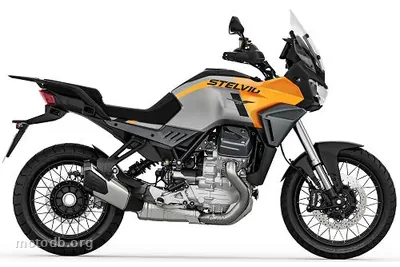
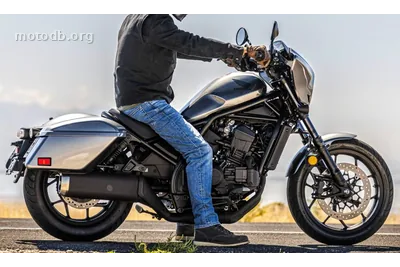
1000 Stelvio
Reviews & comments
No reviews yet. Be the first to share your opinion!