Key performance
Technical specifications
Engine
- Displacement
- 997 cc
- Power
- 91.0 ch @ 8600 tr/min (66.9 kW)
- Torque
- 84.3 Nm @ 6250 tr/min
- Engine type
- 4 cylindres en ligne, 4 temps
- Cooling
- liquide
- Compression ratio
- 10.2:1
- Bore × stroke
- 74 x 58 mm
- Valves/cylinder
- 4
- Camshafts
- 2 ACT
Chassis
- Frame
- ouvert de type Diamond en acier
- Gearbox
- boîte à 6 rapports
- Final drive
- Cardan
- Front suspension
- Fourche téléhydraulique Ø 41 mm, déb : 140 mm
- Rear suspension
- mono-amortisseur unitrack, déb : 140 mm
Brakes
- Front brakes
- Freinage 2 disques Ø 300 mm, étrier 2 pistons
- Rear brakes
- Freinage 1 disque Ø 280 mm, étrier simple piston
- Front tyre
- 110/80-18
- Front tyre pressure
- 2.50 bar
- Rear tyre
- 150/80-16
- Rear tyre pressure
- 2.50 bar
Dimensions
- Seat height
- 790.00 mm
- Fuel capacity
- 28.50 L
- Weight
- 294.00 kg
- Dry weight
- 270.00 kg
- New price
- 9 298 €
Overview
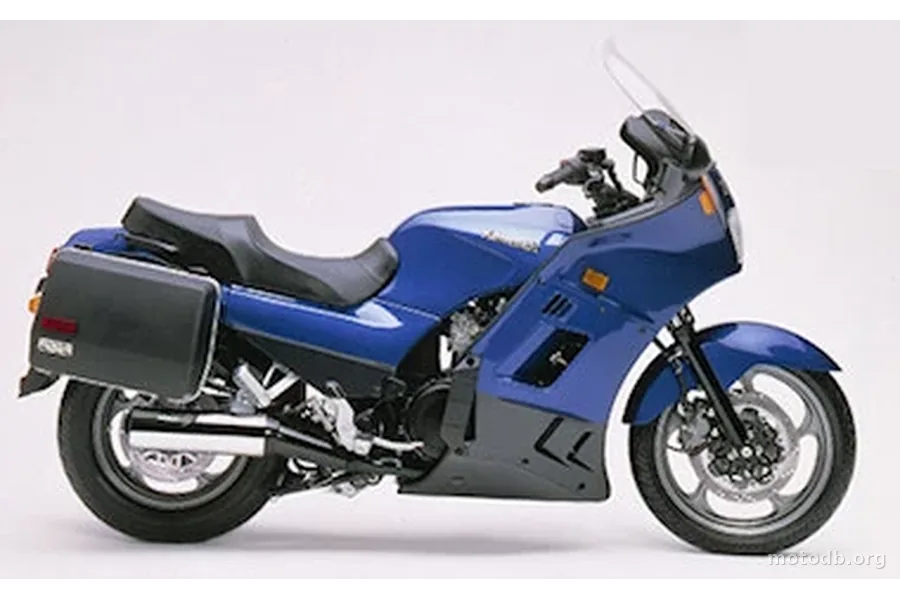
When Kawasaki released its GTR 1000 in 1986, few people really believed in the project's longevity. A 997 cc inline four-cylinder engine, a massive bodywork, a shaft drive instead of the usual chain: the Japanese manufacturer was betting on Japanese-style grand touring, a segment then dominated by BMWs and Honda GLs. Thirty years later, the Kawasaki 1000 GTR is still regularly purchased used, sometimes even on the classifieds, and dedicated forums remain active. This is no coincidence.
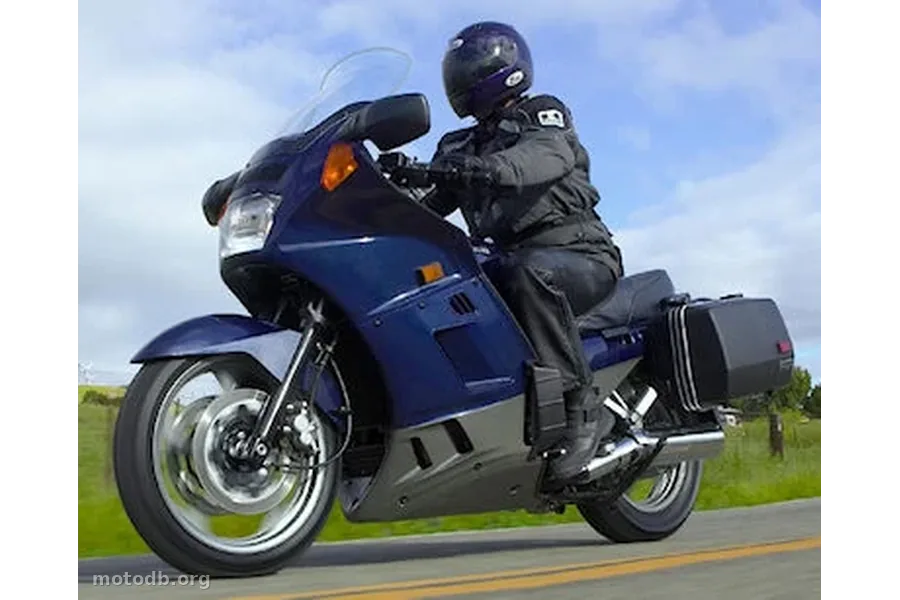
The engine is the heart of the matter. Four valves per cylinder, a bore of 74 mm for a stroke of 58 mm, a compression ratio of 10.2:1: the engine develops 91 horsepower at 8600 rpm and, above all, 84.3 Nm of torque from 6250 rpm. These figures seem modest today, but on a touring motorcycle, it's torque that counts, not peak power. The 1994 aesthetic revision coincided with a restriction imposed by sound standards, and this filtering slightly dulled the engine's character. In solo use on national or departmental roads, nothing is noticeable. Load the beast with a passenger and two full suitcases, launch onto the highway at a sustained speed, and there the inline four begins to show its limits. It's not a sports machine, it's a workhorse.
The open Diamond-type steel frame supports all of this effectively, but its age is betrayed at high speed by a slight directional instability. The 41 mm telescopic fork and the Unitrack monoshock each have 140 mm of travel, guaranteeing acceptable comfort over long distances. Tires in 110/80-18 at the front and 150/80-16 at the rear contribute to this assumed touring positioning. The braking, two 300 mm discs at the front with two-piston calipers and a 280 mm disc at the rear, remains within the standards of the time without excelling. At low speed, the 294 kg all full are felt, and the restricted turning radius complicates maneuvers in town. It is clearly not the target of this machine.
The true strength of the Kawasaki 1000 GTR is its coherence as a tool for grand travel. The 28.5-liter tank was the most generous on the market at its release, and it remains impressive. The autonomy resulting from this, coupled with the shaft drive which eliminates chain maintenance chores, makes it a formidable logistical partner. The fairing provides adequate protection, the seat comfort lasts for several hundred kilometers, and the integrated suitcases, robust if not visually seductive, swallow luggage without a murmur. On Kawasaki 1000 GTR reliability, the reputation is solidly established by years of service on the roads of the Tour de France where journalists of the press championed it precisely for its resistance. Kawasaki 1000 GTR maintenance is mechanically accessible, and parts remain findable.
At 9298 euros in the 2000 model year version, the GTR faces competitors such as the Honda ST1100 Pan European or the BMW R1100RT, both more technologically recent. The design of the Kawasaki has aged without grace, and you must accept this as a basic fact. Some enthusiasts are even turning to projects to transform the Kawasaki 1000 GTR into a scrambler or café racer, with mixed results given the initial size. For those looking for a serious used Kawasaki 1000 GTR, it is necessary to check the maintenance history, the valve seals, and the condition of the driveshaft. The mechanics absorb a lot, but it is the neglect that kills it. For the pragmatic globetrotter who wants to devour kilometers without being ruined and without playing Sunday mechanics, the GTR remains a solid proposition, even if modern competition has cut its heels on all other plans.
Practical info
- La moto est accessible aux permis : A
Indicators & positioning
Similar bikes
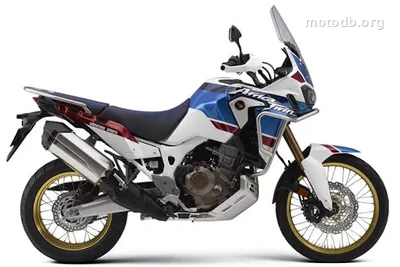
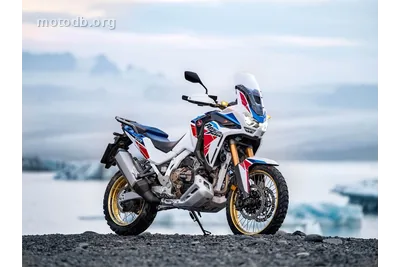
CRF 1000 L AFRICA TWIN Adventure Sports
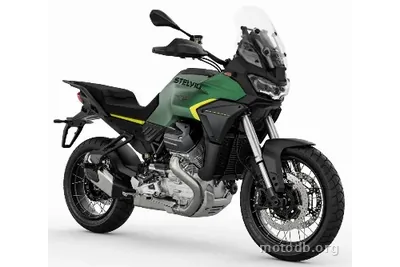
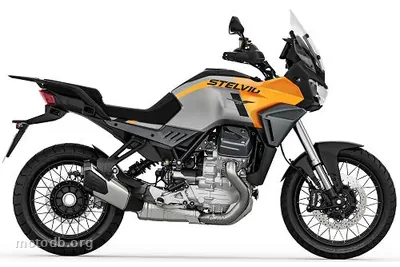
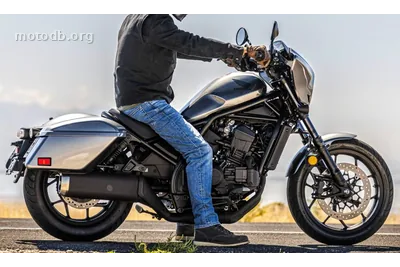
1000 Stelvio
Reviews & comments
No reviews yet. Be the first to share your opinion!