
Key performance
Technical specifications
Engine
- Displacement
- 249 cc
- Power
- 43.0 ch @ 8500 tr/min (37.5 kW)
- Torque
- 47.7 Nm @ 6500 tr/min
- Engine type
- Single cylinder, four-stroke
- Cooling
- Liquid
- Compression ratio
- 13.5:1
- Bore × stroke
- 76.8 x 53.8 mm (3.0 x 2.1 inches)
- Valves/cylinder
- 4
- Camshafts
- 1 ACT
- Fuel system
- Injection. Dual-Timing Programmed Fuel Injection (PGM-FI), 46mm throttle body
- Valve timing
- Single Overhead Cams (SOHC)
- Ignition
- Full transistor with electronic advance
- Starter
- Kick
Chassis
- Frame
- Double poutre, simple berceau dédoublé en aluminium
- Gearbox
- 5-speed
- Final drive
- Chain (final drive)
- Clutch
- Multi plate wet clutch
- Front suspension
- 48mm inverted Showa cartridge fork with 16-position rebound and 16-position compression damping adjustability
- Rear suspension
- Pro-Link® Showa single shock with spring preload, 17-position rebound damping adjustability, and compression-damping adjustment separated into low-speed (13 positions) and high-speed (3.5 turns); 12.3 inches travel
- Front wheel travel
- 61 mm (2.4 inches)
- Rear wheel travel
- 61 mm (2.4 inches)
Brakes
- Front brakes
- Double disc. Two-piston calipers.
- Rear brakes
- Single disc
- Front tyre
- 80/100-21
- Rear tyre
- 100/90-19
Dimensions
- Seat height
- 950.00 mm
- Wheelbase
- 1488.00 mm
- Ground clearance
- 323.00 mm
- Length
- 2191.00 mm
- Width
- 827.00 mm
- Height
- 1271.00 mm
- Fuel capacity
- 6.28 L
- Weight
- 104.80 kg
- New price
- 8 090 €
Overview
What drives Honda to start from scratch on a machine that had just clinched two Supercross Lites titles in the United States? The answer comes down to three words: the competition never sleeps. In 2014, the Honda CRF250R goes far beyond a cosmetic facelift. It inherits the chassis from its big sister, the CRF 450 R, and starts over from virtually a blank sheet. A risky bet, but one consistent with HRC's philosophy of aiming true rather than making incremental fixes.
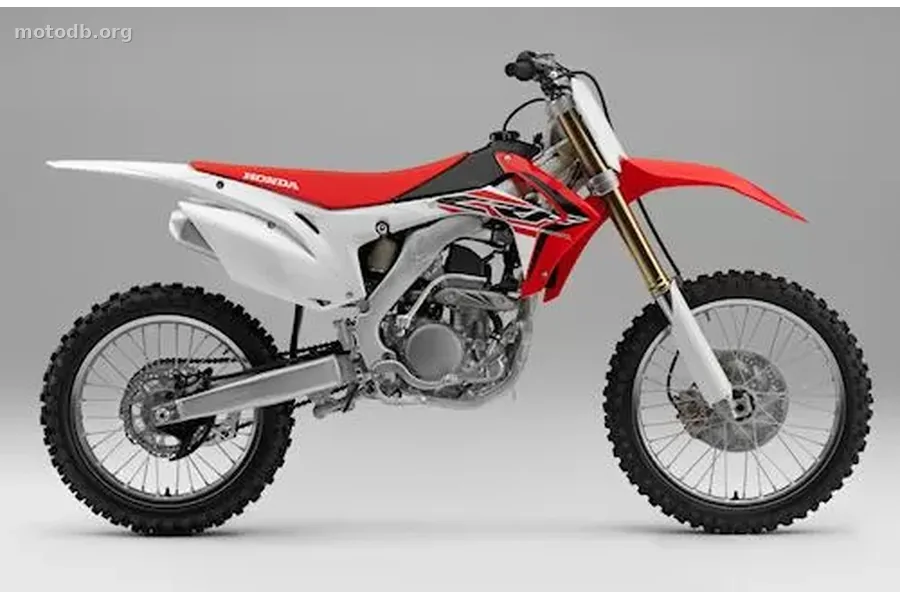
At the heart of this overhaul is the twin-spar aluminum frame. The sixth generation dedicated to motocross at Honda, it weighs just 9.35 kg and positions the steering head lower on the main spars. The direct consequence: the center of gravity drops, inertia decreases, and the CRF250R gains agility in direction changes. With a wheelbase of 1,488 mm and ground clearance of 323 mm, the geometry remains conventional for the class, but the connection with the front end takes on a new dimension. You can tell Honda pursued that coveted "calculated flexibility" in the chassis — the kind that gives the rider confidence when traction breaks away on corner entry. Compared to the Yamaha YZ250F, which leans more toward rigidity, it's a different, more progressive approach. The question of whether the Honda CRF250R is a two-stroke comes up often among beginners: the answer is no, it is indeed a liquid-cooled, four-valve Unicam single-cylinder four-stroke. And the difference between the Honda CRF250R and CRF250F lies precisely there: the R is a pure competition machine, while the F is aimed at recreational riding.
On the engine side, the 249 cc unit retains its 76.8 mm bore and 53.8 mm stroke, but the compression ratio climbs to 13.5:1. Honda reworked the intake and exhaust ports, revised the PGM-FI injection mapping, and modified the injector angle. The result: 43 horsepower at 8,500 rpm and 47.7 Nm of torque from as low as 6,500 rpm. The gains are concentrated in the low and mid range — right where it matters on an MX track when you need to drive out of a rut. The five-speed gearbox has been reinforced to handle the demands. It's not the most aggressive engine in the field — the KTM 250 SX-F was already pushing hard back then — but its consistency and low-rpm tractability remain valuable assets for an amateur rider who doesn't have a pro's throttle hand.
The Showa suspension deserves a closer look. The 48 mm inverted fork offers 16 positions of adjustment in both rebound and compression. The rear shock, shortened by 14.5 mm and mounted lower on the frame, contributes to the ongoing pursuit of mass centralization. The Pro-Link system provides 17 positions of rebound adjustment and separate low-speed/high-speed compression damping, with 13 positions and 3.5 turns of adjustment. Plenty to spend hours fine-tuning, for those who enjoy it. The package rolls on 80/100-21 tires up front and 100/90-19 at the rear — standard MX sizing. The braking system, a dual front disc with a two-piston caliper and a single rear disc, gets the job done without fanfare. All this for a wet weight of 104.8 kg and a 6.28-liter fuel tank — compact but sufficient for twenty-minute motos.
Priced at 8,090 euros in 2014, the Honda CRF250R targeted serious amateur riders and regional competitors alike. Subsequent model years, from the CRF250R 2022 to the CRF250R 2024 and even the CRF250R 2025, continued along this path with incremental updates. But this 2014 model year marks a turning point — the moment Honda stopped polishing an aging platform and started from zero. The price remains steep compared to some competing Japanese brands, and the 950 mm seat height rules out shorter riders. Yet for anyone seeking a reliable and well-balanced tool on motocross tracks, this CRF remains a solid choice. Not the most spectacular, but the one that brings you back to the pits in one piece.
Indicators & positioning
Similar bikes
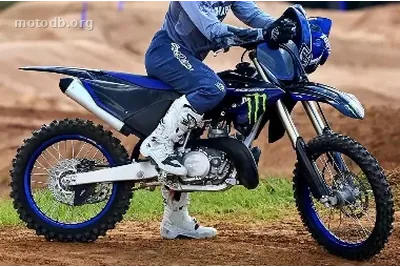
YZ 250 Monster Energy Edition
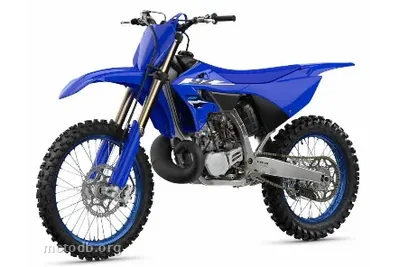
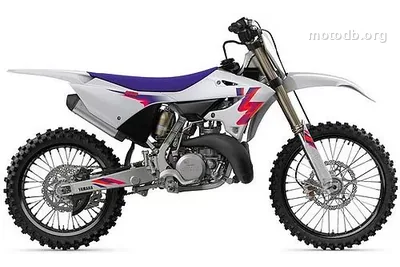
YZ 250 50eme anniversaire
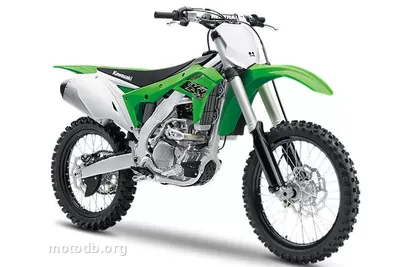
KX 250
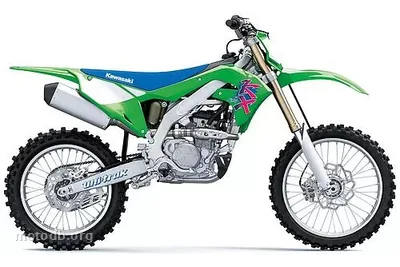
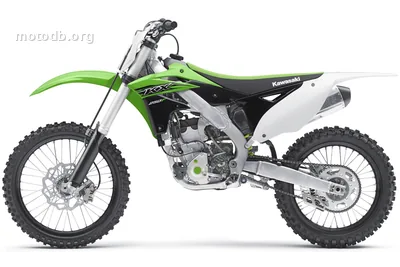
Reviews & comments
No reviews yet. Be the first to share your opinion!