Key performance
Technical specifications
- Power
- — → 43.0 ch @ 11000 tr/min (31.6 kW)
- Torque
- — → 28.4 Nm @ 8000 tr/min
- Valves/cylinder
- — → 4
- Camshafts
- — → 1 ACT
- Fuel system
- Injection. Programmed Fuel Injection (PGM-FI), 50mm throttle body → Injection. Programmed Fuel Injection (PGM-FI), 46mm throttle body
- Starter
- — → Electric & kick
- Frame
- — → Double poutre, simple berceau dédoublé en aluminium
- Front suspension
- 48mm inverted Showa cartridge fork with rebound and compression damping adjustability → 48mm inverted Showa cartridge fork with 16-position rebound and 16-position compression damping adjustability
- Rear suspension
- Pro-Link Showa single-shock with spring-preload, rebound-damping adjustability, and compression-damping adjustment separated into low-speed and high-speed → Pro-Link Showa single shock with spring preload, 17-position rebound damping adjustability, and compression-damping adjustment separated into low-speed (13 positions) and high-speed (3.5 turns)
- Rear wheel travel
- 318 mm (12.5 inches) → 312 mm (12.3 inches)
- Front brakes
- Double disc → Single disc. Twin-piston calipers
- Front tyre
- 80/100-21 → 2.50-21
- Rear tyre
- 100/90-19 → 3.00-19
- Seat height
- 955.00 mm → 950.00 mm
- Ground clearance
- 325.00 mm → 323.00 mm
- Weight
- 103.00 kg → 103.90 kg
- New price
- — → 6 990 €
Engine
- Displacement
- 249 cc
- Power
- 43.0 ch @ 11000 tr/min (31.6 kW)
- Torque
- 28.4 Nm @ 8000 tr/min
- Engine type
- Single cylinder, four-stroke
- Cooling
- Liquid
- Compression ratio
- 13.2:1
- Bore × stroke
- 76.8 x 53.8 mm (3.0 x 2.1 inches)
- Valves/cylinder
- 4
- Camshafts
- 1 ACT
- Fuel system
- Injection. Programmed Fuel Injection (PGM-FI), 46mm throttle body
- Valve timing
- Single Overhead Cams (SOHC)
- Ignition
- Full transistor with electronic advance
- Starter
- Electric & kick
Chassis
- Frame
- Double poutre, simple berceau dédoublé en aluminium
- Gearbox
- 5-speed
- Final drive
- Chain (final drive)
- Front suspension
- 48mm inverted Showa cartridge fork with 16-position rebound and 16-position compression damping adjustability
- Rear suspension
- Pro-Link Showa single shock with spring preload, 17-position rebound damping adjustability, and compression-damping adjustment separated into low-speed (13 positions) and high-speed (3.5 turns)
- Front wheel travel
- 310 mm (12.2 inches)
- Rear wheel travel
- 312 mm (12.3 inches)
Brakes
- Front brakes
- Single disc. Twin-piston calipers
- Rear brakes
- Single disc
- Front tyre
- 2.50-21
- Rear tyre
- 3.00-19
Dimensions
- Seat height
- 950.00 mm
- Wheelbase
- 1488.00 mm
- Ground clearance
- 323.00 mm
- Fuel capacity
- 5.68 L
- Weight
- 103.90 kg
- New price
- 6 990 €
Overview
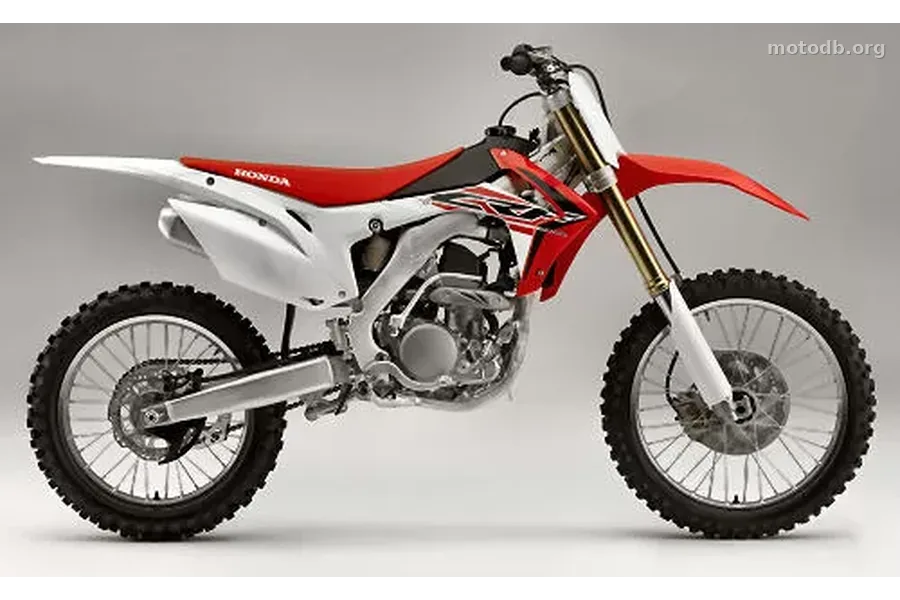
What did Honda still have to prove in the 250cc four-stroke motocross segment in 2012? Not much, truth be told. The Honda CRF250R had already been dominating the conversation for several generations, but the engineers in Hamamatsu decided to put the machine back on the workbench with a list of modifications as long as a swingarm. And speaking of which, the swingarm is part of the package: lengthened by 29 mm to improve traction under acceleration. This 2012 vintage CRF250R is not a simple cosmetic refresh. It's a deep overhaul affecting the engine, chassis, and suspension.
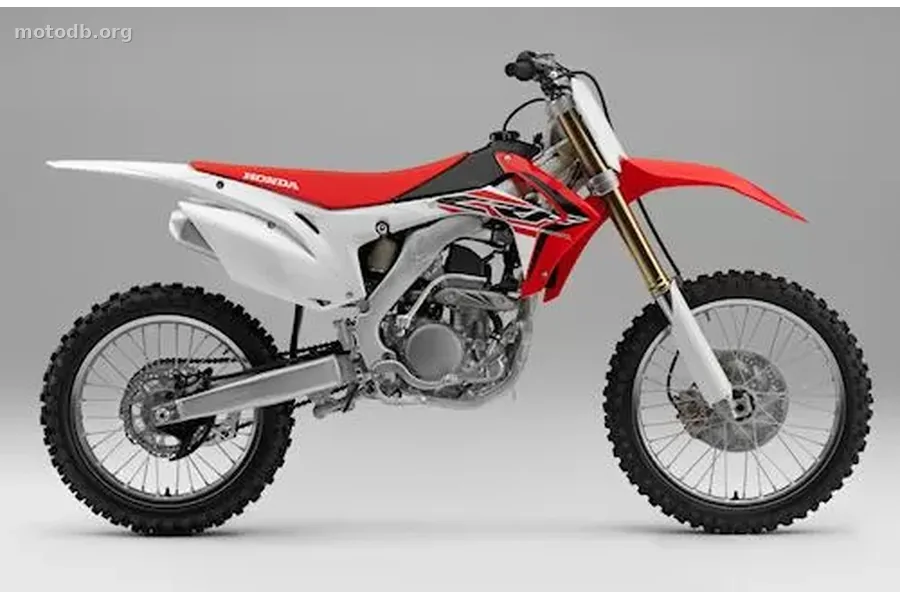
On the engine side, the 249cc single-cylinder four-stroke receives a redesigned cylinder head, a new camshaft, and valve springs drawn directly from MotoGP technology. The compression ratio climbs to 13.2:1 with a bore reduced to 76.8 mm for a stroke of 53.8 mm. The result: 43 horsepower at 11,000 rpm and 28.4 Nm of torque available from 8,000 rpm. The refined throttle body promises a sharper response at the twist grip. The fuel injection operates without a battery, which is a real advantage for a motocross machine where every gram counts. A warning light on the kill switch signals any potential issues with the injection circuit, and both ignition timing and fuel mapping can be modified via a simple connector linked to a computer. No need to remove the fuel tank. For riders who like to fine-tune their settings, this is a real advantage over a Yamaha YZ250F or a KTM 250 SX-F, which at the time did not offer this level of accessibility. The Honda CRF250R is indeed a four-stroke machine — don't confuse it with the two-strokes in the competing lineup.
The chassis deserves a closer look. The fifth-generation aluminum twin-spar frame draws direct inspiration from the CRF450R, adapted to the specific demands of the 250. It gains in lateral and torsional rigidity. The wheelbase extends to 1,488 mm to improve stability, while the rake angle is reduced for greater agility through corners. The 48 mm Showa inverted fork with larger-diameter cartridges offers 16 positions of adjustment in both rebound and compression. At the rear, the Showa Pro-Link single shock separates low-speed and high-speed compression damping adjustments. This level of adjustability places the machine on par with the best in the MX2 class.
The contained weight of 103.9 kg wet, with a fuel tank reduced to 5.68 liters thanks to optimized fuel consumption, contributes to the sensation of lightness that has always been the CRF's hallmark. The new single muffler saves 850 grams, the redesigned radiator improves cooling, and the streamlined bodywork makes it easier for the rider to move around on the seat, perched at 950 mm. With 323 mm of ground clearance and 21-inch tires up front and 19-inch at the rear, the machine swallows ruts without flinching. The precise-shifting five-speed gearbox and chain drive complete a cohesive package.
Priced at 6,990 euros, the 2012 Honda CRF250R sits in the upper-middle range of the segment. That's the price of a refined machine aimed at competitive riders as well as demanding enthusiasts who ride regularly on the track. The difference between the CRF250R and the more leisure- and trail-oriented CRF250F is measured precisely here: in the level of preparation and the ability to withstand intensive use. The evolutions brought over the years, from the 2008 CRF250R through the 2023, 2024, and 2025 versions, confirm that Honda has never stopped developing this platform. In 2012, the brand was laying the foundations of a machine that would continue to set the benchmark for over a decade in the premier quarter-liter motocross category.
Indicators & positioning
Similar bikes
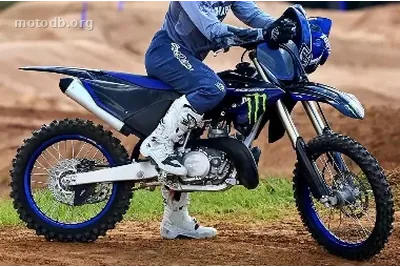
YZ 250 Monster Energy Edition
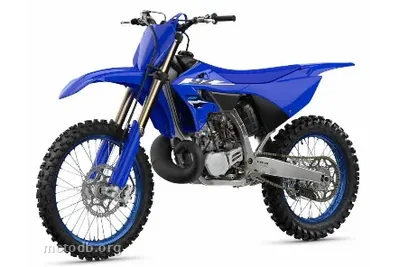
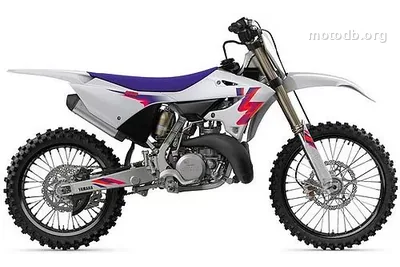
YZ 250 50eme anniversaire
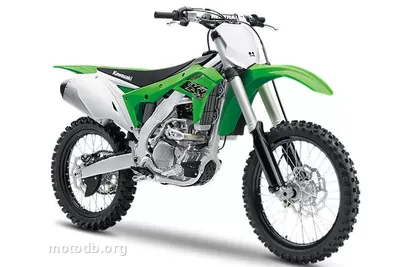
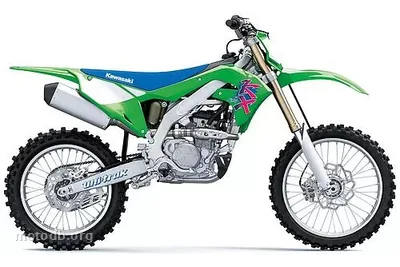
KX 250
Reviews & comments
No reviews yet. Be the first to share your opinion!