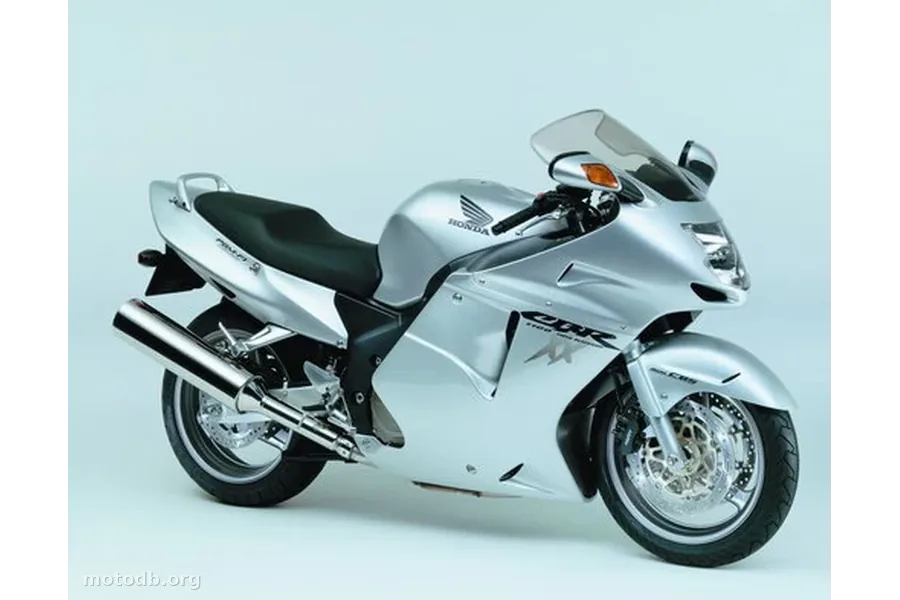
Key performance
Technical specifications
Engine
- Displacement
- 1137 cc
- Power
- 164.0 ch @ 9500 tr/min (120.6 kW)
- Torque
- 121.6 Nm @ 7250 tr/min
- Engine type
- 4 cylindres en ligne, 4 temps
- Cooling
- liquide
- Compression ratio
- 11:1
- Bore × stroke
- 79 x 58 mm
- Valves/cylinder
- 4
- Camshafts
- 2 ACT
- Fuel system
- Injection
- Lubrication
- Wet sump
- Ignition
- Computer-controlled digital transistorized
- Starter
- Electric
Chassis
- Frame
- double poutre en alu
- Gearbox
- boîte à 6 rapports
- Final drive
- Chaîne
- Clutch
- Hydraulic wet multi plate
- Front suspension
- Fourche téléhydraulique inversée Ø 43 mm, déb : 120 mm
- Rear suspension
- Mono-amortisseur, déb : 120 mm
Brakes
- Front brakes
- Freinage 2 disques Ø 310 mm, étrier 3 pistons
- Rear brakes
- Freinage 1 disque Ø 256 mm, étrier 3 pistons
- Front tyre
- 120/70-17
- Front tyre pressure
- 2.90 bar
- Rear tyre
- 180/55-17
- Rear tyre pressure
- 2.90 bar
Dimensions
- Seat height
- 810.00 mm
- Wheelbase
- 1490.00 mm
- Ground clearance
- 130.00 mm
- Fuel capacity
- 24.00 L
- Weight
- 255.00 kg
- Dry weight
- 223.00 kg
- New price
- 13 600 €
Overview
Who remembers the shockwave Honda sent through the motorcycle world in the late 1990s, when the Hamamatsu firm laid on the table a sportbike capable of flirting with 300 km/h? The CBR 1100 XX Super Blackbird literally invented the hyper-tourer category — machines built to devour miles at a pace nobody thought possible on a street-legal motorcycle. By 2005, the model year we're looking at here, the black bird already has a few grey feathers. But beneath its fairing, boasting a drag coefficient worthy of a Grand Prix machine, the 1137 cc inline four-cylinder continues to deliver its 164 horsepower at 9,500 rpm with a disconcerting smoothness. That's the paradox of this Honda: it's fast enough to make the competition blush, yet it does so without ever raising its voice.
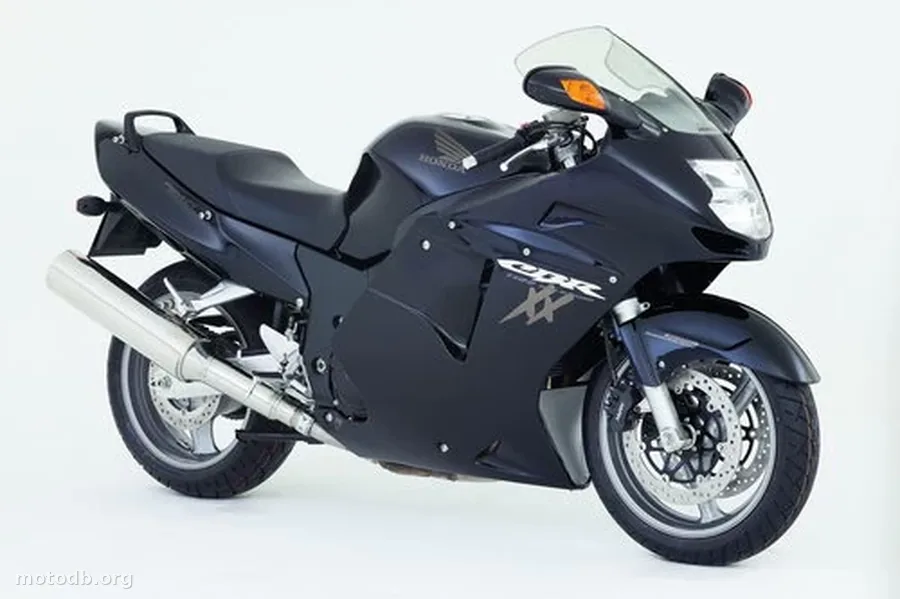
The engine block remains the centerpiece of the puzzle. With 121.6 Nm of torque available from just 7,250 rpm, the Blackbird pulls from the bottom of the rev range with quiet authority. The fuel injection, inherited from the 1999 update, smoothed out the power curve to the point of making this bike almost too civilized. No parasitic vibrations, no jerkiness, no brutal character. Some will see a lack of sensation in this, a kind of mechanical neutrality that deprives the rider of that visceral dialogue you maintain with a twin or a big parallel-twin. Others will appreciate precisely this metronome-like discretion when it comes to stringing together 600 kilometers of highway without fatigue. The 24-liter fuel tank, for that matter, allows for substantial legs between fuel stops.
On the chassis side, the aluminum twin-spar frame and 1,490 mm wheelbase give this 255 kg wet-weight machine the straight-line stability of an ocean liner. The 43 mm inverted fork and rear monoshock, both offering 120 mm of travel, filter road imperfections adequately without turning the bike into a limousine. The Dual-CBS braking system, with its two 310 mm front discs and single 256 mm rear disc linked through Honda's combined braking system, reassures with its progressiveness. One does regret, however, the absence of ABS on this model year — equipment the competition was already beginning to make standard.
Against the Suzuki Hayabusa 1300 and the Kawasaki ZX-12R, the Super Blackbird shows a deficit in raw power on paper. The Hayabusa already boasted over 175 horsepower, and the Kawasaki was no slouch either. Yet the Honda retains one compelling argument: its ease of handling. Where its Japanese rivals demand a firm grip and heightened awareness, the CBR 1100 XX lets itself be ridden with an ease almost reminiscent of a 750. The seat height, kept to a manageable 810 mm, and the riding position — admittedly somewhat sporty with the torso leaned forward — remain acceptable for long-distance riding. The passenger, on the other hand, inherits a seat that's adequate but nothing more, with a slightly cramped rear perch and token grab handles.
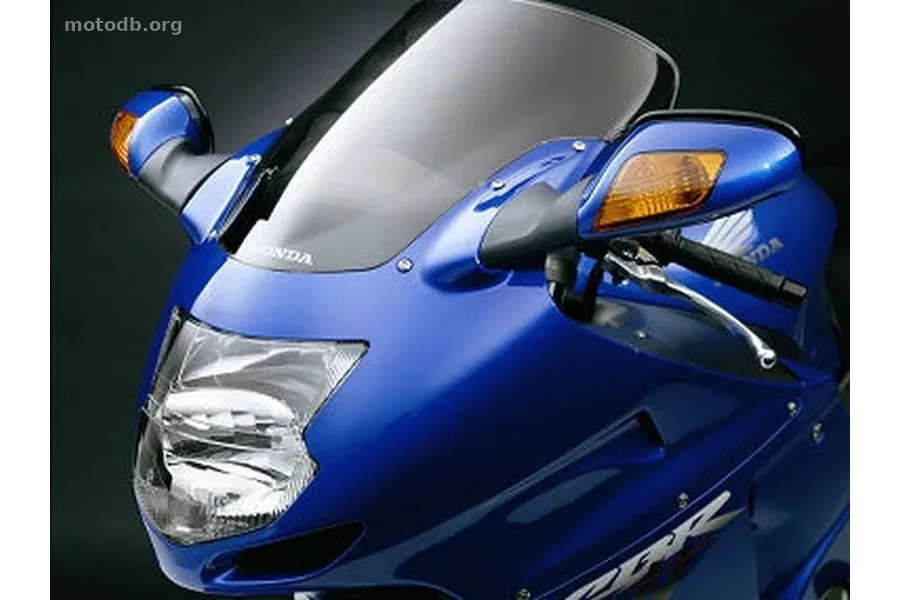
At €13,600 in 2005, the Super Blackbird sat in the upper range of the segment. For that price, Honda offered a refined, well-rounded motorcycle capable of playing express GT during the week and showing up at the track on weekends without embarrassment. Its main flaw? Precisely that slightly antiseptic perfection that earns it as many admirers as detractors. The Blackbird is a motorcycle you respect more than you desire. It's aimed at the experienced rider, one who has moved past the pursuit of thrills in favor of mileage efficiency and riding comfort. A sensible choice, powered by an inline four that stubbornly refuses to age.
Standard equipment
- Assistance au freinage : Double CBS
Practical info
- La moto est accessible aux permis : A
Reviews & comments
No reviews yet. Be the first to share your opinion!