Key performance
Technical specifications
Engine
- Displacement
- 1137 cc
- Power
- 164.0 ch @ 9500 tr/min (119.7 kW)
- Torque
- 124.0 Nm @ 7250 tr/min
- Engine type
- In-line four, four-stroke
- Cooling
- Liquid
- Compression ratio
- 11:1
- Bore × stroke
- 79.0 x 58.0 mm (3.1 x 2.3 inches)
- Valves/cylinder
- 4
- Camshafts
- 2 ACT
- Fuel system
- Injection
- Lubrication
- Wet sump
- Ignition
- Computer-controlled digital transistorized
- Starter
- Electric
Chassis
- Frame
- double poutre en alu
- Gearbox
- 6-speed
- Final drive
- Chain (final drive)
- Clutch
- Hydraulic wet multi plate
- Front suspension
- Fourche téléhydraulique inversée Ø 43 mm, déb : 120 mm
- Rear suspension
- Mono-amortisseur, déb : 120 mm
- Front wheel travel
- 120 mm (4.7 inches)
- Rear wheel travel
- 120 mm (4.7 inches)
Brakes
- Front brakes
- Dual disc
- Rear brakes
- Single disc
- Front tyre
- 120/70-ZR17
- Front tyre pressure
- 2.90 bar
- Rear tyre
- 180/55-ZR17
- Rear tyre pressure
- 2.90 bar
Dimensions
- Seat height
- 810.00 mm
- Wheelbase
- 1490.00 mm
- Ground clearance
- 130.00 mm
- Fuel capacity
- 23.00 L
- Weight
- 255.00 kg
- Dry weight
- 223.00 kg
- New price
- 13 600 €
Overview
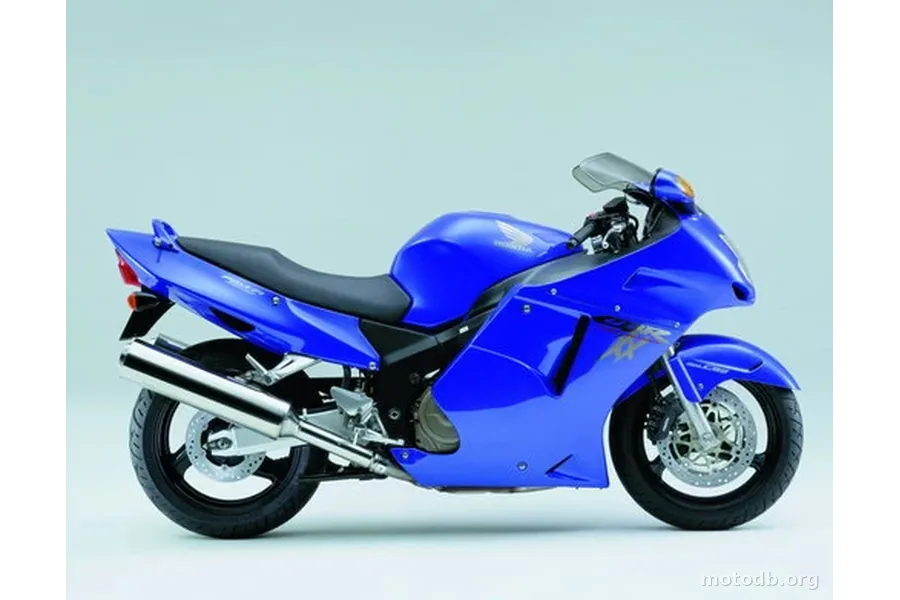
Who remembers the day Honda decided to shake up the laws of road physics? It was 1996, and the CBR 1100 XX Super Blackbird landed with a wild promise: flirting with 300 km/h on a motorcycle that any competent rider could tame. Not a racing prototype, not a disguised dragster. A civilized sport-tourer, capable of devouring the highway at speeds previously reserved for airliners. The "Blackbird" name was no accident — a deliberate nod to the US Air Force's SR-71, the fastest aircraft in the world. Honda was aiming high, and the result delivered on its promises.
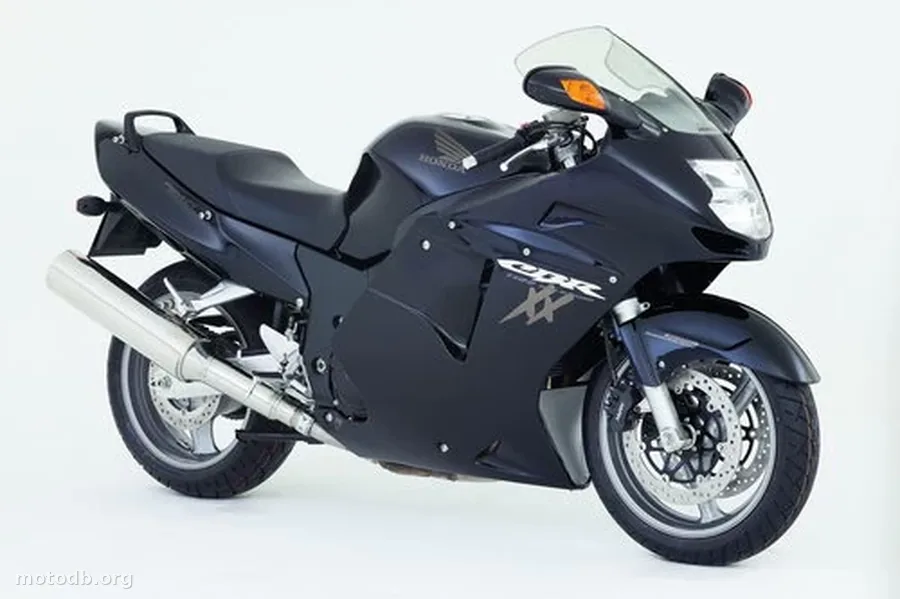
This 2001 model year carries the fully refined version of the 1137 cc inline four-cylinder, fed by fuel injection and ram-air intake since the 1999 update. The numbers speak for themselves: 164 horsepower at 9,500 rpm and, more importantly, 124 Nm of torque from just 7,250 rpm. This engine is a turbine. It pulls hard, it pulls long, it pulls everywhere. From 3,000 to 9,000 rpm, the thrust remains constant, linear, almost too clean. That's actually the one criticism you can level at it: this powerplant lacks character. Not a vibration, not a hiccup, not a moment's hesitation. You ride fast — very fast, even — with disconcerting ease, but the rider seeking raw sensations will be left slightly wanting. The power-to-weight ratio remains flattering despite the 255 kg wet weight, and the 23-liter tank allows for long stints between fuel stops.
On the chassis side, the aluminum twin-spar frame houses a 43 mm inverted fork and a single rear shock, both tuned for compromise. The 1,490 mm wheelbase delivers ocean-liner stability on the highway, yet the Blackbird carves through corners with an agility that would put some 750s to shame. The 130 mm ground clearance limits track-day ambitions, but that was never the point. The dual front disc brakes with the Dual-CBS system get the job done with precision, even if standards have evolved since then. The claimed top speed of 283 km/h remains a compelling argument against the competition, although the Suzuki Hayabusa 1300 and Kawasaki ZX-12R have raised the bar in terms of raw horsepower. Both rivals boast higher output on paper, but they achieve it at the cost of a more nervous temperament and reduced comfort.
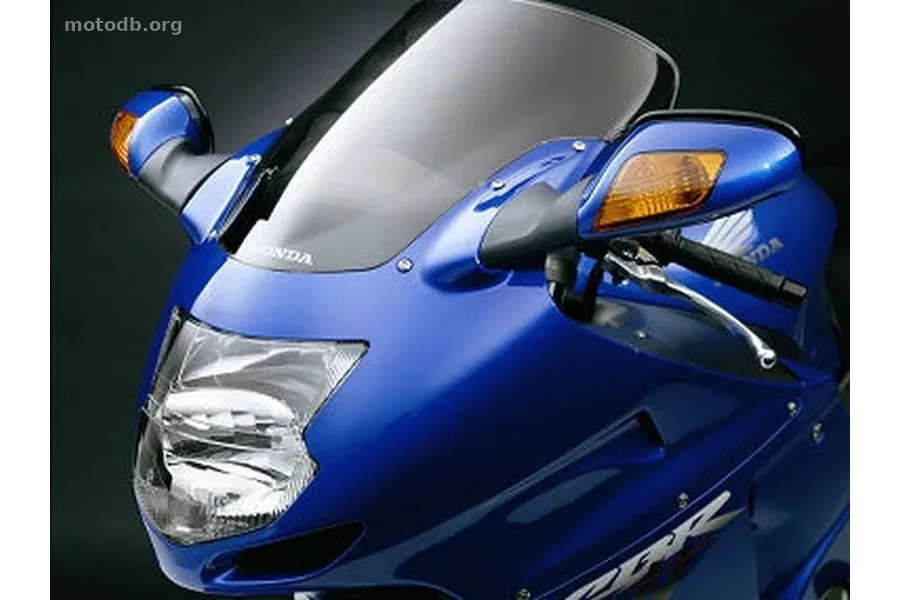
This is precisely where the Honda plays its trump card. The Super Blackbird is not the most powerful, nor the lightest, nor the most spectacular. It is the most well-rounded. The seat, perched at 810 mm, remains accessible, the riding position leans toward sporty without torturing your wrists over 500 kilometers, and the balance between performance and daily usability remains one of the finest ever offered in this class. The downside? The wind protection, paradoxically insufficient for a machine built for speed. Beyond 200 km/h, the wind makes its presence felt with insistence. And the passenger, relegated to a narrow, elevated perch, doesn't quite share the rider's enthusiasm.
At 13,600 euros in 2001, the CBR 1100 XX was aimed at demanding long-distance riders — those who want to cross Europe in a single push without giving up the adrenaline rush of a blistering overtake. Not a track weapon, not a city bike, but a muscular GT that invented a genre and, twenty-five years later, still commands respect through its mechanical coherence and overall balance. Honda may have lost the numbers war against Suzuki and Kawasaki, but the Blackbird won the battle of elegance.
Standard equipment
- Assistance au freinage : Double CBS
Practical info
- La moto est accessible aux permis : A
Reviews & comments
No reviews yet. Be the first to share your opinion!