Key performance
Technical specifications
Engine
- Displacement
- 1137 cc
- Power
- 164.0 ch @ 9500 tr/min (120.6 kW)
- Torque
- 121.6 Nm @ 7250 tr/min
- Engine type
- 4 cylindres en ligne, 4 temps
- Cooling
- liquide
- Compression ratio
- 11:1
- Bore × stroke
- 79 x 58 mm
- Valves/cylinder
- 4
- Camshafts
- 2 ACT
- Fuel system
- Injection
- Lubrication
- Wet sump
- Ignition
- Computer-controlled digital transistorized
- Starter
- Electric
Chassis
- Frame
- double poutre en alu
- Gearbox
- boîte à 6 rapports
- Final drive
- Chaîne
- Clutch
- Hydraulic wet multi plate
- Front suspension
- Fourche téléhydraulique inversée Ø 43 mm, déb : 120 mm
- Rear suspension
- Mono-amortisseur, déb : 120 mm
Brakes
- Front brakes
- Freinage 2 disques Ø 310 mm, étrier 3 pistons
- Rear brakes
- Freinage 1 disque Ø 256 mm, étrier 3 pistons
- Front tyre
- 120/70-17
- Front tyre pressure
- 2.90 bar
- Rear tyre
- 180/55-17
- Rear tyre pressure
- 2.90 bar
Dimensions
- Seat height
- 810.00 mm
- Wheelbase
- 1490.00 mm
- Ground clearance
- 130.00 mm
- Fuel capacity
- 24.00 L
- Weight
- 255.00 kg
- Dry weight
- 223.00 kg
- New price
- 13 600 €
Overview
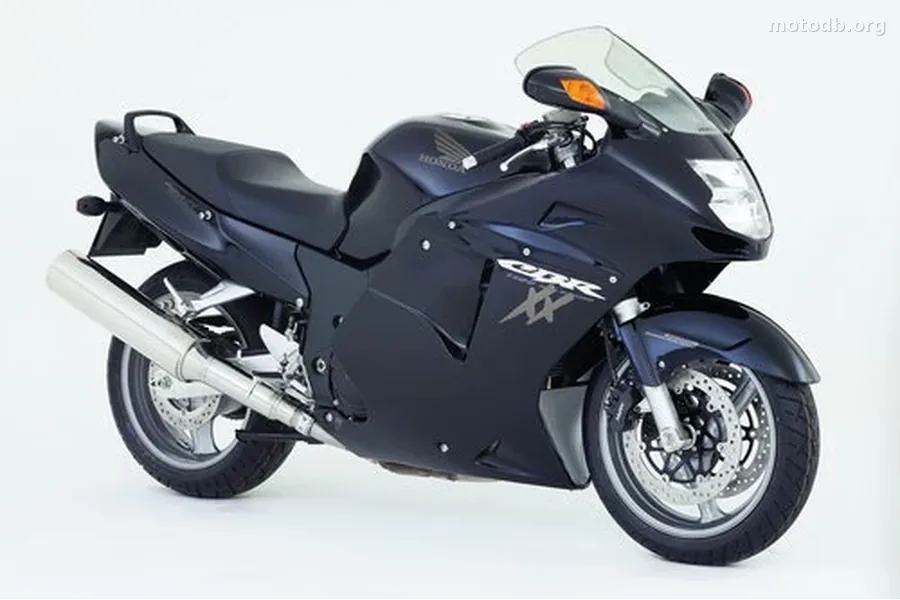
Who remembers the earthquake Honda triggered in the late 90s? Before the Suzuki Hayabusa came along to reshuffle the deck, it was the CBR 1100 XX Super Blackbird that kicked off the era of hyper-tourers capable of flirting with 300 km/h. An inline four-cylinder displacing 1137 cc, 164 horsepower at 9500 rpm, 121.6 Nm of torque at 7250 rpm. On paper, the spec sheet is enough to make your head spin. In reality, this Honda has always favored discretion over displays of brute force.
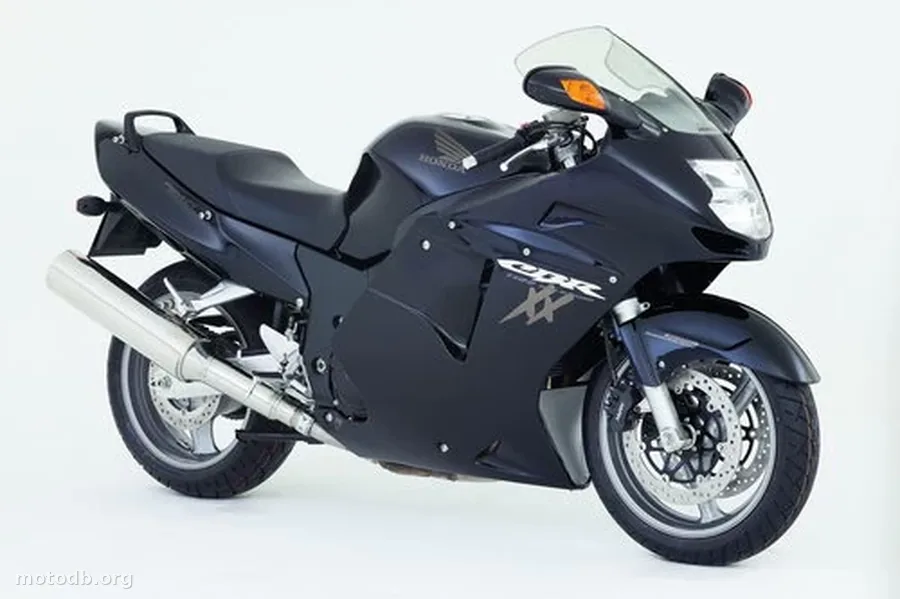
That, in fact, is its most fascinating paradox. Here is a motorcycle built to devour European motorways in a single stretch, equipped with aerodynamics that would put some pure sportbikes to shame, yet possessed of an almost disconcerting tameness. The engine, despite its 11:1 compression ratio and 16 valves, runs with a smoothness that borders on clinical. Not a vibration, not a hiccup. Some will see it as the ultimate refinement; others will lament the lack of character that prevents the Blackbird from raising the hair on your forearms. Honda has always cultivated this art of silky, almost surgical engineering. You love it or you hate it, but you cannot deny the competence.
The chassis, for its part, is beyond serious reproach. The aluminum twin-spar frame, the 43 mm inverted fork, and the rear monoshock — both offering 120 mm of travel — deliver a rare compromise between high-speed stability and agility through a series of bends. Its 255 kg wet weight, including the 24-liter fuel tank, is quickly forgotten once the machine is in motion. The braking system, with its twin 310 mm front discs and the Dual-CBS setup, inspires solid confidence. It lacks the bite of a modern radial caliper, admittedly, but its progressiveness and power are a perfect match for the machine's philosophy. The 1490 mm wheelbase ensures unwavering stability when the speedometer needle goes haywire.
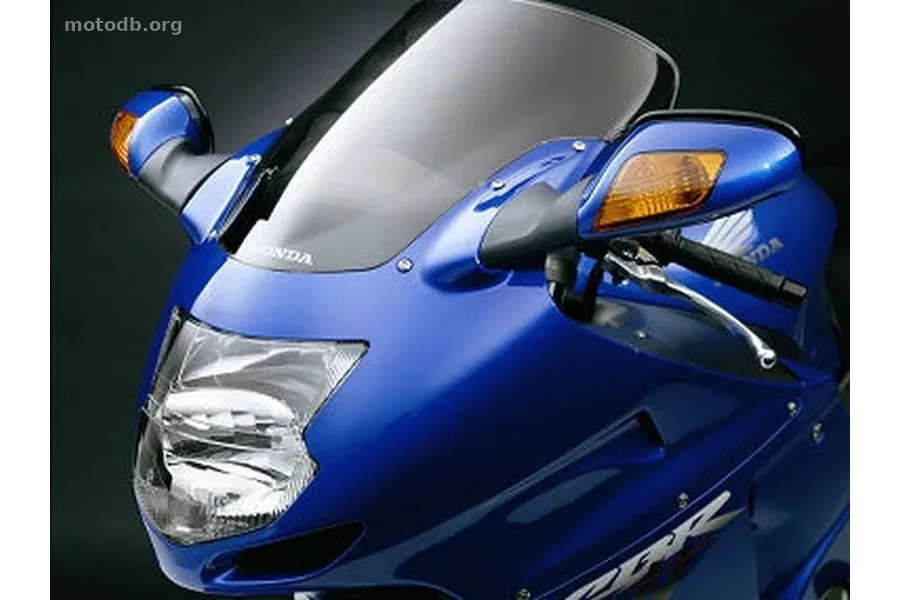
Then there is the matter of comfort, and this is where things fall slightly short. The 810 mm seat height suits taller riders, but the riding position leans a touch too far toward sporty for very long hauls. The wind protection, despite the full fairing, shows its limits beyond 200 km/h, where the helmet starts to buffet noticeably. As for the pillion, they had better be accommodating. Up against the Hayabusa and its more brutal temperament, or the Kawasaki ZX-12R and its record-chasing ambitions, the 2004 Super Blackbird — upgraded with fuel injection and ram-air induction since 1999 — plays a different card. One of overall harmony, ease, and effortless mile-munching.
At 13,600 euros in 2004, the CBR 1100 XX was aimed at demanding touring riders — those who want to cross France in one go without arriving drained, while keeping enough in reserve to humiliate most sportbikes at the traffic lights. Not the most exciting in its class, nor the fastest against its Japanese rivals. But probably the most well-balanced. And in the world of motorcycling, balance is a quality you always end up appreciating — especially when the miles pile up by the thousands.
Standard equipment
- Assistance au freinage : Double CBS
Practical info
- La moto est accessible aux permis : A
Reviews & comments
No reviews yet. Be the first to share your opinion!