Key performance
Technical specifications
Engine
- Displacement
- 1137 cc
- Power
- 164.0 ch @ 9500 tr/min (119.7 kW)
- Torque
- 124.0 Nm @ 7250 tr/min
- Engine type
- In-line four, four-stroke
- Cooling
- Liquid
- Compression ratio
- 11:1
- Bore × stroke
- 79 x 58 mm
- Valves/cylinder
- 4
- Camshafts
- 2 ACT
- Fuel system
- Injection
- Lubrication
- Wet sump
- Ignition
- Computer-controlled digital transistorized
- Starter
- Electric
Chassis
- Frame
- double poutre en alu
- Gearbox
- 6-speed
- Final drive
- Chain (final drive)
- Clutch
- Hydraulic wet multi plate
- Front suspension
- Fourche téléhydraulique inversée Ø 43 mm, déb : 120 mm
- Rear suspension
- Mono-amortisseur, déb : 120 mm
Brakes
- Front brakes
- Dual disc
- Rear brakes
- Single disc
- Front tyre
- 120/70-17
- Front tyre pressure
- 2.90 bar
- Rear tyre
- 180/55-17
- Rear tyre pressure
- 2.90 bar
Dimensions
- Seat height
- 810.00 mm
- Wheelbase
- 1490.00 mm
- Ground clearance
- 130.00 mm
- Fuel capacity
- 24.00 L
- Weight
- 255.00 kg
- Dry weight
- 223.00 kg
- New price
- 13 600 €
Overview
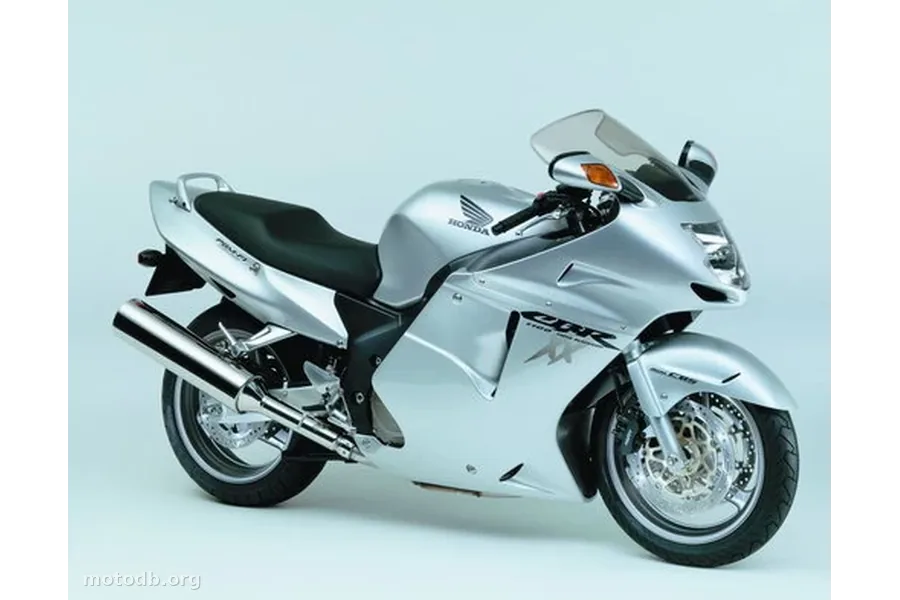
What motorcycle could, in the late 1990s, claim to flirt with 300 km/h while remaining civilized enough to swallow hundreds of kilometers without turning its rider into a wreck? The Honda CBR 1100 XX Super Blackbird, of course. Launched in late 1996, it literally invented the concept of the hyper-tourer. Before it, you had to choose between outright speed and touring comfort. Honda decided this dilemma no longer needed to exist, and the result lies in an inline four-cylinder displacing 1137 cc that churns out 164 horsepower at 9500 rpm with 124 Nm of torque available from just 7250 rpm. Figures that, even in 2000, were enough to make your head spin.
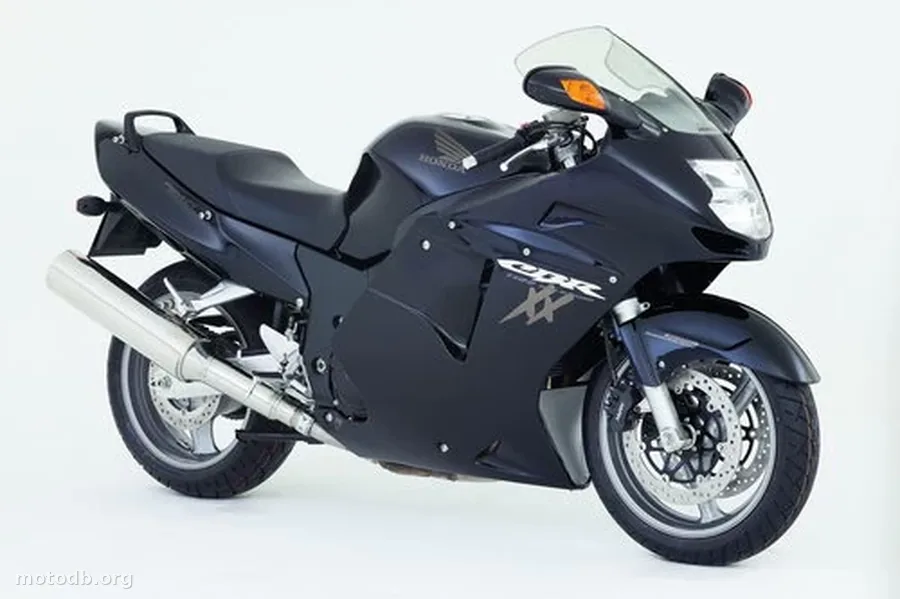
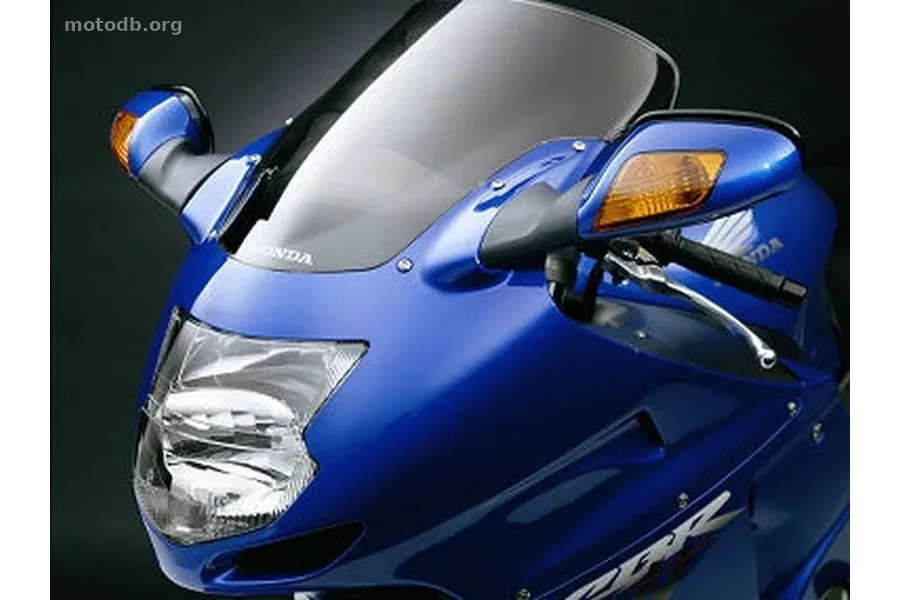
What strikes you first about the Blackbird is its aerodynamics. Honda had worked on the fairing with an obsession worthy of Formula 1, achieving a drag coefficient lower than that of certain 250cc Grand Prix machines. The result is immediately felt on the motorway or during long straights where the machine cuts through the air with disconcerting ease. But this efficiency has a downside. The engine, so smooth and refined, sometimes lacks character. Not a vibration, not a single jolt. It's Swiss watchmaker engineering, technically flawless, but one that leaves riders craving raw sensations somewhat wanting. You could almost forget you're traveling at 200 km/h, so complete is the mechanical serenity.
On the chassis side, Honda spared no expense. The twin-spar aluminum frame, the 43 mm inverted fork, and the rear mono-shock — both offering 120 mm of travel — give this 255 kg wet-weight machine an agility that has nothing to envy from much lighter sportbikes. You tip the Blackbird into corners with an ease that defies its size. The dual front disc braking with the Dual-CBS system inspires confidence in all circumstances, even if purists will miss having fully independent control over both ends. The 24-liter fuel tank allows for long stretches without stopping, which fits perfectly with the machine's sport-touring vocation.
The 2000 version benefited from improvements introduced the previous year, notably electronic fuel injection and ram-air induction that eliminated the last hesitations at low revs. The added flexibility further enhances the pleasure of everyday riding. That said, the wind protection, paradoxically, could have been more generous for the rider. The riding position leans a bit too much toward the sporty side for very long journeys, and the passenger is hardly treated to a comfortable time on their portion of the seat. These were deliberate compromises by Honda, which was clearly targeting fast long-distance riders rather than leisurely tourers.
Against the Suzuki Hayabusa 1300 and the Kawasaki ZX-12R — two competitors boasting higher power outputs and an even more radical philosophy — the CBR 1100 XX played a different card. Less impressive on paper, it made up for it with a cohesiveness and ease of handling that its rivals could not claim. At 13,600 euros, it was aimed at the experienced rider who refuses to sacrifice versatility on the altar of pure performance. Twenty-five years later, the Super Blackbird remains a benchmark in hyper-tourer history — the one that proved you could combine a 290 km/h top speed with daily use without ever losing its dignity.
Standard equipment
- Assistance au freinage : Double CBS
Practical info
- La moto est accessible aux permis : A
Reviews & comments
No reviews yet. Be the first to share your opinion!