Key performance
Technical specifications
Engine
- Displacement
- 1137 cc
- Power
- 164.0 ch @ 9500 tr/min (109.5 kW)
- Torque
- 119.0 Nm @ 7250 tr/min
- Engine type
- In-line four, four-stroke
- Cooling
- Liquid
- Compression ratio
- 11.0:1
- Bore × stroke
- 79.0 x 58.0 mm (3.1 x 2.3 inches)
- Valves/cylinder
- 4
- Camshafts
- 2 ACT
- Fuel system
- Injection. Electronic fuel injection
- Valve timing
- Double Overhead Cams/Twin Cam (DOHC)
- Lubrication
- Wet sump
- Ignition
- Computer-controlled digital transistorised with electronic advance, integral immobiliser
- Starter
- Electric
Chassis
- Frame
- Aluminium twin spar
- Gearbox
- 6-speed
- Final drive
- Chain (final drive)
- Clutch
- Hydraulic wet multi plate
- Front suspension
- 43mm HMAS cartridge-type telescopic fork, 109mm axle travel
- Rear suspension
- Pro-link with gas-charged HMAS damper, stepless adjustable rebound damping, 109mm axle travel
Brakes
- Front brakes
- Double disc. 3-piston caliper
- Rear brakes
- Single disc. 3-piston caliper
- Front tyre
- 120/70-ZR17
- Front tyre pressure
- 2.90 bar
- Rear tyre
- 180/55-ZR17
- Rear tyre pressure
- 2.90 bar
Dimensions
- Seat height
- 810.00 mm
- Wheelbase
- 1490.00 mm
- Ground clearance
- 130.00 mm
- Length
- 2160.00 mm
- Fuel capacity
- 23.00 L
- Weight
- 255.00 kg
- Dry weight
- 224.00 kg
- New price
- 13 600 €
Overview
What machine could possibly claim, in the late 1990s, to break the mythical 300 km/h barrier while remaining suitable for daily use? Honda answered with the CBR 1100 XX Super Blackbird, a two-wheeled missile that literally invented the hyper-sport GT category. In 2007, this vintage version carries on the original recipe with a few refinements, commanding respect through its longevity in a segment where trends come and go quickly.
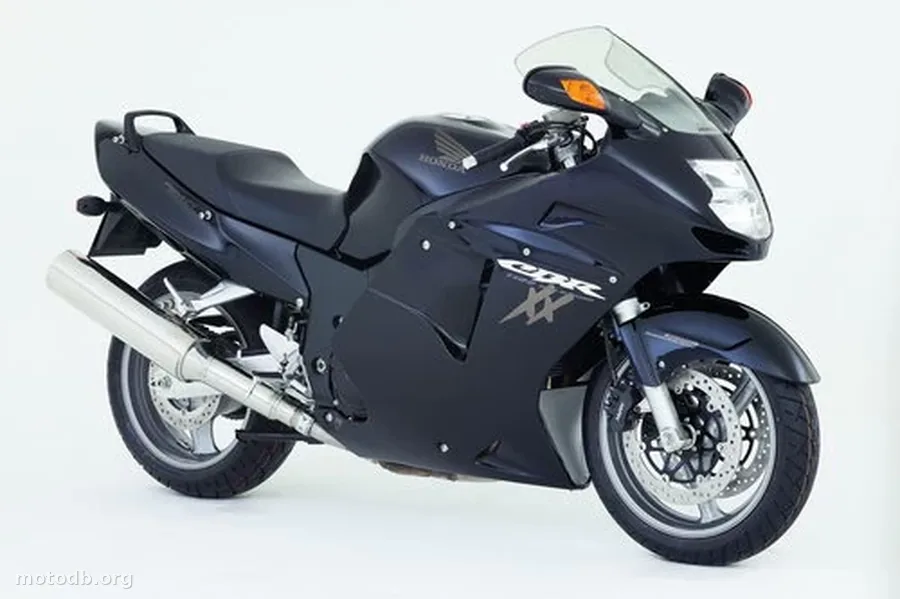
Beneath the streamlined fairing, the 1137 cc inline four-cylinder produces 164 horsepower at 9,500 rpm and, more importantly, 119 Nm of torque from just 7,250 rpm. Numbers that no longer inspire awe next to the latest sportbikes, but that poorly convey the reality on the road. This engine is a Swiss watch: almost too polished in its smoothness, it delivers power with a disconcerting linearity. No kick in the pants, no parasitic vibrations. Some will rightly criticize this overly smooth, almost sanitized character. That's the price to pay for devouring 800 kilometers of motorway without your forearms begging for mercy. The 23-liter fuel tank also allows for substantial legs between fill-ups.
The aluminum twin-spar frame, paired with a 43 mm HMAS fork and a gas-charged Pro-link shock, forms a package of rare coherence. At 255 kg wet, the Blackbird makes no claim to featherweight status, yet it disappears beneath you in corners thanks to a well-calibrated 1,490 mm wheelbase and carefully balanced weight distribution. It turns like a 750 of its era, which remains a feat for a machine of this displacement. The dual front disc brakes with three-piston calipers and the linked CBS braking system get the job done with rigor, even if standards have evolved since. The seat perched at 810 mm and the slightly forward-leaning riding position are reminders of its sporting ambitions. The passenger, meanwhile, will have to make do with average space and ergonomics that clearly favor the rider.
Against it, the Suzuki Hayabusa 1300 and Kawasaki ZX-12R reshuffled the deck with higher horsepower figures and more spectacular outright performance. The Hayabusa, in particular, stole its speed crown and established itself as the segment benchmark. Yet Honda retains one compelling argument: its ease of use. Where its rivals demand skill and concentration, the CBR 1100 XX remains approachable, predictable, reassuring. An experienced rider seeking a fast GT to devour country roads will find a formidable tool. A less seasoned motorcyclist won't be caught off guard by an excess of character.
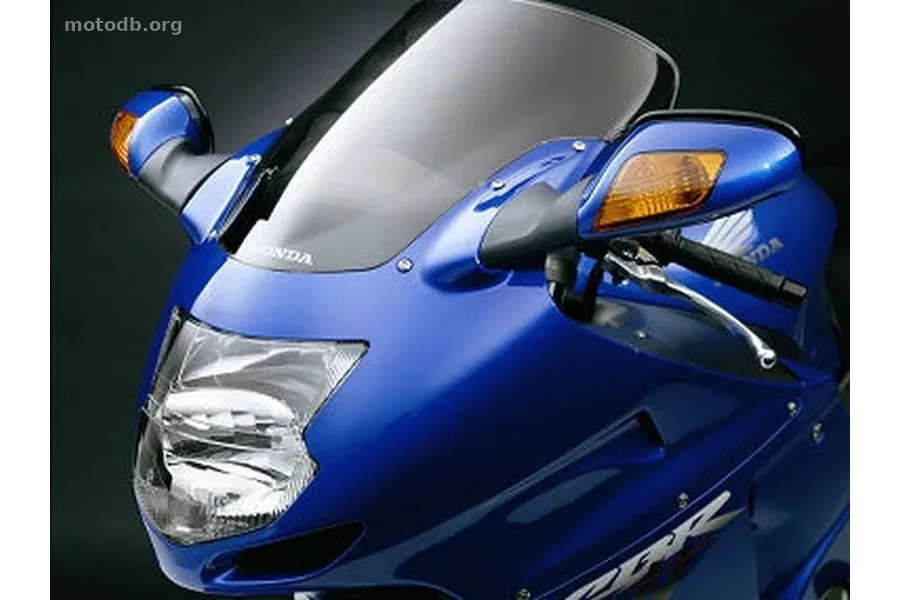
At €13,600 in 2007, the Super Blackbird was aimed at long-distance tourers who refused to sacrifice sporting temperament at the altar of comfort. Its wind protection remains improvable at very high speeds despite a drag coefficient worthy of a Grand Prix machine, and its engine lacks the touch of madness that stirs the enthusiasts' souls. But it is precisely this restraint, this total composure that makes it an accomplished GT. Honda didn't build the most exciting motorcycle of its generation. The manufacturer built the most well-rounded one — the kind that doesn't grow tiresome after ten years of faithful service. And that is something neither the Hayabusa nor the Kawasaki can claim.
Standard equipment
- Assistance au freinage : Double CBS
Practical info
- La moto est accessible aux permis : A
Reviews & comments
No reviews yet. Be the first to share your opinion!