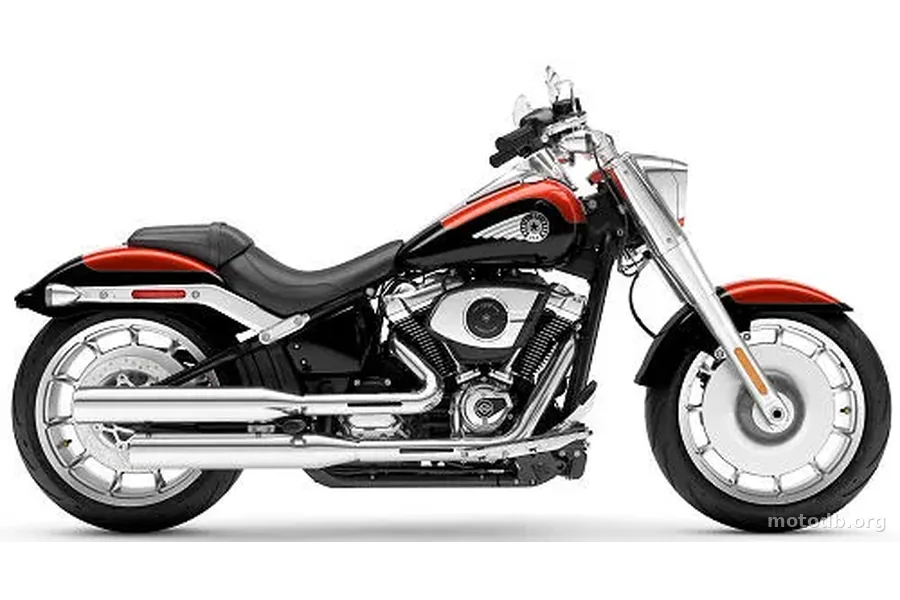
Key performance
Technical specifications
Engine
- Displacement
- 1923 cc
- Power
- 103.0 ch @ 5020 tr/min (75.8 kW)
- Torque
- 167.7 Nm @ 3000 tr/min
- Engine type
- Bicylindre en V à 45°, 4 temps
- Cooling
- par air
- Compression ratio
- 10.3 : 1
- Bore × stroke
- 103.5 x 114.3 mm
- Valves/cylinder
- 4
- Fuel system
- Injection
- Starter
- électrique
Chassis
- Frame
- Double berceau tubulaire en acier
- Gearbox
- boîte à 6 rapports
- Final drive
- Courroie
- Front suspension
- Fourche telescopique Ø 49 mm, déb : 130 mm
- Rear suspension
- Mono-amortisseur sous la selle, déb : 86 mm
Brakes
- Front brakes
- Freinage 1 disque Ø 300 mm, étrier 4 pistons
- Rear brakes
- Freinage 1 disque Ø 292 mm, étrier 2 pistons
- Front tyre
- 160/60-18
- Rear tyre
- 240/40-18
Dimensions
- Seat height
- 675.00 mm
- Seat type
- Selle biplaces
- Fuel capacity
- 18.90 L
- Weight
- 315.00 kg
- New price
- 26 395 €
Overview
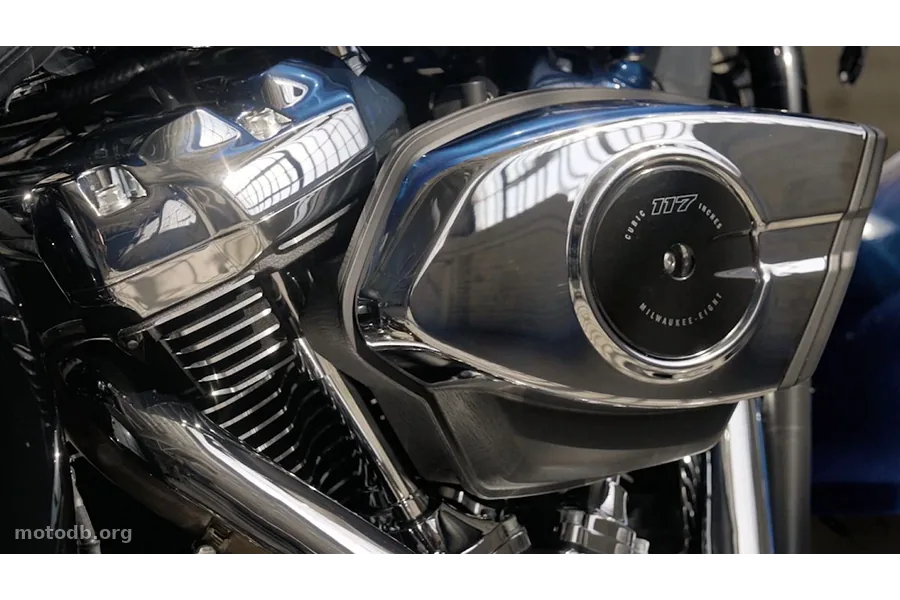
Who would have thought that one day Milwaukee would stuff its most massive icon with extra electronics and cubic inches, while actually making it lighter? Yet that's the feat accomplished with this 2025 vintage of the Fat Boy, now powered by the Milwaukee Eight 117 Custom. Under the hood of this 45-degree V-twin, 1,923 cc produce 103 horsepower at 5,020 rpm and, more importantly, 167.7 Nm of torque from just 3,000 rpm. Figures that relegate the 2017 Fat Boy S and its Twin Cam Screamin' Eagle to the realm of memory. New cylinder heads, redesigned exhausts, revised fuel injection, improved cooling: the powertrain has been seriously reworked. Four valves per cylinder may make traditionalists wince, but this engine was designed to last and to evolve. On paper, the direct competition — whether the Indian Chief Dark Horse or the Triumph Rocket 3 R — doesn't offer this blend of raw torque available so low in the rev range and pure charisma.
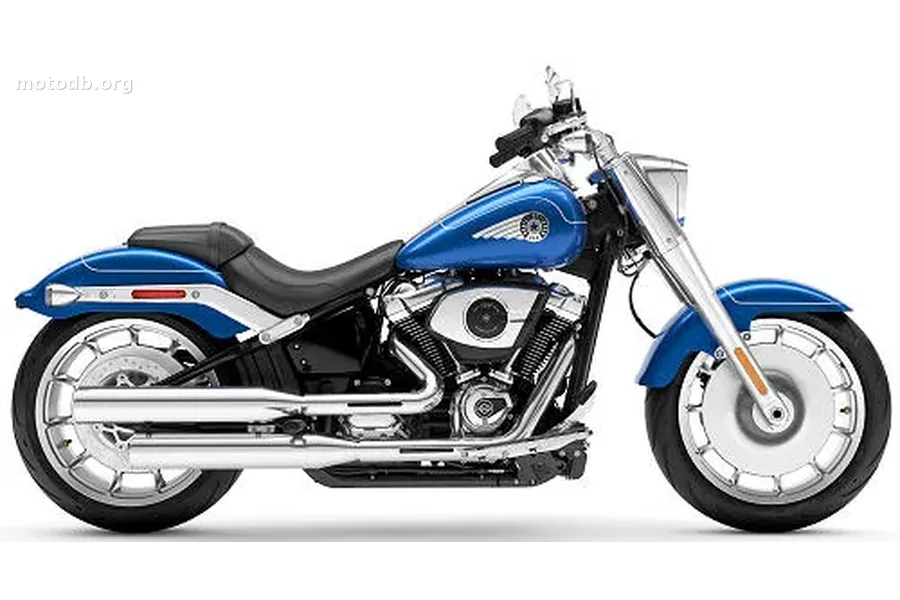
Style, as it happens, is the minefield of this update. Harley dared to touch the monument. The faired headlight shifts into a resolutely contemporary, almost aggressive register, vaguely evoking the defunct Suzuki VZR 1800 Intruder. The boldness stops at the bow: the rest of the silhouette retains its massive, reassuring lines. The wheels adopt an unapologetic muscle-car design, and the tires reach record dimensions for a production Harley. A 160/60-18 up front, a 240/40-18 at the rear. The visual result is striking, almost cartoonish. You love it or you hate it, but nobody remains indifferent. The Fat Boy is no longer Terminator's ride; it now sets its sights on a more contemporary universe.
On the chassis side, the Softail platform continues to mature. The tubular steel double-cradle frame uses 50% fewer parts and gains 65% in rigidity over the previous structure. The result: an overall rigidity increase of 34% and a weight saving of nearly 20 kilograms. The machine still tips the scales at 315 kg fully fueled, including the 18.9-liter tank. It's no featherweight, but the seat height of 675 mm and the low center of gravity make the mass manageable at a standstill. The 49 mm telescopic fork borrowed from the Touring range offers 130 mm of travel, while the rear mono-shock, adjustable for preload, makes do with 86 mm. Braking relies on a 300 mm front disc gripped by a four-piston caliper and a 292 mm rear disc with a two-piston caliper. Adequate without being sporty, true to the model's philosophy.
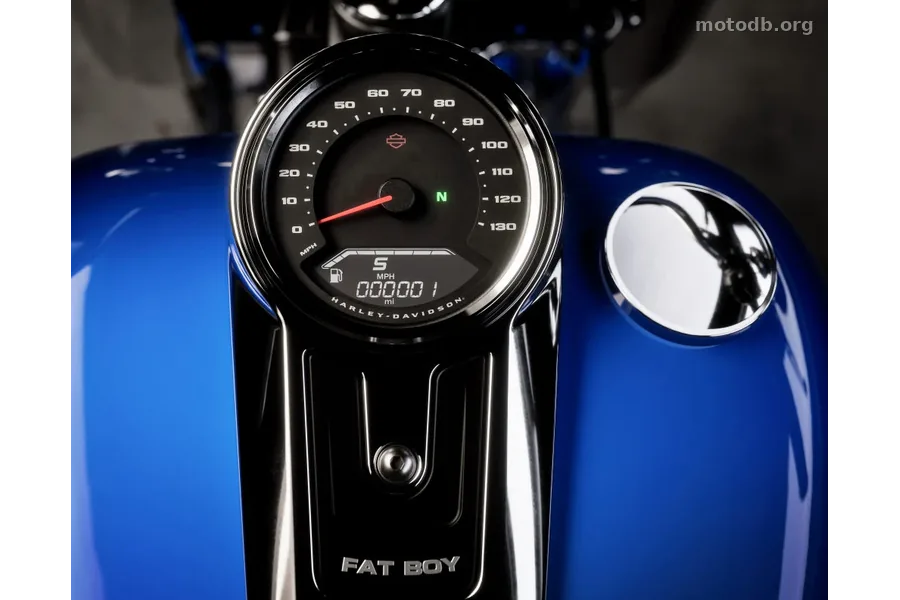
The real surprise comes from the electronic equipment. Cornering ABS, C-TCS traction control and C-DSCS drag-torque slip control — both lean-angle sensitive — three riding modes Rain, Road and Sport, tire pressure monitoring: the Fat Boy has finally caught up with the times. Add to that a USB-C port, an adjustable brake lever, new switchgear, and a revised instrument cluster. For a brand that long dragged its feet when it came to technology, the shift is decisive. The cruise control introduced in 2023 rounds out an arsenal now credible against market standards.
Then there's the question of price. At €26,395, the 2025 Fat Boy positions itself at the top end of the heavyweight custom segment. That's the entry price, before options and customization. The target audience knows it: you don't come to this model for outright performance or versatility. You come for presence, for devastating torque usable in everyday riding, and for that unique ability to turn every straight road into a statement. The 2025 Fat Boy isn't perfect. Its top speed caps out at 175 km/h, its suspension remains basic, and its weight demands respect in tight maneuvers. But it possesses what many modern motorcycles have lost: character, raw and unfiltered.
Standard equipment
- Assistance au freinage : ABS de série
- Nombre de mode de conduite : 3
- ABS Cornering
- Indicateur de vitesse engagée
- Régulateur de vitesse
- Prise USB
- Démarrage sans clé
- Contrôle de traction
- Contrôle du frein moteur
- Surveillance de la pression des pneus
Practical info
- La moto est accessible aux permis : A
Indicators & positioning
Similar bikes
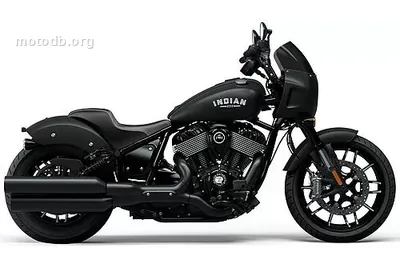
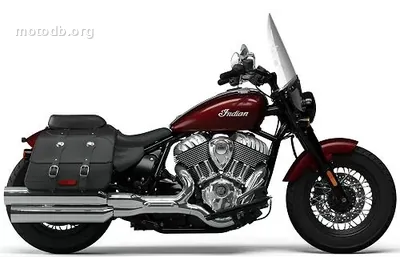
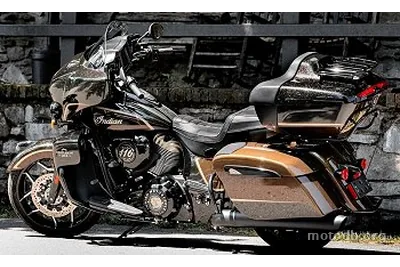
1890 Super Chief Limited / Dark Horse
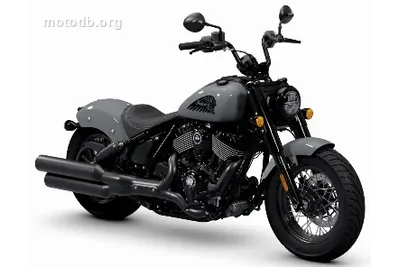
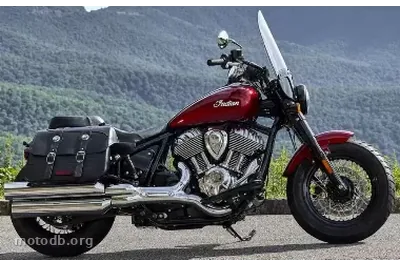
Chief Bobber Dark Horse
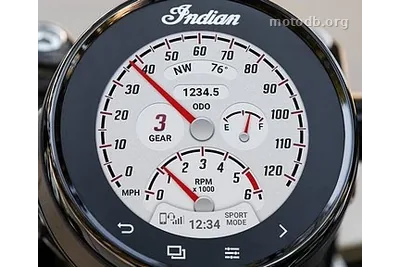
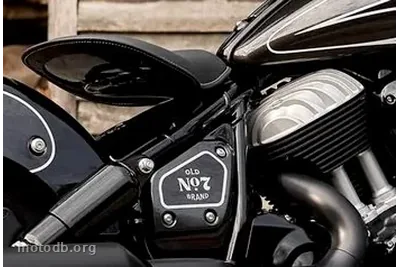
1890 Chief Bobber Dark Horse Jack Daniel's
Reviews & comments
No reviews yet. Be the first to share your opinion!