Key performance
Technical specifications
Engine
- Displacement
- 1923 cc
- Power
- 103.0 ch @ 5020 tr/min (75.8 kW)
- Torque
- 168.0 Nm @ 3000 tr/min
- Engine type
- Bicylindre en V à 45°, 4 temps
- Cooling
- par air
- Compression ratio
- 10.3 : 1
- Bore × stroke
- 103.5 x 114.3 mm
- Valves/cylinder
- 4
- Fuel system
- Injection
- Starter
- électrique
Chassis
- Frame
- Double berceau tubulaire en acier
- Gearbox
- boîte à 6 rapports
- Final drive
- Courroie
- Front suspension
- Fourche téléscopique Ø 49 mm, déb : 130 mm
- Rear suspension
- Mono-amortisseur sous la selle, déb : 86 mm
Brakes
- Front brakes
- Freinage 1 disque Ø 300 mm, étrier 4 pistons
- Rear brakes
- Freinage 1 disque Ø 292 mm, étrier 2 pistons
- Front tyre
- 160/60-18
- Rear tyre
- 240/40-18
Dimensions
- Seat height
- 675.00 mm
- Seat type
- Selle biplaces
- Fuel capacity
- 18.90 L
- Weight
- 315.00 kg
- New price
- 27 990 €
Overview
Who would have thought that one day Milwaukee would stuff its most massive icon with extra electronics and cubic inches while actually making it lighter? Yet that's the feat Harley-Davidson has pulled off with this 2026 Fat Boy, powered by the Milwaukee Eight 117 Custom and its 1923 cc V-twin. The engine puts out 103 horsepower at 5020 rpm, which remains modest on paper compared to an Indian Chief Dark Horse or a Triumph Rocket 3. But the big twin strikes elsewhere: 168 Nm of torque from just 3000 rpm. At that speed, the belt drive and six-speed gearbox need only channel that avalanche of Newton-meters to the 240 mm rear tire. The result is a catapult launch every time you crack the throttle, a frank and linear surge that puts a grin on your face without needing to tickle the rev limiter. Reworked cylinder heads, revised fuel injection, and optimized cooling all contribute to the health of this four-valve-per-cylinder V-twin — a detail that may make Twin Cam nostalgists grind their teeth, but one that guarantees far superior longevity and efficiency.
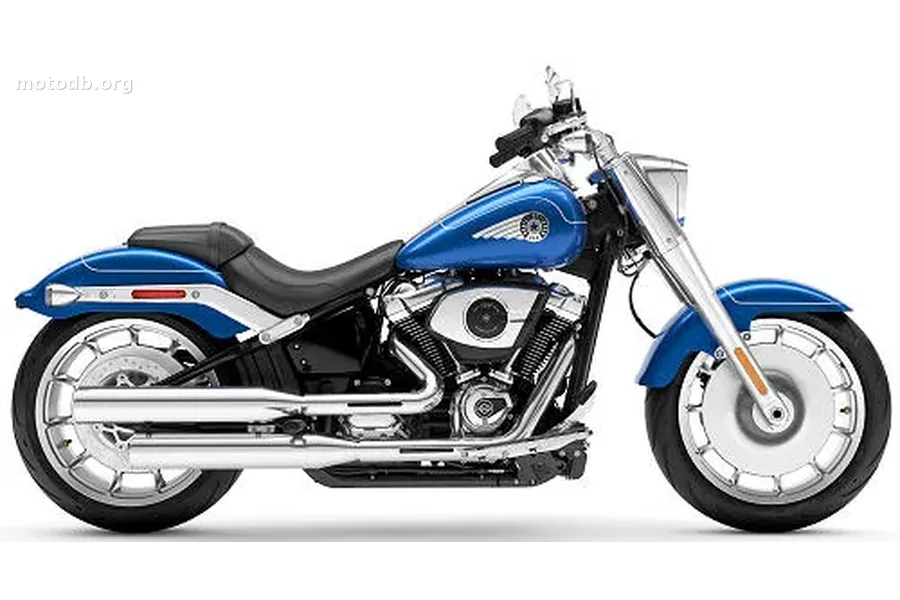
The design — let's talk about it. Harley has made a bold statement on the Fat Boy's front end. The faired headlight shifts into a resolutely contemporary, almost aggressive register, faintly reminiscent of certain muscular Japanese bikes from the 2000s. The massive wheels exude muscle-car attitude, and the 160 mm-wide front tire — the widest ever fitted as standard on a Harley — reinforces that steamroller impression. The rest of the silhouette retains its familiar lines, that chrome-plated wrestler's build everyone recognizes from a hundred meters away. The contrast between the modernity of the face and the classicism of the profile is inevitably divisive. Some will see well-placed audacity, others outright heresy.
On the chassis side, the Softail platform continues to bear fruit. The steel double-cradle frame, lightened and stiffened by 65% compared to the previous generation, delivers markedly improved handling for a machine weighing 315 kg wet. The 49 mm telescopic fork offers 130 mm of travel up front, while the rear mono-shock, hidden beneath the seat at 675 mm from the ground, makes do with just 86 mm. That's not much, and rough roads will remind your back about it. But on decent tarmac, the package proves coherent and reassuring, even if nobody is going to enter this machine in a riding school. Braking, handled by a 300 mm disc up front and a 292 mm disc at the rear, gets the job done without particular enthusiasm.
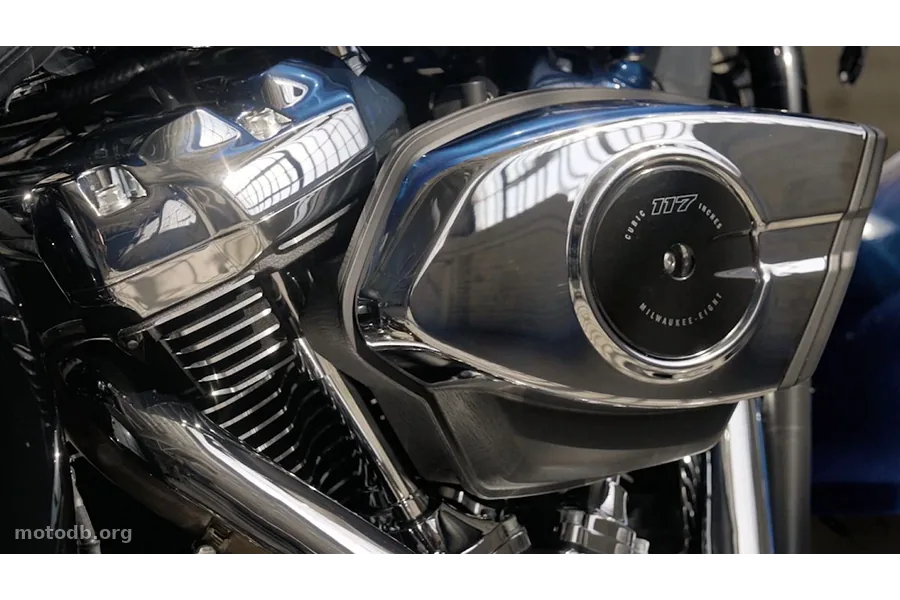
The real surprise of this model year lies in the onboard electronics. Cornering ABS, lean-sensitive traction control, engine brake torque management, three riding modes, tire pressure monitoring — the Fat Boy closes the gap with its European and Japanese competition in one leap. The USB-C port, adjustable brake lever, and redesigned switchgear round out a dashboard finally worthy of 2026. For a brand long resistant to any form of electronic assistance, the shift is radical.
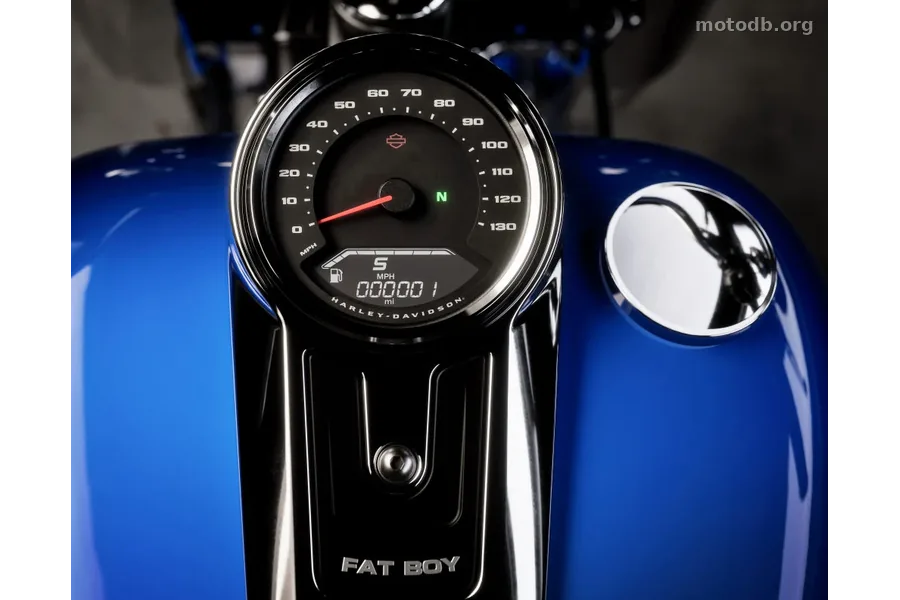
At 27,990 euros, the Fat Boy targets a very specific audience: the committed cruiser rider, the one who wants to ride straight, low, and wide, with fistfuls of torque and a look that doesn't go unnoticed. The 18.9-liter tank and a top speed capped at 175 km/h are reminders that this Harley isn't built for devouring long highway stretches or playing sportbike. It's built to be seen, heard, and felt. And on that front, the contract is fulfilled.
Standard equipment
- Assistance au freinage : ABS de série
- Nombre de mode de conduite : 3
- ABS Cornering
- Indicateur de vitesse engagée
- Régulateur de vitesse
- Prise USB
- Démarrage sans clé
- Contrôle de traction
- Contrôle du frein moteur
- Surveillance de la pression des pneus
Practical info
- La moto est accessible aux permis : A
- Pays de fabrication : Etats-Unis
Indicators & positioning
Similar bikes
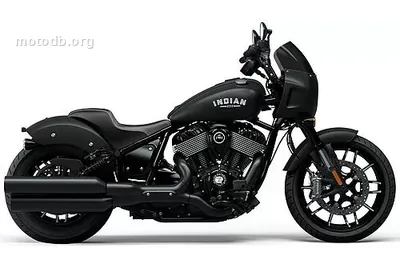
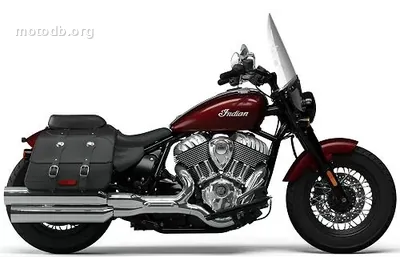
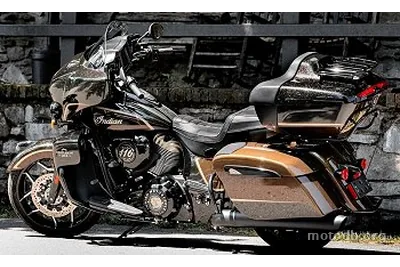
1890 Super Chief Limited / Dark Horse
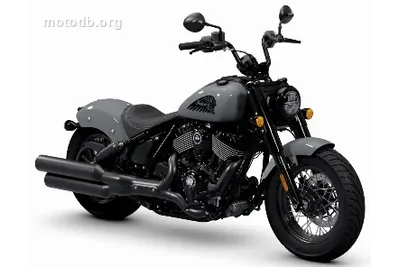
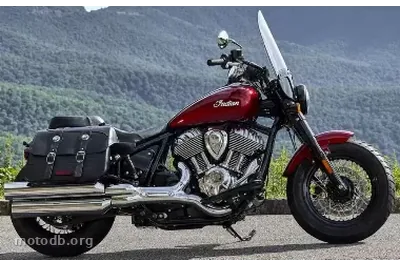
Chief Bobber Dark Horse
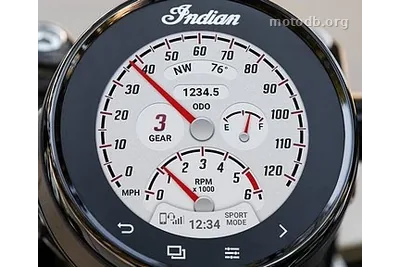
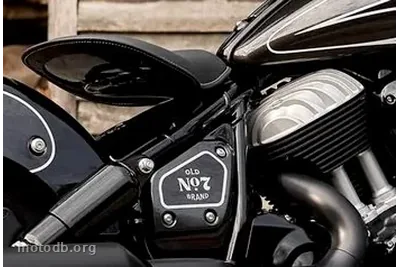
1890 Chief Bobber Dark Horse Jack Daniel's
Reviews & comments
No reviews yet. Be the first to share your opinion!