Key performance
Technical specifications
Engine
- Displacement
- 999 cc
- Power
- 153.0 ch @ 10000 tr/min (112.5 kW)
- Torque
- 107.9 Nm @ 9500 tr/min
- Engine type
- 4 cylindres en ligne, 4 temps
- Cooling
- liquide
- Compression ratio
- 12.2 : 1
- Bore × stroke
- 73.4 x 59 mm
- Valves/cylinder
- 4
- Camshafts
- 2 ACT
- Fuel system
- Injection Ø 44 mm
Chassis
- Frame
- périmétrique en aluminium
- Gearbox
- boîte à 6 rapports
- Final drive
- Chaîne
- Front suspension
- Fourche téléhydraulique inversée Ø 43 mm, déb : 120 mm
- Rear suspension
- Mono-amortisseur, déb : 63 mm
Brakes
- Front brakes
- Freinage 2 disques Brembo Ø 310 mm, fixation radiale, étrier 4 pistons
- Rear brakes
- Freinage 1 disque , étrier simple piston
- Front tyre
- 120/70-17
- Front tyre pressure
- 2.50 bar
- Rear tyre
- 190/50-17
- Rear tyre pressure
- 2.90 bar
Dimensions
- Seat height
- 825.00 mm
- Fuel capacity
- 12.00 L
- Weight
- 214.00 kg
- New price
- 14 199 €
Overview
When Suzuki decided to resurrect the Katana, nobody expected a mechanical revolution. The Hamamatsu manufacturer simply dug into its own archives, grafted the sharp-edged aesthetics of the 80s onto the proven GSX-S 1000 platform, and served the result to a clientele that is nostalgic but not indifferent to modernity. The 999 cc inline four-cylinder, a direct descendant of the older-generation GSX-R block, produces 153 horsepower at 10,000 rpm and 107.9 Nm at 9,500 rpm. It's solid, punchy, with that taste for high revs that characterizes the brand's sporting lineage.
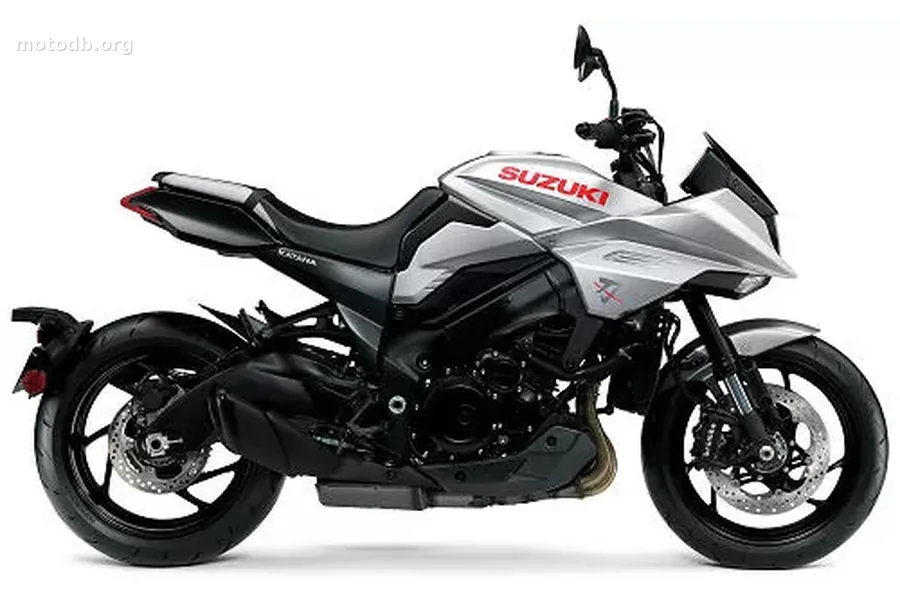
The S version makes no claim to changing the game on a technical level. No revised suspension, no reworked engine mapping. Suzuki plays a different tune here — one of accessible personalization — and does so with consistency. The windscreen is replaced by a more encompassing unit, bolted on top of the original like a catalog accessory. Tank pads dress the flanks. A two-tone black and red seat replaces the standard unit. The overall package projects a more assertive identity, something reminiscent of the special editions that Japanese tuners assembled in the 1990s for local markets.
The real argument for this variant comes down to two words: Akrapovic titanium-carbon. The stock exhaust header gives way to a handcrafted piece that frees up nearly 3 additional horsepower, adds 2.2 Nm of torque, and sheds 1.1 kg from the overall weight. On a bike that already tips the scales at 214 kg fully fueled, the gain remains symbolic — but the acoustic benefit is anything but. This type of exhaust transforms the sonic character of a machine, adding bite to every twist of the throttle, a presence that the standard version simply doesn't claim.
Against the neo-retro competition, the Katana S defends a clear positioning. It is neither a Kawasaki Z900RS with its seductive rounded lines, nor a Honda CB1000R with its clean, minimalist design. It is more aggressive in form, more sporting in its DNA, and speaks to a rider who wants a period look without sacrificing 250 km/h at the end of a straight. A seat height of 825 mm and the engine's temperament steer it toward riders of average build and acquired experience. Beginners are advised to wait.
The price tag reads €14,199 — €500 more than the standard Katana. Suzuki offsets this with an announced customer incentive of €900, which brings the gap down to a reasonable level for anyone who intended to fit an aftermarket exhaust and personalization accessories anyway. When reading through the list of standard equipment on this S, the math even works in the buyer's favor.
Standard equipment
- Assistance au freinage : ABS
Practical info
- La moto est accessible aux permis : A
Indicators & positioning
Similar bikes
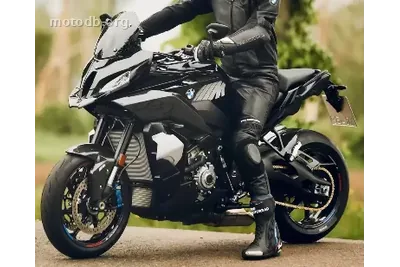
M 1000 XR prototype
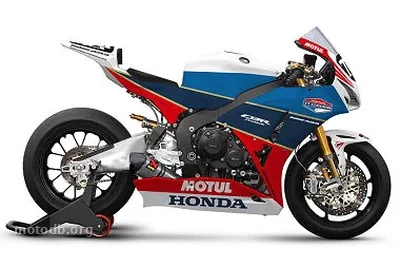
CBR 1000 RR Endurance TT Legends
Reviews & comments
No reviews yet. Be the first to share your opinion!